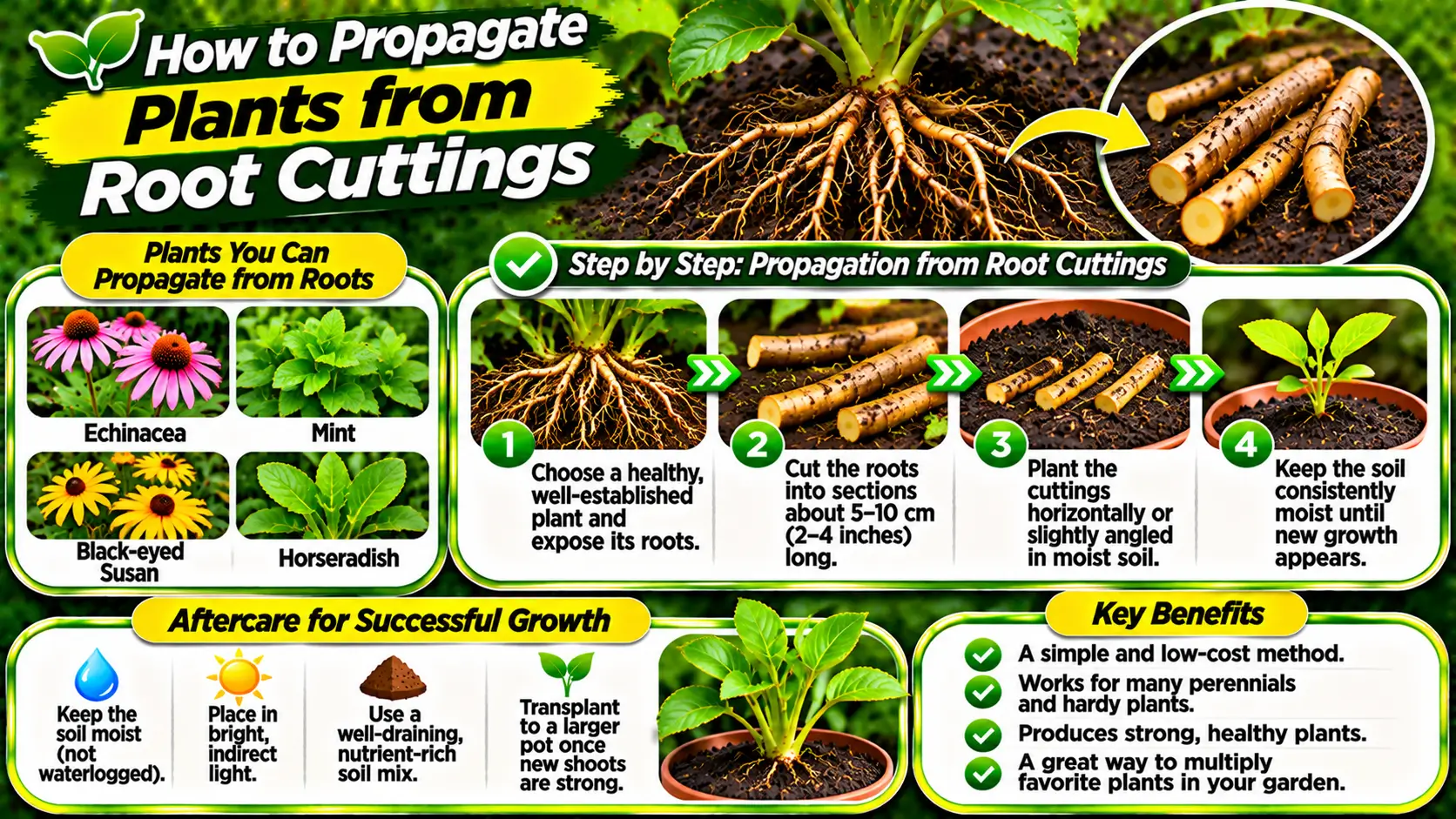
Root cuttings are pieces of a parent plant’s root that can develop new shoots and, in suitable species, form an independent plant. This method is different from stem or leaf propagation because the starting material is below the soil surface. It is useful for certain herbaceous perennials, shrubs, and plants that naturally regenerate from roots. It is not appropriate for every plant, and taking roots can disturb the parent, so identify the species and confirm that it responds well before beginning.
Table of Contents
- Choosing plants that respond
- Timing the work
- Preparing the parent plant
- Selecting and cutting root sections
- Preparing the propagation medium
- Positioning root cuttings
- Conditions during rooting
- Recognizing new growth
- Potting up young plants
- Common problems and prevention
- Protecting the parent and new plants
- When root cuttings are worth trying
- Root cuttings work only for suitable species
- Orientation and diagnosis of root cuttings
- Frequently Asked Questions
Choosing plants that respond
Some plants are commonly propagated from root sections, while others do not reliably produce shoots this way. Species with vigorous, regenerative root systems are often better candidates than plants with delicate or highly specialized roots. Use a trusted propagation reference for the particular plant rather than assuming that any thick root will grow. Avoid attempting root propagation from plants that are protected, invasive, or restricted in your area, and never collect roots from wild populations without permission.
Timing the work
Root cuttings are often taken when a plant is dormant or not actively producing top growth, because this can reduce stress and make the root system easier to handle. The ideal season depends on the species and climate. Avoid working when the soil is waterlogged, frozen, or extremely dry. If the parent plant is flowering heavily, diseased, or already weak, postpone propagation until it is healthy enough to tolerate careful root removal.
Preparing the parent plant
Water the parent plant beforehand if the soil is dry, so roots are less likely to break during lifting. Carefully expose a limited section of the root system rather than excavating more than necessary. Choose healthy roots with firm tissue and no signs of rot, lesions, or pest damage. Keep the root system protected from sun and wind while working. Replace the soil around the parent promptly, firm it gently, and water as appropriate to help it recover.
Selecting and cutting root sections
The required root diameter and length vary by species, so follow plant-specific guidance. Use clean, sharp tools to cut sections without crushing the tissue. Keep track of the upper and lower orientation when the species requires it; some propagation methods distinguish the end that was closer to the crown. Lay the pieces in order on a clean surface and label them immediately. Avoid taking so much root material that the parent plant is left unstable or unable to support itself.
Preparing the propagation medium
Use a clean container with drainage holes and a free-draining propagation mix. The medium should hold enough moisture to prevent the root pieces from drying while retaining air around them. Avoid heavy garden soil in small trays because it can compact and remain wet. Moisten the mix before planting so it is evenly damp rather than muddy. Clean containers and fresh medium reduce the risk of decay and help young shoots establish.
Positioning root cuttings
Place each root section at the depth and orientation recommended for the species. Some plants are propagated by laying root pieces horizontally and covering them lightly; others require upright placement. Do not bury pieces deeply without checking their needs, because insufficient oxygen or excessive moisture can cause rot. Space sections so emerging shoots will not be crowded. Label the tray with the plant name and date, and keep a record of the source plant.
Conditions during rooting
Place the tray in a sheltered location with the light and temperature suitable for the species. Many root cuttings benefit from moderate warmth and consistent moisture, but conditions differ among plants. Check the medium regularly and water gently when it begins to dry. Do not keep it saturated. Avoid repeatedly disturbing the cuttings to look for growth; new shoots and roots are easily damaged. Stable conditions and patience are more valuable than frequent handling.
Recognizing new growth
Some root sections produce shoots before a strong root system is established, while others develop roots first. A small shoot does not always mean the cutting is ready for transplanting. Wait until the new plant has enough growth and roots to hold the medium together, according to the species. Remove any sections that become soft, foul-smelling, or visibly rotten, and avoid letting diseased material remain beside healthy pieces.
Potting up young plants
When a rooted cutting is ready, move it into a small pot with a suitable growing mix. Handle it by the root section or leaves rather than pulling on a tender shoot. Set it at the same depth it was growing and water gently. Keep it in a protected position while it establishes, then gradually adapt it to the light and conditions it will receive long term. Do not overpot into a very large container, where excess wet mix can increase the risk of root problems.
Common problems and prevention
Root cuttings may fail because the species is unsuitable, the material was unhealthy, the orientation was wrong, or the medium stayed too wet or dried completely. Contaminated tools and reused soil can introduce disease. Poor labeling can also lead to confusion about which sections succeeded. Work cleanly, keep accurate records, and start with more than one section only when the parent plant can spare the material. If a batch fails, review the species requirements before repeating it.
Protecting the parent and new plants
After harvesting, monitor the parent plant for wilting or reduced growth and provide appropriate water and care. Avoid additional root disturbance until it has recovered. Keep young plants away from harsh sun, strong wind, and extreme temperature changes. Do not fertilize newly potted cuttings heavily; allow roots to establish first. Once new growth is steady, begin normal feeding at a rate suitable for the species and growing medium.
When root cuttings are worth trying
Root propagation can be a useful technique for plants that naturally regenerate from roots, but it requires more care than simply taking a stem cutting. Confirm that the species is suitable, harvest modestly, use clean equipment, and maintain a balanced medium. Not every section will grow, and success rates vary. A careful, small trial is often the best way to learn how a particular plant responds without putting the parent at unnecessary risk.
Build a simple record for each propagation attempt. Note the plant name, parent plant, date, method, growing medium, light conditions, and watering pattern. If a cutting or young plant fails, these details can help reveal whether the issue was timing, material quality, moisture, temperature, or handling. Records are especially useful when propagating several varieties that look similar.
Keep propagation material separate from plants that show unexplained decline. Pests and pathogens can move on leaves, stems, roots, tools, and containers. Inspect the parent before taking material, clean equipment between plants, and discard diseased pieces promptly. A clean starting point cannot guarantee success, but it removes several avoidable sources of failure.
Resist the temptation to speed up every stage with extra fertilizer or concentrated products. New roots and shoots are delicate, and high nutrient levels can damage them or encourage weak growth. Use a medium appropriate for the plant and provide the light, moisture, and temperature it needs. Change one condition at a time if you need to troubleshoot, so you can understand what actually helped.
Do not judge a new plant only by the appearance of its first leaves. It may need time to build a root system before producing vigorous top growth. Keep the medium appropriately moist, provide suitable light, and avoid repeated repotting. If the plant remains firm and gradually develops new growth, it may simply be establishing at its own pace.
Propagation is also a way to learn the growth habit of a plant. Observe where roots form, how new shoots emerge, and which conditions encourage healthy development. The method that works for one species may not work for another, even when the plants look similar. Use reliable species-specific instructions and treat each new batch as a small, carefully observed trial.
Root cutting preparation and care
| Factor | Recommended approach | Warning sign |
|---|---|---|
| Parent plant | Use a healthy, established plant known to respond to root cuttings | Weakness, disease, or recent stress |
| Root section | Select firm, healthy roots of suitable size for the species | Soft, damaged, or discolored tissue |
| Orientation | Keep top and bottom ends identified where orientation matters | Planting upside down |
| Medium | Use a clean, airy, evenly moist propagation medium | Waterlogged or contaminated medium |
| Environment | Provide stable warmth and indirect light as species requires | Extreme heat, cold, or drying |
| Potting on | Wait for established shoots and roots | Disturbing cuttings too early |
For additional guidance, consult University of Florida IFAS guide to plant propagation techniques.
Explore these related propagation guides:
Root cuttings work only for suitable species
Root cuttings are not a general substitute for stem cuttings. They are useful only for plants capable of producing shoots from root tissue, and the response varies by species and root age. Before disturbing the parent, confirm that the plant is known to propagate this way. Some herbaceous perennials and selected woody plants can form shoots from root sections, while many common garden plants will not. If the plant is grafted, root-derived shoots may also differ from the desired cultivar.
Choose healthy, disease-free roots from an established parent and avoid removing so much root material that the original plant cannot recover. Root sections should be firm and free of rot, insect galleries, or severe damage. Use a clean tool and keep harvested material labeled by plant and source; mixing roots from different plants makes later identification difficult.
Orientation and diagnosis of root cuttings
For species whose propagation instructions specify an upper and lower end, preserve that orientation during collection and planting. A simple way to do this is to make a straight cut at the end nearest the crown and a slanted cut at the distal end, but follow the species-specific method rather than assuming every root cutting uses the same convention. Planting upside down can delay or prevent shoot emergence in plants that depend on polarity.
| Observation | Possible meaning | Response |
|---|---|---|
| Firm root section from a species known to sucker | Potentially viable propagule | Prepare and orient it as the species guide directs |
| Soft, dark, or foul-smelling tissue | Rot or decay | Discard; do not place with healthy material |
| No shoots after the expected species-specific period | Wrong timing, orientation, temperature, or unsuitable species | Review the method before repeating |
| Parent wilts or declines after harvest | Too much root tissue may have been removed | Stabilize parent care and reduce future harvest size |
Mississippi State University Extension describes root pieces as one category of cutting and emphasizes that propagation timing and treatment depend on plant type. NC State Extension’s guidance on leaf, cane, and root cuttings also stresses that species-specific instructions determine which plant parts can regenerate.
Related Gardening Guides
Explore these related guides for more practical ideas and planning advice:
- How to Propagate Plants from Rhizomes: A Practical Step-by-Step Guide
- How to Propagate Plants from Corms: Dividing, Planting, and Aftercare
- How to Propagate Shrubs and Trees from Hardwood Cuttings
Frequently Asked Questions
Which plants can be propagated from root cuttings?
Only certain species reliably produce shoots from root sections. Check species-specific propagation guidance before taking roots, and avoid damaging rare or stressed parent plants.
How large should a root cutting be?
The suitable length and thickness depend on the species and propagation method. Use healthy roots and follow a reliable guide for the plant rather than applying one measurement to every species.
Do root cuttings need light while they develop?
The requirements vary. Many are started in a suitable propagation medium and kept under conditions that prevent drying or rot; shoots need appropriate light once they emerge.
How do I know when a root cutting has rooted?
Look for new shoots and, when safe to check, evidence of developing roots. Avoid repeatedly disturbing the cutting because this can damage fragile new growth.
6 thoughts on “How to Propagate Plants from Root Cuttings”