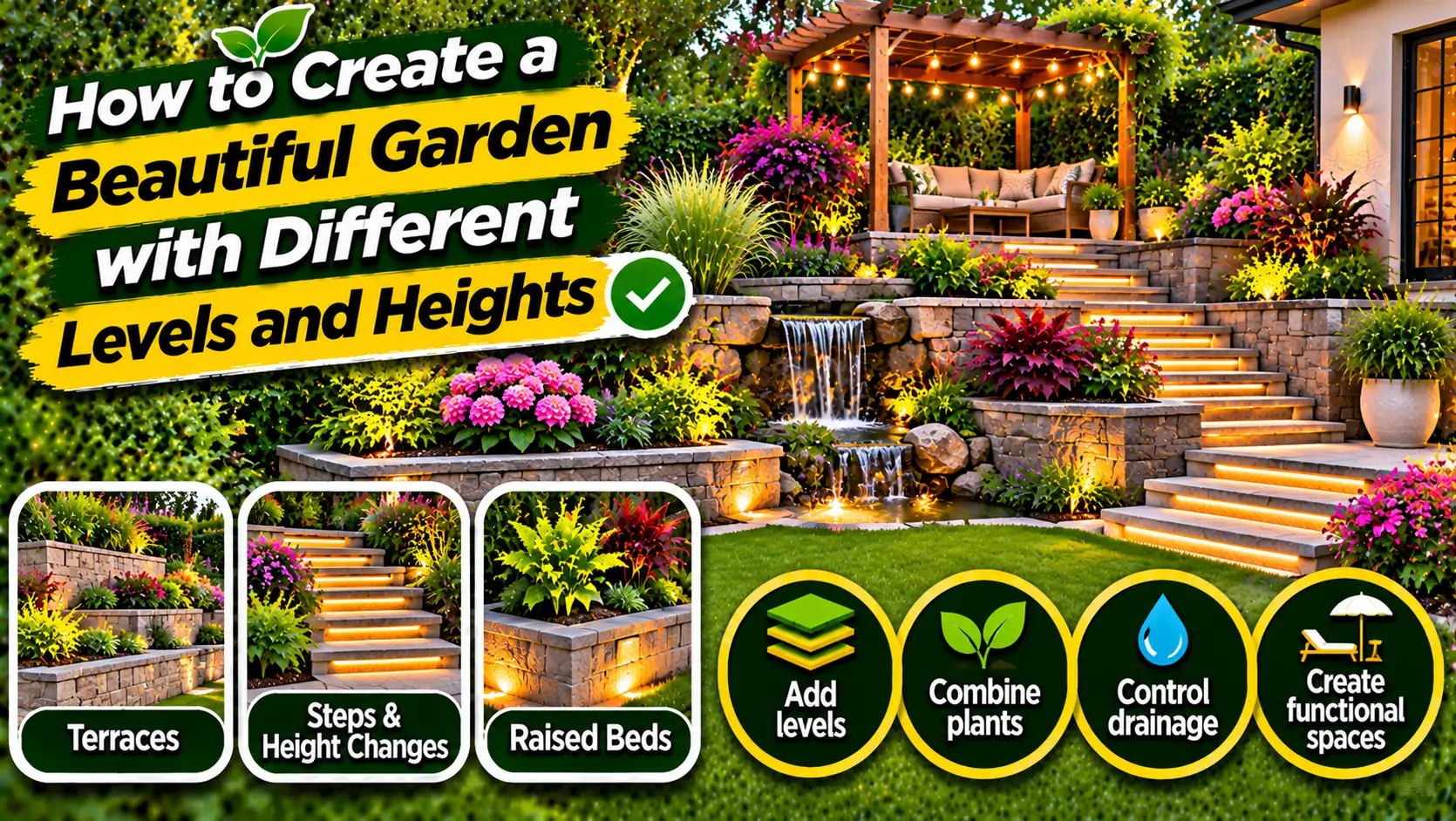
A garden with varied levels and heights can feel more spacious, layered, and visually interesting than a flat arrangement of plants. Differences in elevation may come from natural slopes, retaining structures, raised beds, steps, containers, or the mature height of trees and shrubs. The goal is not to add height everywhere. It is to create a balanced composition that is safe, practical, and appropriate for the site.
Table of Contents
- Read the existing shape of the land
- Use trees and shrubs to establish the upper layer
- Build lower layers with perennials and ground covers
- Create elevation with raised beds and containers
- Terrace a slope carefully
- Use steps and paths to connect the levels
- Balance visual weight and sightlines
- Plan for growth and ongoing care
- Frequently Asked Questions
Read the existing shape of the land
Before changing levels, study the slope, soil, drainage, and movement through the garden. Notice where water flows during heavy rain and whether soil is already eroding. Existing changes in elevation may be useful design features rather than problems to remove. A gentle slope can support a sequence of planting zones or a path that reveals different views.
Mark high and low points and identify places where people need level access. Consider doors, gates, patios, utility areas, and routes used for moving equipment. Any significant excavation or alteration to a slope should be planned carefully because it can affect drainage, neighboring land, and the stability of structures.
Use trees and shrubs to establish the upper layer
Trees provide the tallest layer and can give a garden scale, shade, seasonal interest, and a sense of enclosure. Choose species according to mature height and spread, root behavior, local climate, and the distance from buildings and overhead services. A tree that looks modest in a nursery container may eventually dominate a small garden.
Shrubs form the middle layer and help connect tall trees with lower planting. Evergreen shrubs can provide year-round structure, while deciduous species add seasonal change. Repeat selected shrubs in groups to create rhythm. Avoid placing large shrubs where they will block essential views, reduce access, or require constant pruning to fit the space.
Build lower layers with perennials and ground covers
Perennials, ornamental grasses, and compact flowering plants fill the space beneath shrubs and create a transition toward the ground. Combine different forms: upright flower spikes, rounded mounds, arching grasses, and spreading foliage. Repeating a few plants across the border helps the composition feel connected.
Ground covers can soften the base of taller plants and reduce exposed soil. Select species suited to the light and moisture conditions, and leave room for them to spread. Avoid using vigorous ground covers where they may invade neighboring beds or smother slower-growing plants. A layered bed should remain readable, not become an overcrowded mass.
Create elevation with raised beds and containers
Raised beds can improve access, define planting zones, and create a clear change in level. Their height should suit the people using them and the plants being grown. Deeper beds provide more root space and moisture buffering, while shallow structures limit plant choices. Use durable materials appropriate to the site and ensure the base and retaining structure can hold the soil safely.
Containers add flexible height and can be moved to adjust the composition. Place larger, heavier pots on stable surfaces and avoid creating trip hazards along routes. Group containers in odd or uneven arrangements only when the result feels balanced; vary height and size while repeating materials or colors for cohesion.
Terrace a slope carefully
Terracing divides a slope into more manageable sections, but retaining walls must resist the pressure of soil and water behind them. Wall height, footing, drainage, reinforcement, and material all influence safety. Large or high retaining structures may require engineering advice, permits, or professional construction. Do not assume that stacking landscape blocks without proper preparation is adequate.
Provide drainage behind retaining structures according to the design. Trapped water increases pressure and can contribute to movement or failure. Use steps or a sloped path to connect levels, keeping routes comfortable and safe. If the slope is steep, unstable, or close to a building or boundary, seek qualified local advice before altering it.
Use steps and paths to connect the levels
A multi-level garden should feel easy to navigate. Keep stair risers consistent and provide enough tread depth for secure footing. Choose non-slip materials and consider handrails where the slope or users make them appropriate. For a gentle change in elevation, a winding path or broad ramp may be more comfortable than steps.
Make transitions visible. Contrasting edge materials, low lighting, or changes in paving texture can help people recognize level changes. Keep planting away from the walking surface and avoid loose materials where stability is important. A route should connect useful destinations rather than simply divide the garden into decorative compartments.
Balance visual weight and sightlines
Tall structures and plants carry more visual weight than low ground covers. Distribute them thoughtfully so one side of the garden does not feel overloaded. A tall tree can anchor a corner, while a lower planting bed on the opposite side may preserve an open view. Use repeated vertical forms to create rhythm without making every area compete for attention.
Look at the garden from the house, entrance, patio, and main paths. A layered arrangement should create depth from these viewpoints. Use lower plants near important sightlines and place taller elements where they frame a view or provide useful privacy. In a narrow garden, avoid a continuous wall of tall planting that makes the space feel enclosed.
Plan for growth and ongoing care
Design with mature plant sizes in mind. Young plants leave gaps, but filling every space immediately can lead to overcrowding later. Use temporary containers or annuals to fill selected gaps while permanent plants establish. Keep enough room for air circulation and access for pruning.
Different levels can create different microclimates. Raised beds may dry faster, shaded lower areas may remain moist, and exposed upper terraces may receive stronger wind. Match plants to these conditions and monitor them through the first growing season. Maintain retaining edges, steps, drainage channels, and supports as part of the regular garden routine.
When selecting the middle and upper planting layers, compare mature size, light exposure, soil drainage, and moisture needs; see Penn State Extension’s guidance on choosing shrubs for practical planning considerations.
Final Thoughts
A garden gains depth when its heights are planned as a connected system. Use trees for scale, shrubs for structure, perennials for seasonal layers, and raised beds or terraces only where they improve function. Pay attention to drainage, safe access, mature plant size, and views from key positions. The result can feel rich and varied without becoming difficult to maintain.
Ways to create levels in a garden
| Method | Best use | Planning consideration |
|---|---|---|
| Raised beds | Define planting zones and add height | Ensure stable edges and suitable soil depth |
| Terraces | Manage sloping ground | Plan drainage and safe retaining structures |
| Layered planting | Create depth with plant heights | Check mature size and light requirements |
| Containers | Add flexible height on patios or balconies | Use stable pots with drainage |
| Focal points | Draw the eye to a feature | Avoid cluttering narrow sightlines |
Related Gardening Guides
Explore these related guides for more practical ideas and planning advice:
- How to Landscape a Sloped Garden: Terraces, Planting, and Drainage
- How to Choose Trees and Shrubs for a Balanced Landscape
- How to Design Garden Borders with Color, Texture, and Year-Round Interest
- Vertical Garden Design: How to Use Walls and Fences Effectively
- How to Choose the Right Garden Style for Your Home
Frequently Asked Questions
How can I create height in a small garden?
Use a restrained combination of taller plants, climbing supports, raised containers, and lower ground covers. Keep the tallest elements where they will not block essential light or make paths feel cramped.
Do all sloped gardens need terraces?
No. Gentle slopes may work well with suitable planting and careful drainage. Terraces are useful when level areas are needed, but significant retaining work should be planned around soil conditions, water movement, and structural safety.
How do I choose plants for different garden levels?
Assess sunlight, wind, soil depth, moisture, and exposure at each level. Select plants for those actual conditions, and check their mature size so upper layers do not shade or crowd lower ones unexpectedly.
How do I stop a layered garden from looking cluttered?
Repeat a limited selection of plants and materials, leave clear sightlines, and give each level a distinct purpose. A consistent palette usually feels more connected than many unrelated features.
7 thoughts on “How to Create a Beautiful Garden with Different Levels and Heights”