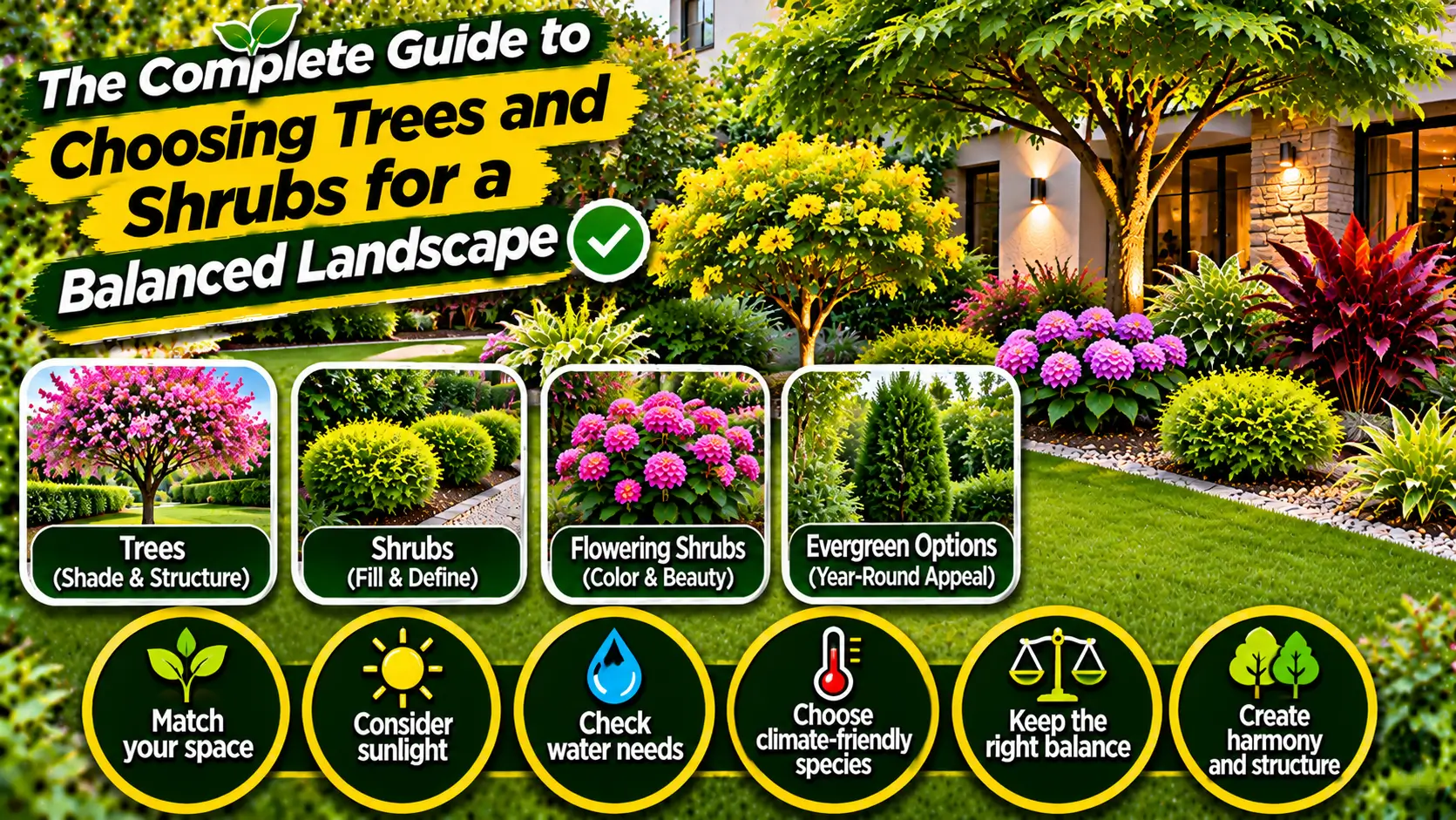
To choose trees and shrubs for a balanced landscape, start by considering your climate, soil conditions, sunlight, available space, and maintenance preferences. Trees and shrubs provide the framework that holds a landscape together. They create shade, privacy, shelter, seasonal interest, and a sense of scale that smaller plants cannot provide on their own. Because woody plants often remain in place for many years, choosing them requires careful planning. The best options are suited to the site, serve a useful purpose, and have enough room to reach their natural size.
Table of Contents
- How to Choose Trees and Shrubs for Your Landscape
- Define the Purpose of Each Woody Plant
- Check Mature Height and Spread
- Match Species to Climate and Exposure
- Evaluate Soil and Drainage
- Use Evergreen and Deciduous Plants Strategically
- Create Layers and Visual Rhythm
- Consider Wildlife, Biodiversity, and Local Ecology
- Plan Planting Distances and Establishment Care
- Account for Long-Term Maintenance and Safety
- Final Thoughts
- A Practical Tree and Shrub Selection Workflow
- A Regional Example
- Questions to Ask at the Nursery
- Related Gardening Guides
- Frequently Asked Questions
How to Choose Trees and Shrubs for Your Landscape
Define the purpose of each woody plant
Start by deciding what the landscape needs. A tree may provide shade for a seating area, frame a view, mark an entrance, or create a focal point. Shrubs may form a screen, define a boundary, soften a wall, attract pollinators, or provide evergreen structure. A clear purpose makes it easier to compare species and avoid buying plants simply because they look attractive in a nursery.
One plant can serve several functions, but not every tree or shrub is suitable for every job. A dense evergreen screen may provide privacy but cast deep shade. A flowering shrub may attract pollinators but offer little winter screening. Identify the most important function and treat other benefits as useful additions.
Check mature height and spread
The size of a young plant is not a reliable guide to the space it will need. Check the expected mature height, canopy width, growth rate, and root characteristics. Allow room for branches to develop without repeated severe pruning. Planting too close to buildings, paths, fences, drains, or overhead cables can create future conflicts and expensive maintenance.
Consider the scale of the whole property. A large-canopy tree can overwhelm a small courtyard, while a tiny ornamental tree may disappear in a broad landscape. Several appropriately sized plants can provide more balanced structure than one oversized specimen. Use reliable local horticultural references because mature dimensions vary with climate, soil, and growing conditions.
Match species to climate and exposure
Temperature range, rainfall, humidity, wind, and seasonal extremes all influence plant performance. Choose species proven to grow in the local climate rather than relying on a hardiness label alone. A hardiness zone describes only part of a plant’s climate tolerance; it does not tell you whether the plant can cope with local rainfall, humidity, soil salinity, or prolonged heat.
Use climate as a first filter, then compare the conditions at the exact planting site. In a hot, dry or seasonally dry region, prioritize locally adapted species that can tolerate the site’s rainfall pattern and soil once established; plan establishment watering rather than assuming a newly planted tree is drought-proof. In hot, humid regions, check drainage, airflow, and known disease problems. In temperate climates, confirm winter hardiness and late-frost sensitivity. Along exposed coasts, investigate salt spray and wind tolerance before choosing broad-leaved evergreens.
Study sun exposure and wind. Some species tolerate full sun but struggle in shade, while others scorch in intense afternoon heat. Exposed sites may need wind-tolerant plants or temporary shelter during establishment. Avoid planting a species that needs cool, moist conditions in a hot, dry position unless the site can realistically provide them.
Evaluate soil and drainage
Soil texture, depth, pH, fertility, and drainage affect root development. Heavy clay can remain wet and compacted, while sandy soil may drain quickly and hold fewer nutrients. Observe the site after rain and check whether water stands for long periods. A tree that dislikes waterlogged roots may fail even when it receives regular care.
Choose plants suited to the soil where possible. Improving a planting area can help, but changing the entire soil profile to support an unsuitable species may be impractical. Avoid placing rich amendments only in a small planting hole if they create a sharp contrast with surrounding soil. Prepare a broad area when appropriate and follow sound local planting guidance.
A simple field check can make the decision more useful: inspect the site after ordinary rainfall, note where water remains, and compare that observation with the plant’s documented moisture needs. For valuable or large plantings, use a laboratory soil test to check pH and nutrient status instead of guessing from leaf symptoms. Penn State Extension recommends matching shrubs to light, exposure, soil composition, and moisture, and warns that poor drainage can deprive roots of oxygen.
Use evergreen and deciduous plants strategically
Evergreen trees and shrubs provide structure throughout the year and can screen views in every season. They are useful near boundaries, entrances, and outdoor seating areas where consistent coverage matters. However, a landscape made entirely of evergreens can feel static. Vary foliage texture, shape, and color, and allow enough space for mature growth.
Deciduous species bring seasonal change through flowers, fruit, autumn color, and winter branch structure. They can provide summer shade while allowing more light through in cooler months. Combine evergreen and deciduous plants according to the desired balance of privacy, light, and seasonal interest. Consider leaf, fruit, and seed litter near paths and patios.
Create layers and visual rhythm
A balanced landscape usually includes more than one height. Larger trees establish the canopy, medium shrubs create the middle layer, and smaller shrubs or perennials soften the foreground. Repeating a few species or forms can connect different areas. Repetition is especially useful along long boundaries or pathways, where it creates a calm rhythm.
Use contrasting shapes selectively. Upright forms can balance spreading shrubs, while fine-textured foliage can stand out against broad leaves. Avoid placing every specimen plant in a separate focal position. Too many unrelated shapes, colors, and flowering periods can make a garden feel disjointed. A consistent palette helps individual plants contribute to the same overall design.
Consider wildlife, biodiversity, and local ecology
Where suitable, choose native or regionally adapted species that support local insects, birds, and other wildlife. Flowers, fruits, seeds, and dense branching can provide food and shelter at different times of year. A mix of species is generally more resilient than a boundary planted entirely with one type of shrub.
Check whether a plant is invasive or restricted in your region before purchasing it. Some ornamental trees and shrubs spread beyond gardens through seeds, suckers, or discarded cuttings. Avoid planting potentially invasive species near natural areas and waterways. Local extension services, botanical gardens, and native plant groups can help identify responsible choices.
Plan planting distances and establishment care
Follow spacing guidance based on the mature spread of each plant, not the size of its nursery pot. Crowding can reduce airflow, increase competition, and create a need for frequent pruning. For a mixed informal planting, a useful planning estimate is to add the expected mature widths of two neighboring plants and divide by two; this gives a starting center-to-center distance, not a universal rule. Adjust it for the species’ growth habit, the desired density, and local nursery or extension recommendations. Hedge spacing is different and should follow advice for the selected species and intended finish.
Water newly planted trees and shrubs consistently while roots establish, adjusting for rainfall, soil, and temperature. Do not rely on a fixed calendar alone: check moisture in the root zone and account for rainfall, soil texture, container-grown versus balled stock, and local heat. Apply mulch over the root zone while keeping it away from direct contact with trunks and stems. Stake only when necessary and use flexible ties that are checked regularly. Prune damaged or crossing branches according to species-specific guidance rather than cutting heavily by default.
Account for long-term maintenance and safety
Some trees produce large roots, heavy branches, fruit, thorns, or abundant litter. Shrubs may need annual pruning or regular renewal. Consider whether the plant will remain manageable near paths, driveways, utilities, and neighboring properties. A species that requires frequent hard pruning to fit its location is usually the wrong choice for that position.
Inspect trees periodically for dead branches, structural defects, disease, and changes after storms. Significant tree work, especially near buildings or power lines, should be handled by qualified professionals. Keep records of species names, planting dates, and care needs so future maintenance can be planned instead of improvised.
Final Thoughts
A balanced landscape begins with trees and shrubs chosen for their mature size, site conditions, and practical role. Combine evergreen and deciduous structure, use layers and repetition, and consider local ecology as well as appearance. Giving woody plants enough space and appropriate establishment care helps create a landscape that becomes more attractive and manageable as it matures.
A practical tree and shrub selection workflow
Before visiting a nursery, write down the job each plant must do and the conditions it will face. The following comparison turns broad design advice into a repeatable selection process. It is a screening tool, not a substitute for checking the mature dimensions and local suitability of a named species.
| Site or design situation | What to prioritize | What to verify before buying |
|---|---|---|
| Hot, seasonally dry garden | Locally adapted species; realistic establishment irrigation; mulch and soil protection | Heat tolerance, mature water demand, root space, and local invasive-species lists |
| Hot, humid garden | Good drainage, airflow, and plants suited to persistent warmth | Susceptibility to fungal or bacterial problems and tolerance of wet-season conditions |
| Temperate garden with cold winters | Winter hardiness, frost timing, and a mix of evergreen and deciduous structure | Hardiness rating, late-frost sensitivity, mature size, and seasonal maintenance |
| Coastal or windy site | Wind-firm structure and species known to tolerate local salt exposure | Salt-spray tolerance, anchorage, exposure, and protection during establishment |
| Small courtyard or narrow boundary | Compact mature dimensions and a clear purpose for every plant | Ultimate height and spread, root behavior, distance from structures, and pruning needs |
A regional example: adapt the plant list, not the selection method
The same selection method works internationally, but the shortlist of suitable species must change by region. For example, a garden in a seasonally dry tropical area should not automatically use the same tree and shrub list as a cool, wet temperate garden. In the tropical example, start with native or well-established regional species documented for the local rainfall pattern, soil, and mature size. In a temperate example, check winter hardiness and frost exposure before considering plants that are popular elsewhere. In both cases, confirm whether a species is invasive or restricted locally; a plant described as native in one country may be non-native in another.
Questions to ask at the nursery
- What are the typical mature height and canopy or shrub width in this region?
- How much direct sun does the species need, and can it tolerate the exposure at my site?
- Does it tolerate the local wet season, dry season, soil type, and water quality?
- Is it native, non-invasive, and permitted in the area where I plan to plant it?
- How much watering and pruning is normally needed during establishment and after maturity?
- Are there known pest, disease, thorn, fruit-drop, or root-space concerns?
For a research-based starting point, compare the plant’s needs with regional extension guidance. Penn State Extension’s shrub-selection guidance discusses light, exposure, soil, and moisture, while its plant-selection resources emphasize mature size and avoiding invasive plants. These are useful decision principles, but the species lists are specific to their region and should not be copied as universal recommendations.
Sources: Penn State Extension: Choosing Shrubs for Your Garden; Penn State Extension: Choosing Plants Wisely; Penn State Extension: Gardening Facts and Fiction.
For additional planting ideas, see our guides to How to Choose Evergreen Shrubs for Year-Round Garden Structure and Best Native Plants for a Resilient, Wildlife-Friendly Garden. For research-based selection advice, consult Penn State Extension’s guide to choosing shrubs for your garden.
Before buying new trees or shrubs, use our seasonal plant-buying checklist to inspect nursery stock and select healthy specimens.
Related Gardening Guides
Explore these related guides for more practical ideas and planning advice:
- How to Create a Beautiful Garden with Different Levels and Heights
- How to Design Garden Borders with Color, Texture, and Year-Round Interest
- Best Native Plants for a Resilient, Wildlife-Friendly Garden
Frequently Asked Questions
How far apart should trees and shrubs be planted?
Use each plant’s expected mature height and spread rather than its nursery size. Check the species’ spacing guidance, allow room for airflow and maintenance, and keep required clearance from buildings, paths, overhead lines, and underground utilities.
Can I plant trees close to my house?
Choose a species whose mature size suits the available space. Consider canopy spread, branches, root characteristics, drainage, foundations, and utility lines, and follow local planting guidance before digging.
Should a balanced landscape include both evergreen and deciduous plants?
Often, yes. Evergreens provide year-round structure, while deciduous trees and shrubs add seasonal change and may allow more winter sunlight through. Match the mix to your climate and the garden’s purpose.
Are native trees and shrubs always the best choice?
Locally native species are often valuable for supporting regional wildlife, but they still need to suit the site’s soil, moisture, light, and available space. Choose plants appropriate to the specific location rather than relying on the native label alone.
7 thoughts on “The Complete Guide to Choosing Trees and Shrubs for a Balanced Landscape”