Define what low maintenance means for you
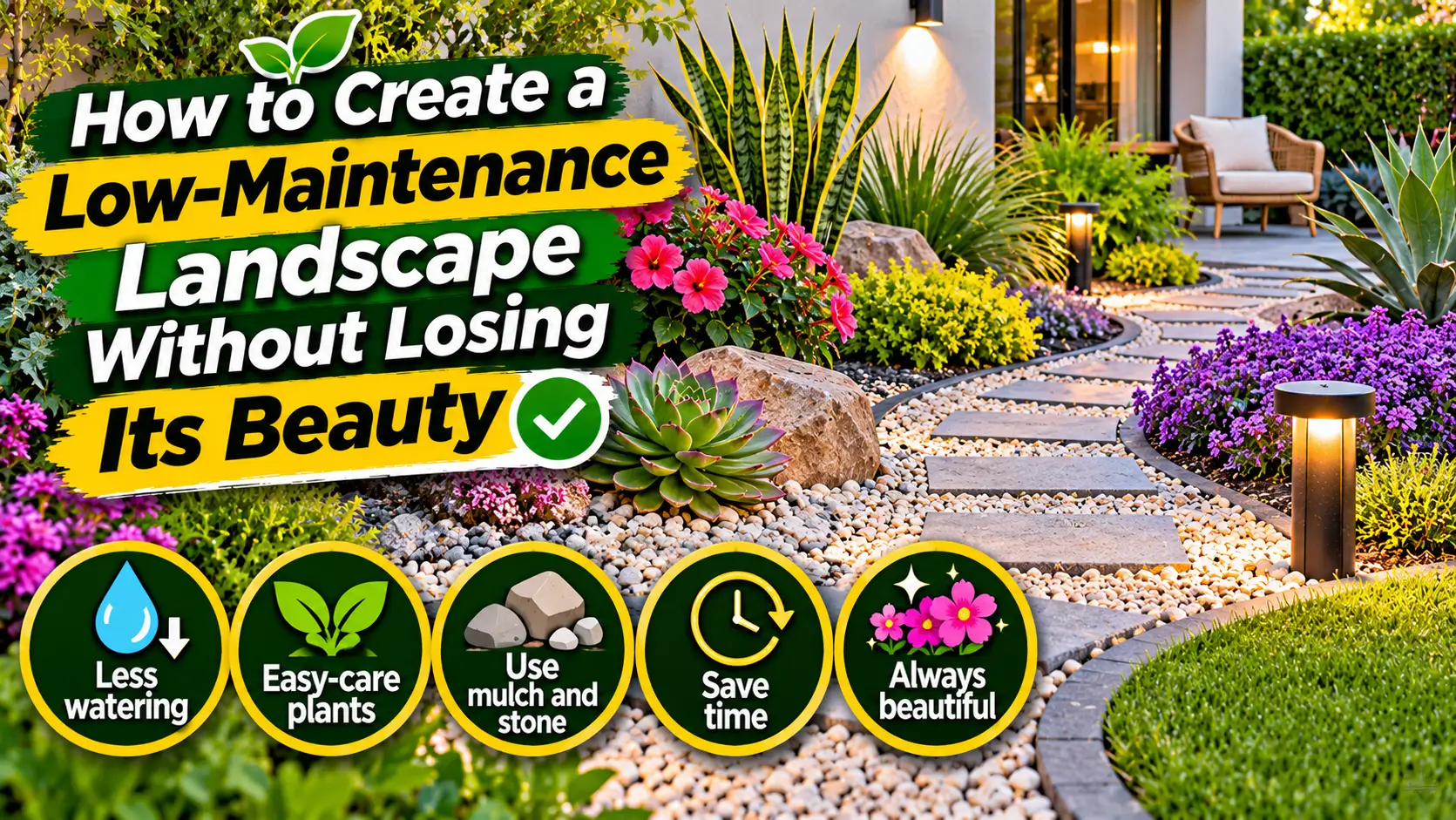
Low maintenance is not the same as maintenance free. Every living landscape needs some attention, but the amount and type of work can be reduced through good design. Decide which tasks you are willing to do regularly and which you want to minimize. Some people enjoy pruning and seasonal planting but dislike mowing; others prefer a neat lawn and simple shrub borders. Your design should reflect these preferences. Consider the size of the property, access to water, local climate, and the time available during busy periods. A realistic maintenance goal is more useful than copying a garden that requires a level of care you cannot sustain.
Table of Contents
- Define what low maintenance means for you
- Choose plants suited to the site
- Reduce unnecessary lawn area
- Use structural planting for year-round form
- Group plants by water requirements
- Design irrigation for efficiency
- Choose durable, accessible materials
- Mulch and manage weeds early
- Plan pruning around natural plant form
- Build a simple seasonal routine
- Frequently Asked Questions
Choose plants suited to the site
The most important plant-selection rule is to match plants to their growing conditions. Consider sunlight, soil texture, drainage, wind, temperature, and available water. A plant that naturally thrives in the site will generally need less intervention than one placed in an unsuitable location. Look for locally adapted species and reliable cultivars with mature sizes appropriate to the space. Native plants can support local wildlife and may be well adapted to regional conditions, although their needs still vary. Ask local nurseries or extension services about plants that perform well in your area. Avoid selecting a plant solely because it looks attractive in a container at the garden center.
Reduce unnecessary lawn area
Lawns can be useful for recreation and open views, but they also require mowing, edging, watering, and sometimes feeding or repair. Keep lawn where it serves a clear purpose and consider replacing awkward strips or unused corners with suitable planting beds, paths, or ground covers. Choose a grass type appropriate to the local climate and intended use. A lawn that receives heavy foot traffic needs a different approach from a purely ornamental area. If you reduce lawn, prepare the replacement area carefully and choose materials or plants that can handle the conditions. Do not replace a lawn with extensive paving unless drainage, heat, and runoff have been considered.
Use structural planting for year-round form
Evergreen shrubs, compact trees, and long-lived perennials can provide a stable framework that does not need frequent replanting. Place structural plants where their mature size fits the space and use them to define entrances, boundaries, and garden rooms. A small number of repeated species can make the landscape feel coherent and simplify pruning. Select plants with manageable growth habits rather than relying on repeated hard cutting to keep vigorous species in place. Consider foliage color and texture as well as flowers, so the garden remains attractive outside peak bloom periods. Structural planting is especially valuable in areas where seasonal displays would require frequent replacement.
Group plants by water requirements
Watering becomes more efficient when plants with similar needs are placed together. Keep moisture-loving plants in areas where soil naturally stays damp, and place drought-tolerant species in well-drained, sunny locations. Avoid mixing plants with very different water requirements in the same irrigation zone. Improve soil structure with suitable organic matter where needed, but do not assume that every plant benefits from the same amendment. Apply mulch to reduce evaporation and moderate soil temperature, keeping it away from direct contact with stems and trunks. Check soil moisture before watering rather than following a rigid schedule that ignores rainfall and seasonal conditions.
Design irrigation for efficiency
A well-planned irrigation system can reduce repetitive work and deliver water where it is needed. Drip lines or soaker hoses can be useful in planted beds because they apply water near the root zone and reduce wet foliage. Sprinklers may be more suitable for some lawn areas, provided they are adjusted to avoid paths and buildings. Divide the system into zones based on plant needs, sun exposure, and soil conditions. Inspect emitters, filters, hoses, and timers periodically for leaks or blockages. Even an automated system needs seasonal adjustment; watering requirements change with temperature, rainfall, plant growth, and dormancy.
Choose durable, accessible materials
Paths, edging, patios, and retaining features should be selected for durability and ease of repair. Materials that shift, collect weeds, or become slippery can create recurring work. Provide stable bases and adequate drainage during installation rather than trying to correct problems later. Use edging to keep lawn and planting areas distinct, but choose a type that can be maintained without specialized equipment. Leave access routes to taps, storage, compost areas, and utility points. A landscape is easier to care for when tools and working areas are convenient and when plants can be reached without stepping into beds.
Mulch and manage weeds early
A suitable mulch layer can reduce evaporation, limit weed germination, and protect soil from temperature extremes. Organic mulches such as shredded bark, leaves, or compost gradually break down and may contribute organic matter. Inorganic materials can be appropriate in some designs but do not improve soil and may increase heat around plants. Apply mulch at a sensible depth and keep it clear of trunks and crowns. Remove perennial weeds before they become established, because mature roots are more difficult to control. A short, regular inspection is usually easier than allowing weeds to spread and then attempting a large cleanup.
Plan pruning around natural plant form
Plants that require frequent clipping can become a significant maintenance burden. Choose shrubs and trees whose natural shape suits the intended location. Prune at the correct time for the species and purpose, using clean, sharp tools. Remove dead, damaged, or crossing growth as needed, but avoid unnecessary repeated cutting that stimulates excessive regrowth. Large trees and work at height may require qualified professionals. If a plant repeatedly outgrows its location, replacing it with a better-sized species may be more practical than constant severe pruning.
Build a simple seasonal routine
A low-maintenance landscape still benefits from a predictable routine. In spring, inspect irrigation, remove winter damage, refresh mulch where needed, and divide or replace plants only when necessary. During summer, monitor soil moisture, check for pests, and remove weeds before they seed. In autumn, clear problem debris, collect leaves where they can be composted, and prepare vulnerable plants for cold weather. In winter, inspect structures and plan any changes for the next growing season. Keep a short garden record so recurring problems can be addressed at their source. The best low-maintenance landscape is one designed around local conditions, sensible plant choices, and a manageable rhythm of care.
A low-maintenance planting plan starts with the conditions already present; soil testing can help avoid unnecessary fertilizer and amendments. See University of Minnesota Extension’s soil-testing guidance for practical guidance.
Low-maintenance landscape choices
| Design choice | Maintenance benefit | Important consideration |
|---|---|---|
| Climate-adapted plants | Less intervention after establishment | Match plants to local rainfall, soil and exposure |
| Mulched beds | Reduces weeds and moisture loss | Keep mulch away from stems and trunks |
| Efficient irrigation | Reduces water waste and manual watering | Inspect emitters and adjust to plant needs |
| Smaller lawn areas | Reduces mowing and irrigation | Keep practical access and use suitable ground covers |
| Grouped plantings | Simplifies care routines | Group plants with similar water and light needs |
Related Gardening Guides
Explore these related guides for more practical ideas and planning advice:
- How to Choose Trees and Shrubs for a Balanced Landscape
- How to Choose the Right Garden Style for Your Home
- How to Create a Vertical Garden: Structures, Plants, and Maintenance
- How to Design Garden Borders with Color, Texture, and Year-Round Interest
- Small Garden Design Ideas That Make Limited Outdoor Spaces Feel Larger
Frequently Asked Questions
What makes a landscape genuinely low maintenance?
A low-maintenance landscape reduces recurring work through suitable plant choices, practical access, durable materials, efficient watering, and a layout that fits the available time. It still needs seasonal inspection and care.
Are native plants always easier to maintain?
Locally adapted native plants can be resilient, but maintenance depends on the species and site. Match each plant to the soil, moisture, light, and available space, and consider its mature size.
Does replacing lawn with gravel reduce maintenance?
It may reduce mowing, but gravel can still need weed control, edging, replenishment, and drainage management. Ground covers or planted areas may be better in some locations.
How can I reduce watering in a garden?
Group plants by water needs, improve soil where appropriate, mulch beds, and use efficient irrigation. Choose drought-tolerant species only where their light, soil, and climate requirements can be met.
4 thoughts on “How to Create a Low-Maintenance Landscape Without Losing Its Beauty”