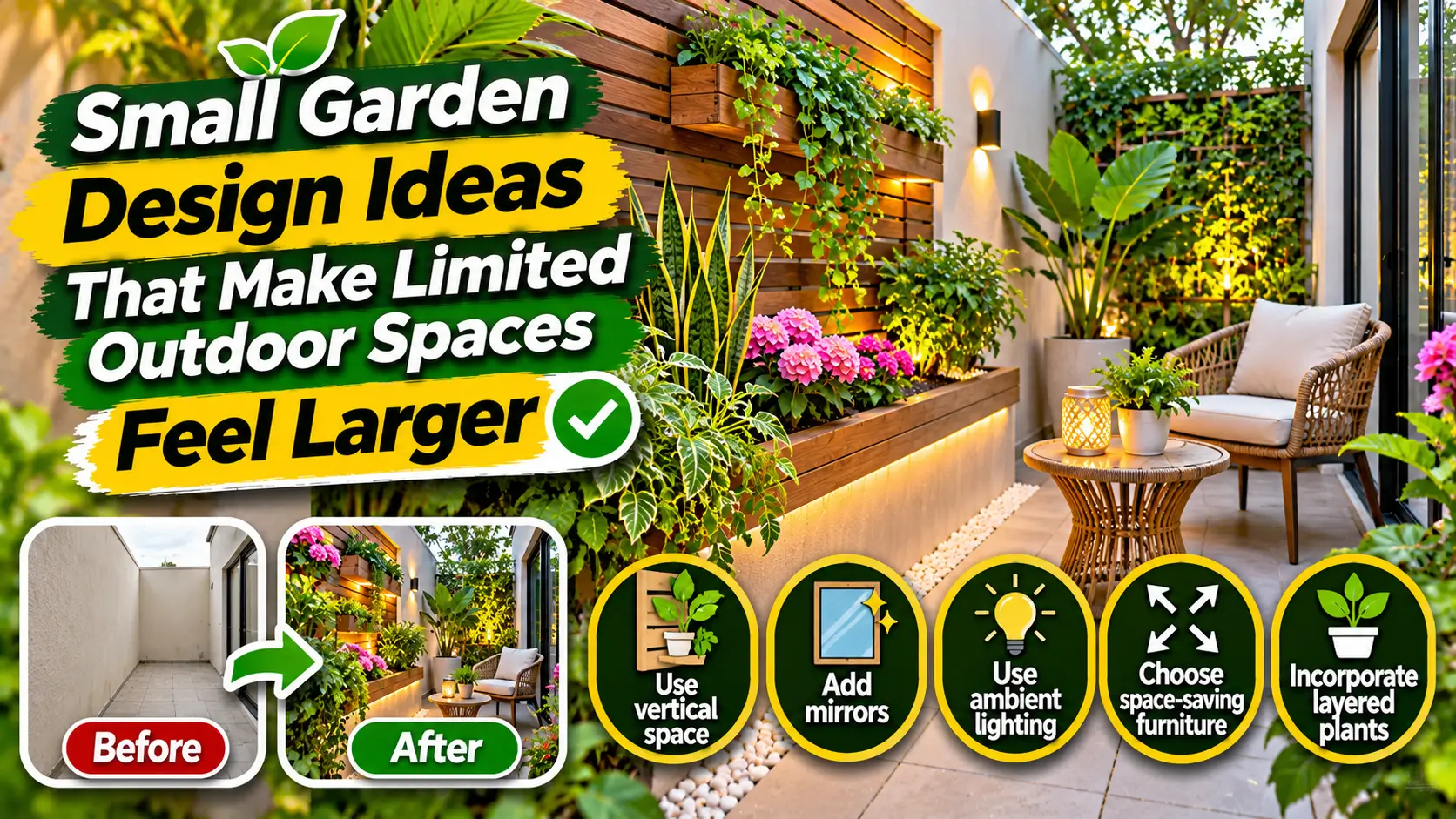
Begin by removing visual clutter
A small garden can feel crowded when too many unrelated objects compete for attention. Start by identifying what is genuinely useful, what is attractive, and what can be removed or stored elsewhere. Keep essential tools in a compact storage unit and avoid scattering small pots across every available surface. A limited number of well-chosen containers usually creates a stronger effect than a large collection of mismatched ones. Keep sightlines open from the entrance toward one attractive feature at the far end. This gives the eye a destination and makes the space feel more deliberate. Clearing clutter does not mean making the garden empty; it means allowing each element enough room to be noticed.
Table of Contents
- Begin by removing visual clutter
- Use a simple layout
- Draw the eye upward
- Choose furniture to fit the space
- Use paving and boundaries strategically
- Select plants for scale and proportion
- Create depth with layers and repetition
- Make containers work harder
- Use light thoughtfully
- Protect flexibility as the garden changes
- Frequently Asked Questions
Use a simple layout
A small outdoor space rarely benefits from a complicated network of paths and tiny planting areas. Choose one main use, such as dining, relaxing, growing herbs, or enjoying ornamental plants, and make that purpose easy to understand. A compact patio with a border along one or two edges may be more useful than several narrow zones that are difficult to furnish. If different activities are essential, separate them through changes in surface, a low planter, or a simple screen rather than solid barriers that divide the garden into cramped compartments. Repeating the same paving or edging material can visually connect the areas and make the garden appear more spacious.
Draw the eye upward
Vertical space is one of the most valuable resources in a small garden. Trellises, wall-mounted planters, climbing plants, narrow obelisks, and tiered shelves can add greenery without taking up much floor area. Choose supports that suit the wall or fence and ensure they are securely fixed. Climbing plants should be selected for their mature size and pruning requirements; vigorous species can quickly cover windows, gutters, or neighboring structures. Vertical planting also creates privacy and softens hard boundaries. Keep the arrangement selective rather than covering every wall, because a little open space helps the garden feel balanced.
Choose furniture to fit the space
Furniture should support the way the garden is used without blocking circulation. Measure the available area before purchasing a table, chairs, bench, or storage seat. Folding chairs, stackable seating, benches with storage, and narrow bistro tables can be useful where space is tight. Rounded furniture may make movement easier in a compact layout, while built-in seating can use awkward corners efficiently. Leave enough room to pull chairs out and walk around them. Lightweight pieces are easy to move when the space needs to be cleared for maintenance or another activity. Comfort matters: furniture that is too small or unstable will not encourage regular use.
Use paving and boundaries strategically
Large paving units with narrow joints can create a calmer appearance than many small, contrasting pieces. Laying paving in a consistent direction may visually lengthen a narrow garden. A simple border between paving and planting helps define the space without introducing too many lines. Pale surfaces can reflect light, but the best choice depends on climate, glare, maintenance, and the style of the property. Fences and walls do not always need to be hidden; painting or staining them in a coordinated color can make them recede visually. Check drainage and surface levels carefully so water does not run toward the house.
Select plants for scale and proportion
Large plants are not automatically unsuitable for small gardens, but their mature size and shape must be considered. A small ornamental tree with a narrow crown may provide more value than several large shrubs that crowd the ground. Choose compact cultivars where appropriate and check the expected height, spread, root behavior, and pruning needs. Use a few structural plants to anchor the design, then add smaller seasonal plants for variety. Avoid planting too densely simply to make the garden look finished immediately. Plants need room to develop, and overcrowding creates extra pruning and can reduce airflow.
Create depth with layers and repetition
A small garden can gain depth when planting is arranged from lower plants near the front to taller forms near boundaries, while keeping important views open. Repeating a few plant varieties along a border creates rhythm and avoids a patchwork effect. Contrasting leaf textures can add interest without relying on many flower colors. Place a distinctive plant or object near the far end to draw attention through the space. If the garden is very narrow, avoid tall, dense planting on both sides because it can create a tunnel effect. One strong planted edge and one more open edge may feel more comfortable.
Make containers work harder
Containers are flexible and allow planting on patios, balconies, and paved courtyards. Use fewer containers with enough volume for healthy roots rather than many tiny pots that dry out quickly. Check that each pot has drainage holes and choose a suitable growing medium for the plants. Group containers with compatible water and light requirements to simplify care. Vary height through plant selection or stable pot stands, but keep the arrangement visually related through repeated materials or colors. Containers can also define an entrance or mark the edge of a seating area without requiring permanent construction.
Use light thoughtfully
Outdoor lighting can make a small garden useful after sunset and highlight its structure. A modest combination of low-level path lighting, a warm light near seating, and a carefully aimed feature light is often enough. Avoid placing bright fixtures at eye level or shining them directly into neighboring windows. Solar lights can be convenient, but performance depends on sunlight exposure and product quality. Choose outdoor-rated fittings and follow electrical safety requirements; permanent wiring should be handled by a qualified professional. Lighting should support movement and atmosphere rather than turning the entire garden into a brightly lit display.
Protect flexibility as the garden changes
Small gardens often need to adapt as household needs change. Keep some elements movable, such as containers, lightweight screens, and freestanding furniture. Avoid filling every corner with permanent structures before living with the layout. Observe how sunlight shifts, where people naturally sit, and which routes are used most often. A simple plan can be improved gradually as you learn what works. Prioritize durable surfaces, healthy soil, and plants suited to the site. With clear organization and careful scale, even a very limited outdoor area can provide a comfortable place to relax, grow plants, and enjoy the seasons.
Repetition, clear focal points, and a restrained mix of materials can help a compact outdoor space feel more open rather than crowded. Explore Penn State Extension’s garden-design principles for practical guidance.
Small garden design solutions
| Solution | How it saves space | Planning caution |
|---|---|---|
| Vertical planting | Uses walls and fences | Check support strength and watering access |
| Compact furniture | Preserves circulation | Measure before purchasing |
| Layered planting | Adds depth without widening beds | Respect mature plant size |
| Mirrors and light surfaces | Can increase perceived brightness | Position safely and avoid intense glare |
| Multi-use zones | Combines seating and growing areas | Keep pathways clear |
Related Gardening Guides
Explore these related guides for more practical ideas and planning advice:
- How to Design a Narrow Garden: Layouts That Make Small Spaces Work
- How to Create a Vertical Garden: Structures, Plants, and Maintenance
- How to Design Garden Paths and Walkways That Are Practical and Beautiful
- Vertical Garden Design: How to Use Walls and Fences Effectively
- How to Design a Garden Layout That Is Both Beautiful and Practical
Frequently Asked Questions
How can I make a very small garden look bigger?
Keep the layout simple, preserve clear routes, use a limited material palette, and create a focal point. Vertical planting and carefully placed mirrors or reflective surfaces may help when used safely and sparingly.
Which plants work best in a small garden?
Choose plants for their mature height and spread, not their current pot size. Compact shrubs, restrained climbers, and well-managed containers can add interest without taking over circulation space.
Should I use large or small paving in a small garden?
Either can work depending on the layout and proportions. Fewer joints may create a calmer look, while smaller units can suit curves and detailed areas. Prioritize a stable, well-drained surface.
How do I add privacy to a small outdoor space?
Use selective screens, trellises, or plants with a suitable mature form. Position them to block direct views without making the space feel enclosed or removing too much daylight.
One thought on “Small Garden Design Ideas That Make Limited Outdoor Spaces Feel Larger”