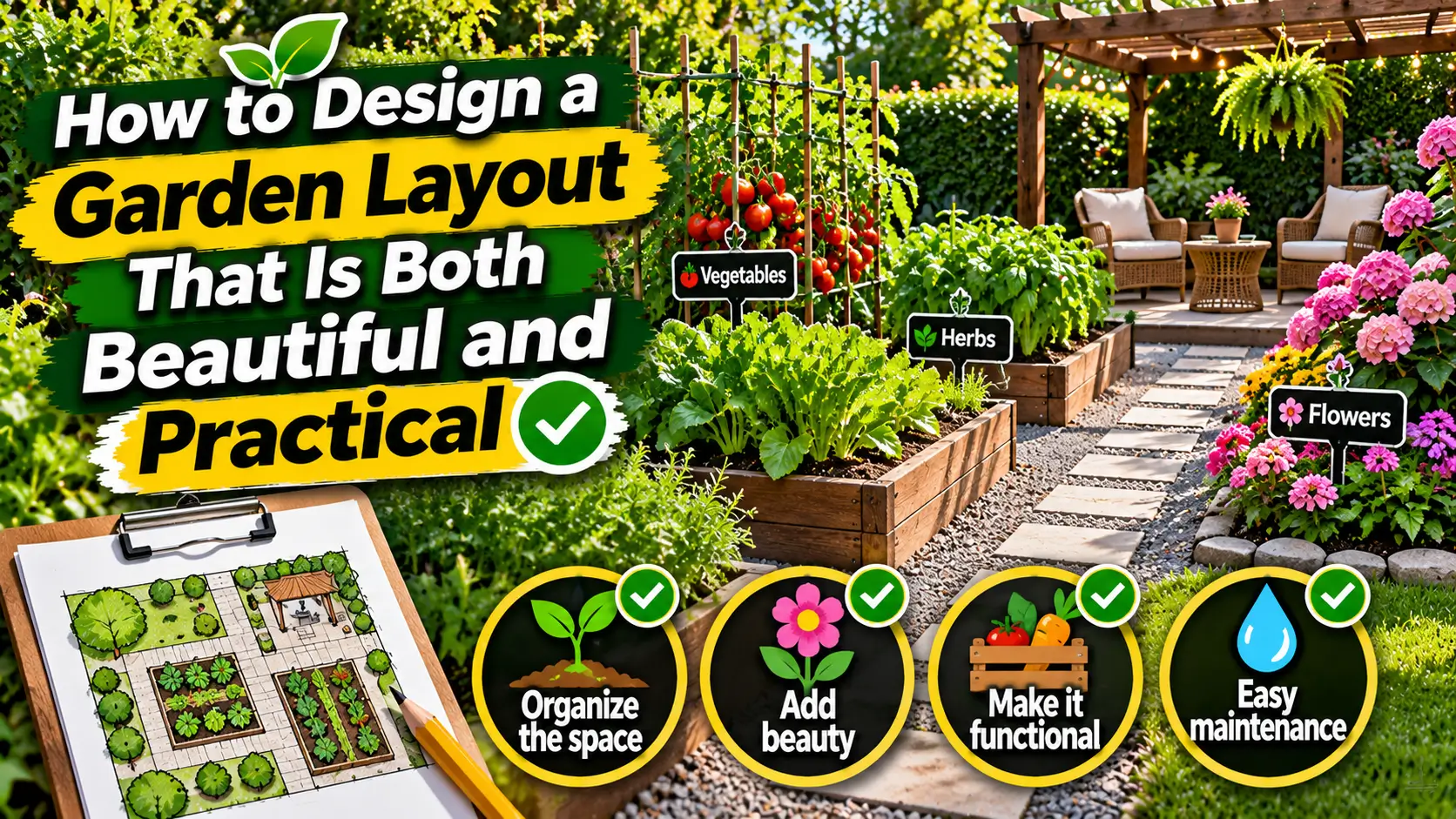
Start with the way you use the space
A successful garden begins with a clear understanding of how the outdoor area needs to function. Before choosing plants or decorative features, consider who uses the garden and what they need from it. A family garden may need open space for play, a quiet seating corner, and a clear route to a shed or washing line. A compact courtyard may work better as an outdoor room with comfortable seating and a few carefully selected containers. A front garden may need an attractive entrance, a visible path, and planting that does not obstruct windows or access. Write down the activities that matter most and rank them. This simple exercise prevents a common design problem: filling the available space with attractive features while leaving too little room for daily life.
Table of Contents
- Start with the way you use the space
- Measure and map the site
- Understand sunlight, shade, and exposure
- Create circulation that feels natural
- Give the garden a clear structure
- Choose focal points with restraint
- Plan planting in layers
- Balance color, texture, and seasonal interest
- Make maintenance part of the design
- Review the plan before buying
- Frequently Asked Questions
Measure and map the site
Measure the boundaries, existing paths, doors, steps, trees, walls, fences, and permanent structures. Draw a simple plan to scale if possible, or use graph paper where each square represents a fixed distance. Mark features that cannot easily be moved, including drains, utility covers, mature trees, and changes in ground level. Record where water collects after rain and where strong winds are most noticeable. A site plan does not need to look professional; its purpose is to make distances and relationships clear. Include the mature spread of existing trees and shrubs rather than drawing only their current size. This helps avoid narrow paths, crowded beds, and plants that eventually overwhelm nearby windows or seating areas.
Understand sunlight, shade, and exposure
Observe the garden at different times of day and, ideally, in more than one season. Note areas that receive direct morning or afternoon sun, bright indirect light, dappled shade, and deep shade. Buildings and evergreen trees can cast shade throughout the year, while deciduous trees allow more light in winter. Also identify exposed corners where wind dries soil and damages tall plants. These observations should guide the placement of patios, vegetable beds, shade structures, and planting groups. Put sun-loving plants where they can receive enough light, and reserve naturally shaded areas for species that tolerate lower light. Designing around the actual conditions usually produces healthier plants and reduces the need for constant replacement.
Create circulation that feels natural
Paths should connect the places people actually need to reach: the entrance, seating, lawn, storage, compost area, and garden gate. The main route should be wide and stable enough for regular use, including carrying tools or a wheelbarrow. Secondary paths can be narrower, but they should remain comfortable to walk on and should not force people through planting beds. Curved paths can create a sense of discovery in a larger garden, while straight paths often suit formal or compact spaces. Avoid curves that serve no purpose or make the route unnecessarily long. Choose a surface that fits the garden’s character and local conditions, and provide a firm base and suitable drainage so the path remains safe in wet weather.
Give the garden a clear structure
A garden feels coherent when its main shapes and boundaries are easy to understand. Structure can come from a lawn, patio, raised beds, hedges, retaining walls, fences, or repeated planting borders. Decide which elements should dominate and keep the number of competing shapes manageable. In a small garden, a simple rectangle or a few strong lines can make the space feel larger and calmer. In a broad garden, separate areas can create useful rooms without making the whole space feel disconnected. Repeat materials, colors, or plant forms in different parts of the garden to create visual continuity. Repetition is often more effective than adding a new feature every few metres.
Choose focal points with restraint
A focal point gives the eye somewhere to rest and helps organize a view. It might be a specimen tree, a sculpture, a water bowl, a distinctive planter, a bench, or an attractive doorway. Place it where it can be appreciated from a path, window, or seating area. A focal point should be visible without competing with every other feature. If the garden is small, one strong feature may be enough. Larger gardens can support several focal points, but they should be revealed in sequence rather than all at once. Use planting, a change in paving, or a framed opening to guide attention toward the feature. Make sure decorative objects are durable and suited to outdoor exposure.
Plan planting in layers
Layered planting creates depth and makes borders look intentional. Start with the largest elements: trees, tall shrubs, screens, and structural evergreen plants. Add medium-height shrubs and perennials, then use low-growing plants and ground covers near the front of beds. Consider mature height and spread, not just the size of plants in nursery pots. Leave enough room for air circulation and maintenance access. Combine different leaf shapes and textures so the garden remains interesting when flowers are not in bloom. Repeating a limited palette of plant varieties usually creates a more settled appearance than using many unrelated species. Include plants suited to the soil, climate, exposure, and available water.
Balance color, texture, and seasonal interest
Color can make a garden lively, restful, formal, or playful. Choose a broad palette before buying plants. For a calm effect, use greens with a small number of flower colors. For a more energetic design, combine complementary colors but repeat them across the space. Foliage matters as much as flowers: silver leaves, fine grasses, broad leaves, and dark evergreen forms provide contrast over a long season. Plan for a sequence of interest, including spring growth, summer flowers, autumn foliage, seed heads, and winter structure. Evergreen plants, ornamental grasses, berries, and persistent stems can prevent borders from looking empty in colder months. A seasonal plan also helps spread maintenance tasks throughout the year.
Make maintenance part of the design
A garden that looks attractive only when it receives constant attention may not be practical for its owners. Be realistic about the time available for watering, pruning, mowing, weeding, and seasonal cleanup. Group plants with similar water needs, use mulch where appropriate, and keep access to taps and storage convenient. Avoid placing thorny shrubs beside narrow paths or high-maintenance plants where they are difficult to reach. Allow enough space behind borders for pruning and inspection. If lawn care is not a priority, reduce lawn area and use suitable ground covers, paving, or planted beds instead. Low maintenance does not mean no maintenance; it means choosing a design whose routine work is manageable.
Review the plan before buying
Walk through the proposed layout in your mind and check whether doors can open, paths are wide enough, seating receives suitable sun or shade, and plants have room to mature. Consider views from inside the house as well as from the garden. Check whether water can drain away from buildings and whether retaining structures need professional advice. Divide the project into stages if the budget is limited. It is often better to complete the basic structure well than to buy many plants before paths, soil preparation, and boundaries are ready. Keep a record of plant names, planting dates, and design decisions. A thoughtful plan gives the garden a clear identity while leaving room for changes as plants grow and needs evolve.
Use balance, repetition, scale, and focal points to connect practical circulation with an attractive planting plan; Penn State Extension explains these principles in Penn State Extension’s guide to garden-design principles for practical guidance.
Garden layout planning checklist
| Planning factor | Questions to answer | Design outcome |
|---|---|---|
| Sunlight | Where are full sun and shade throughout the day? | Place plants where their light needs can be met |
| Movement | How will people enter and cross the garden? | Create clear, practical paths |
| Water and drainage | Where does water collect or flow? | Reduce waterlogging and runoff problems |
| Plant size | What are mature heights and widths? | Prevent crowding and repeated pruning |
| Use and maintenance | How will the space be used and cared for? | Make the layout functional and manageable |
Related Gardening Guides
Explore these related guides for more practical ideas and planning advice:
- How to Choose the Right Garden Style for Your Home
- How to Create a Beautiful Garden with Different Levels and Heights
- How to Design Garden Paths and Walkways That Are Practical and Beautiful
- How to Design Garden Borders with Color, Texture, and Year-Round Interest
- How to Plan a Garden Patio and Outdoor Seating Area
Frequently Asked Questions
Where should I start when planning a garden layout?
Begin by measuring the site and noting doors, paths, utilities, existing trees, sunlight, drainage, and views. Then decide how the space needs to function before selecting materials or plants.
How do I divide a garden into useful zones?
Group activities such as seating, growing, play, and storage according to access, light, and privacy. Use paths, planting, or changes in surface to define zones without making movement awkward.
Should I plan the planting before the paths?
Plan them together. Routes determine access and circulation, while mature planting affects width, shade, and visibility. Allow enough room for plants to grow without obstructing paths.
How often should I review a garden layout?
Review it as plants mature and household needs change. Small adjustments to planting, storage, or seating can improve function without requiring a complete redesign.
3 thoughts on “How to Design a Garden Layout That Is Both Beautiful and Practical”