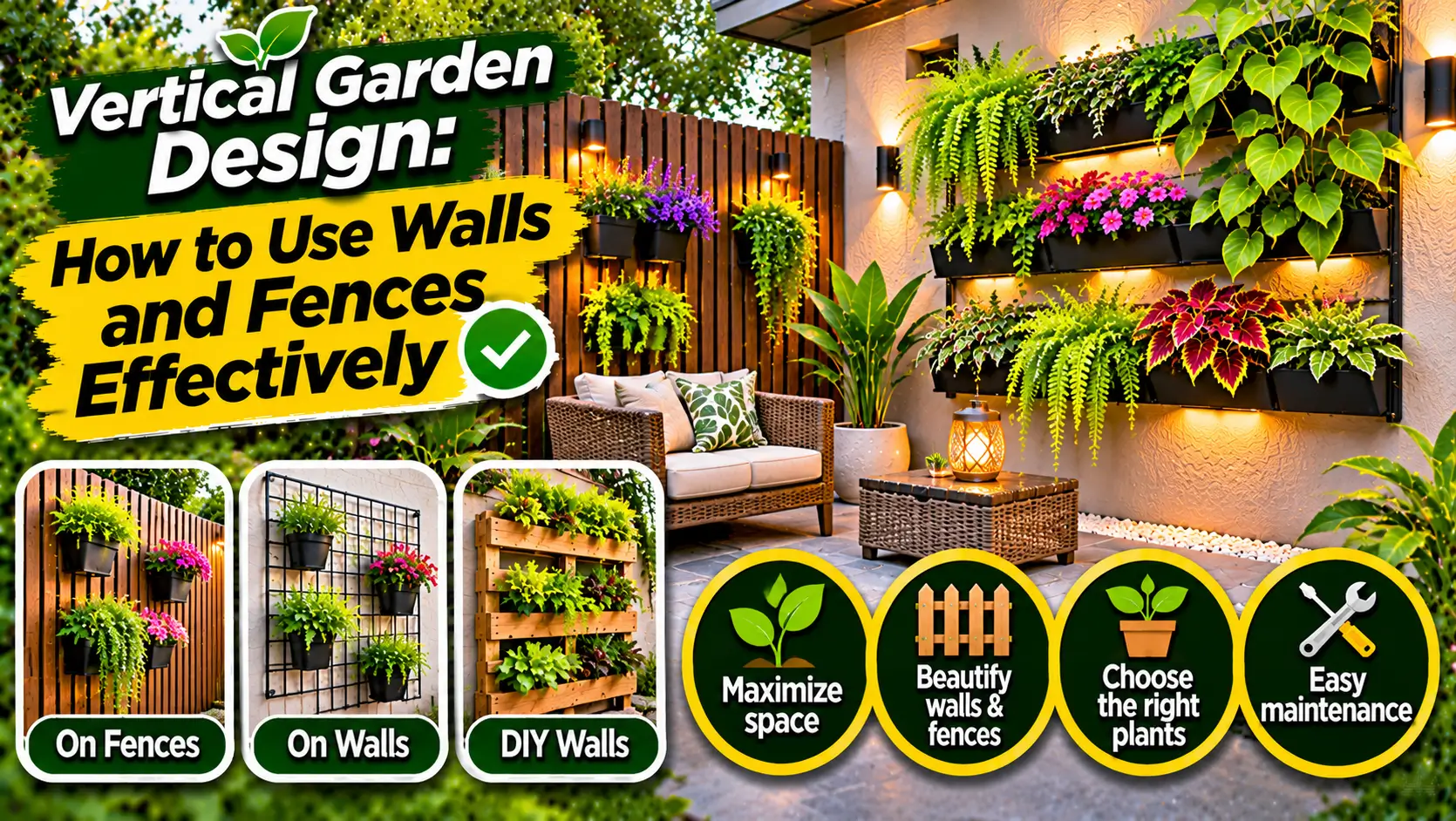
Vertical gardening makes use of surfaces that are often overlooked: walls, fences, screens, pergolas, and freestanding supports. It can bring greenery into courtyards, balconies, narrow side yards, and compact gardens where ground space is limited. A successful vertical garden is not simply a collection of pots attached to a wall. It needs a suitable structure, appropriate plants, reliable water management, and safe access for maintenance.
Table of Contents
- Assess the wall or support before planting
- Understand light, wind, and exposure
- Choose a suitable vertical system
- Select plants for the conditions
- Plan irrigation and drainage
- Use containers and growing media wisely
- Create a balanced composition
- Maintain access and plant health
- Map the wall before choosing a layout
- Choose a composition that fits the space
- Adapt the design to regional conditions
- Review a wall design before installation
- Frequently Asked Questions
Assess the wall or support before planting
Check what the surface is made from, how strong it is, and whether it can safely support the combined weight of containers, growing medium, plants, and water. A saturated planter can be much heavier than it appears when dry. Do not attach a heavy system to weak cladding, damaged masonry, or a fence that is not designed to carry additional loads.
Look for signs of moisture damage, cracks, rot, or loose fixings. Keep planting systems clear of vents, electrical equipment, access panels, and building features that must remain unobstructed. If the structure or load capacity is uncertain, consult a qualified installer before attaching anything.
Understand light, wind, and exposure
Light levels can change dramatically from the bottom to the top of a wall. A high position may receive more direct sun and wind, while lower pockets may stay shaded and humid. Observe the surface at different times of day and through the seasons. Select plants according to the actual conditions at their planting position rather than treating the whole wall as one environment.
Wind can dry containers quickly and place stress on stems and fixings. Exposed balconies and roof terraces may need robust supports and compact plants. A sheltered courtyard may support more delicate foliage, but restricted airflow can increase disease risk. Group plants with similar light and moisture requirements so that care remains manageable.
Choose a suitable vertical system
A trellis is a simple option for climbing plants and can be fixed to a suitable support with an appropriate gap for airflow. Freestanding screens can divide a garden while carrying climbers, and they can be moved or replaced more easily than permanent wall installations. Wire systems are useful for training vines when properly tensioned and anchored.
Wall-mounted pots and modular pockets provide planting in small sections. They are flexible but require careful attention to weight, drainage, and watering. Larger troughs at ground level with a trellis above may be easier to maintain than many small containers. Living-wall panels can create dense coverage, but their irrigation, drainage, and maintenance requirements are more demanding. Choose a system you can reach and service safely.
Select plants for the conditions
Climbing plants are natural choices for vertical structures. Depending on climate and support, options may include clematis, climbing roses, jasmine, honeysuckle, or other locally suitable vines. Some climbers attach themselves to surfaces, while others need ties or a trellis. Research mature size and growth habit before planting; vigorous species can overwhelm small supports or damage unsuitable surfaces.
Compact herbs, leafy plants, ferns, and trailing species can work in containers and pockets where their light and water needs are met. Succulents may suit sunny, well-drained installations but can struggle in humid, shaded locations. Edible vertical gardens can include herbs and compact vegetables, provided containers have enough root volume and receive adequate light. Prefer non-invasive species and check local restrictions for potentially aggressive climbers.
Plan irrigation and drainage
Vertical containers often dry faster than ground beds because they have limited soil volume and may be exposed to sun and wind. A reliable watering routine is essential. Hand watering can work for a small installation, but multiple tiers may be easier to manage with a properly designed drip system. Check that water reaches every level and that emitters do not clog.
Excess water must drain safely without staining walls, damaging timber, or creating slippery surfaces below. Use containers with drainage holes and a suitable growing medium. Collect or direct runoff where appropriate, and never allow water to enter building cavities. Inspect irrigation connections regularly, especially before periods of hot weather or when the system has been unused.
Use containers and growing media wisely
Select containers with enough depth and volume for the mature root system. Very small pockets can restrict growth and demand frequent watering. Lightweight containers may reduce structural load, but they still need to be secure and weather-resistant. Ensure every pot is fixed according to its design and cannot fall if a support shifts.
Use a growing medium suited to the plants and container system. Ordinary garden soil can be too heavy and may compact in small planters. A quality container mix usually provides a better balance of drainage, air, and moisture retention. Refresh or replace depleted media when plants become root-bound or growth declines.
Create a balanced composition
A vertical garden can look chaotic if every pocket contains a different plant. Repeat a few species or foliage colors to establish rhythm. Combine upright, mounding, and trailing forms, but leave enough space for mature growth. A restrained palette often makes a small wall feel calmer and more intentional.
Consider the wall as part of the wider garden. Repeat colors from nearby borders, furniture, or containers to connect the vertical planting with the ground plane. A trellis can become a focal point, a privacy screen, or a backdrop for a seating area. Avoid covering every available surface if an open section would provide useful visual breathing room.
Maintain access and plant health
Design the installation so that pruning, feeding, replacing plants, and checking fixings are practical. Do not position high-maintenance plants where they can only be reached by unsafe climbing. Use stable steps or appropriate access equipment when necessary, and seek professional help for tall or complex systems.
Inspect supports, screws, brackets, ties, and irrigation lines on a regular schedule. Remove dead leaves, check for pests, and prune plants before they become too heavy or block neighboring growth. Watch for uneven watering: wilting at the top or waterlogged pockets at the bottom may indicate that the system needs adjustment.
For additional examples of trellises and ways to use vertical space, consult Utah State University Extension’s overview of vertical gardening for practical planning considerations.
Final Thoughts
Vertical gardening can transform unused walls and fences into productive, attractive parts of the landscape. Begin with a safe support, study exposure, choose plants for each position, and plan watering and drainage from the start. A simple system that is easy to reach and maintain will usually perform better than an elaborate installation that cannot be serviced.
Vertical garden systems compared
| System | Suitable use | Key consideration |
|---|---|---|
| Trellis | Climbing plants on walls or fences | Secure firmly and allow plant access |
| Wall-mounted pockets | Small herbs and ornamentals | Monitor moisture and irrigation closely |
| Modular panels | Structured living walls | Check load, drainage and maintenance access |
| Freestanding screens | Dividing spaces or adding privacy | Anchor against wind and plant weight |
Map the wall before choosing a layout
Make a simple elevation sketch of the wall or fence before selecting plants. Mark doors, windows, vents, taps, electrical fittings, drainage outlets, and areas that must remain accessible. Divide the remaining surface into planting zones and record the light and wind conditions in each zone at different times of day. A wall that receives morning sun at its upper edge may remain shaded near the ground; one uniform plant list may therefore be unsuitable for the entire surface.
Choose a composition that fits the space
Choose the visual structure before filling the wall with individual plants. Repeating a small number of compatible species can create a calm, legible pattern; a mixed composition can provide more texture but requires closer attention to different growth rates and water needs. Use mature plant width and height, not the size of nursery pots, to estimate the space each plant will occupy. Leave room to reach irrigation lines, remove dead foliage, and replace a failed plant without dismantling neighboring sections.
| Design goal | Layout approach | What to check |
|---|---|---|
| Green privacy screen | Climbers trained along a trellis or cable system | Mature spread, support capacity, and time needed to cover the surface |
| Decorative focal wall | Repeated modules or a controlled pattern of foliage and flowers | Consistent light, irrigation coverage, and replacement access |
| Edible vertical display | Accessible containers grouped by similar water needs | Root depth, crop suitability, safe growing media, and harvest access |
| Low-maintenance green edge | Ground-level planters with a simple support | Local climate suitability and manageable pruning requirements |
Adapt the design to regional conditions
In hot, sunny locations, prioritize species that tolerate the measured exposure and choose containers that do not overheat easily. In humid or rainy locations, give greater attention to airflow, drainage, and the risk of persistently wet foliage or wall surfaces. In windy coastal or elevated settings, use a support system designed for the exposure and avoid assuming that a lightweight screen will remain stable. In cool or frost-prone climates, consider how small containers expose roots to temperature changes. These are planning principles, not universal plant lists: confirm species suitability with a regional extension service or local horticultural authority.
Review a wall design before installation
- Can the structure safely carry the saturated system and withstand the site’s wind exposure?
- Does the design protect the building surface and direct excess water safely?
- Are plants grouped by compatible light and moisture requirements?
- Will mature growth leave access to windows, vents, services, and maintenance points?
- Can each plant be watered, pruned, inspected, and replaced from a safe position?
- Is there a realistic plan for irrigation checks during heat, rainfall, and periods away from home?
For design decisions, compare the different forms of vertical greening rather than treating every planted wall as the same system. The academic review Vertical Greening Systems: A Critical Comparison of Do-It-Yourself Designs describes differences in structure, irrigation, plant choice, and maintenance across common approaches. Kansas State University Extension also recommends matching container size, plant needs, wind exposure, and support strength.
Further reading: Kansas State University Extension: Designing a Vertical Garden.
Related Gardening Guides
Explore these related guides for more practical ideas and planning advice:
- How to Create a Vertical Garden: Structures, Plants, and Maintenance
- Best Climbing Plants for Trellises, Fences, and Vertical Gardens
- How to Design a Narrow Garden: Layouts That Make Small Spaces Work
- How to Create a Beautiful Garden with Different Levels and Heights
- How to Landscape a Sloped Garden: Terraces, Planting, and Drainage
Frequently Asked Questions
What should I check before attaching a vertical garden to a wall?
Confirm that the wall and fixings can support the system when fully saturated and planted. Check waterproofing, access for maintenance, wind exposure, and where excess water will drain.
How often does a vertical garden need watering?
There is no universal schedule. Container size, plant species, weather, sun, and system design all affect drying time. Check moisture at different heights and use irrigation that can be adjusted to the plants’ needs.
Which plants work best in a vertical garden?
Choose plants according to the wall’s light, wind, temperature, and available root volume. Compact species with compatible water needs are easier to manage together than plants with very different requirements.
How can I prevent a vertical garden from damaging a wall?
Use a suitable support system, protect the wall with an appropriate waterproof layer, and direct drainage away from the building. Inspect fixings and moisture regularly, especially after heavy rain.
3 thoughts on “Vertical Garden Design: How to Use Walls and Fences Effectively”