Decide what a vertical garden should achieve
Vertical gardening uses walls, trellises, fences, towers, and other supports to grow plants upward rather than spreading across the ground. It can make a small patio more productive, soften a blank wall, provide privacy, or create a decorative feature. Before choosing a system, decide whether the priority is flowers, foliage, herbs, vegetables, screening, or a mixture. The purpose determines the structure, plant selection, water supply, and amount of care required.Measure the available area and observe its conditions. Record how many hours of direct sunlight it receives, whether wind is strong, and whether the wall is exposed to reflected heat. Check access to water and whether maintenance can be performed safely. A vertical garden may look compact, but it can require frequent watering and pruning because containers have limited soil volume. Planning for access from the beginning makes the difference between a thriving feature and a difficult installation.
Table of Contents
- Decide what a vertical garden should achieve
- Choose a system that matches the wall and plants
- Select plants for light and growing conditions
- Prepare the structure and growing medium
- Install irrigation that is easy to monitor
- Plant in a way that supports healthy growth
- Provide nutrients without overfeeding
- Prune, inspect, and manage pests
- Prepare for weather and seasonal changes
- Keep the design practical over time
- Choose a vertical garden system by scale and risk
- Run a pre-installation safety check
- Frequently Asked Questions
Choose a system that matches the wall and plants
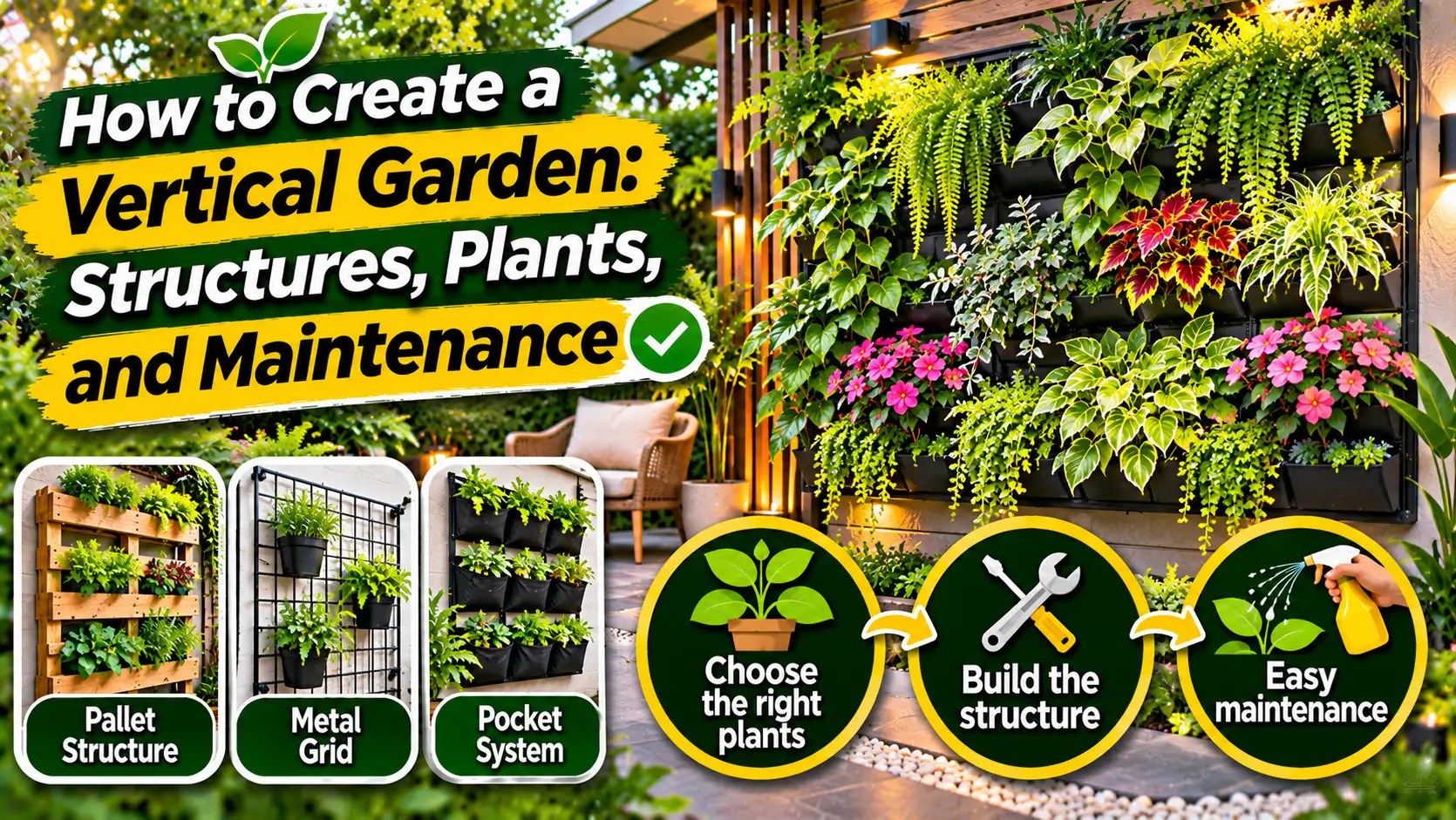
Simple systems include freestanding trellises, wire grids, wall-mounted planters, hanging containers, modular pockets, and freestanding vertical towers. A trellis is often suitable for climbing plants and can be installed with a gap that allows air to circulate behind it. Wall-mounted containers provide flexibility for herbs and ornamentals, while modular systems can create a larger planted surface. Towers may work well for compact crops where space is limited.Consider the total weight when the system is wet. Soil, water, mature plants, and the structure itself can be much heavier than expected. Confirm that the wall or fence can support the load and use fixings appropriate for the material. Do not attach a heavy system to weak cladding or an unstable fence. For large installations, consult a qualified installer or building professional. A freestanding structure may be safer where the wall cannot carry the weight or where access for maintenance is limited.
Select plants for light and growing conditions
Plant choice should follow the conditions, not the appearance of a photograph or product display. A sunny wall may suit compact herbs, strawberries, succulents, or flowering annuals, depending on climate and container depth. A shaded wall may be better for ferns and shade-tolerant foliage plants. Some climbing plants need substantial root space and a strong support, while compact varieties can grow successfully in smaller containers.Check mature size, root behavior, water requirements, and seasonal performance. Plants placed near the top of a vertical system may dry faster than those below, while lower pockets may receive extra runoff. Group plants with similar needs where possible. Avoid mixing a drought-tolerant plant with one that requires consistently moist soil in the same irrigation zone. If growing edible crops, select varieties suited to containers and follow safe practices for water, growing media, and harvesting.
Prepare the structure and growing medium
A vertical garden needs a secure frame and a growing medium that retains enough moisture while allowing excess water to drain. Ordinary garden soil is often too heavy for wall-mounted containers and may compact in a small pocket. A quality container mix designed for the plants being grown is generally more suitable. The exact blend depends on the system, climate, and crop; some installations need additional structure or moisture-retaining components.Provide drainage holes and a way to collect or direct runoff. Water dripping onto a walkway, wall, or lower neighbor’s property can create problems. Protect vulnerable building materials from persistent moisture and follow the system manufacturer’s installation guidance. Leave space for airflow and access to inspect fixings. Before planting, test the structure with water and check for leaks, blocked outlets, and uneven drainage. Correct these issues before roots fill the containers.
Install irrigation that is easy to monitor
Vertical gardens can dry out quickly because containers hold relatively little growing medium and exposed positions may receive sun and wind. Hand watering is possible for a small arrangement, but larger systems often benefit from drip lines or a controlled irrigation system. Deliver water slowly enough for the growing medium to absorb it rather than allowing it to run straight through.Different levels may need different amounts of water. Upper containers can dry faster, while lower ones may collect drainage from above. Use adjustable emitters or separate zones where practical. Check the system regularly for clogged outlets, leaks, and uneven flow. An automatic timer can reduce routine work, but it should not replace observation: seasonal temperatures and plant growth change water needs. Monitor moisture in the root zone and adjust the schedule rather than watering solely by the calendar.
Plant in a way that supports healthy growth
Arrange plants according to their mature size and growth habit. Put trailing plants where their stems can hang without blocking access, and place upright plants where they will not shade smaller neighbors excessively. Climbers need a clear route to their support and may need gentle tying while young. Avoid overcrowding simply to create an instant full appearance; plants need room for air movement and root development.Water plants before installation if the root balls are dry, and handle them carefully to avoid damaging stems and roots. Set each plant at an appropriate depth and firm the growing medium gently around it. Water thoroughly after planting and allow excess water to drain. For a modular wall, plant in stages if the system is large, checking each section for stability and water distribution before moving on. Keep labels or a simple planting map so that future care is easier.
Provide nutrients without overfeeding
Frequent watering can wash nutrients out of small containers, so vertical gardens may need more regular feeding than plants growing in open ground. However, applying fertilizer too often or at excessive strength can damage roots and create nutrient-rich runoff. Begin with the recommendations for the growing medium and plant species. Use a fertilizer suitable for the intended plants and follow label directions carefully.Observe plant growth for clues. Pale leaves, weak growth, or poor flowering can have several causes, including unsuitable light, root problems, pests, or nutrient imbalance. Do not assume every symptom requires fertilizer. Check moisture, drainage, and root health first. For edible plants, use products labeled for food crops and observe any harvest intervals or other instructions. A measured feeding routine is more reliable than repeated applications made in response to every change in leaf color.
Prune, inspect, and manage pests
Vertical arrangements can become dense quickly. Remove dead leaves, trim plants that block neighboring pockets, and guide climbers along their supports. Pruning improves appearance and can increase airflow, but the correct timing and method depend on the species. Avoid cutting flowering stems without checking whether the plant blooms on old or new growth.Inspect both upper and lower surfaces of leaves for pests. Aphids, whiteflies, spider mites, and mealybugs can spread through closely spaced plants. Isolate affected containers where possible, identify the pest, and use an appropriate integrated management approach. Avoid applying pesticides without checking the label, plant sensitivity, and whether edible crops or pollinators may be affected. Regular inspection is easier than treating a large infestation after it has spread throughout the structure.
Prepare for weather and seasonal changes
A vertical garden is exposed to conditions that may differ from the ground below. Wind can dry foliage and stress fixings, while intense sun can heat containers. Frost can damage roots in small pockets more quickly than roots in the soil. Select plants suited to local conditions and consider seasonal protection where necessary. In cold areas, move portable containers to shelter or protect vulnerable roots according to the plant’s needs.Check the structure after storms and strong winds. Tighten or repair loose components and remove damaged stems. In hot weather, monitor moisture more frequently and consider temporary shade for sensitive plants. In rainy periods, ensure drainage remains open and that the wall is not staying wet. Seasonal adjustments help prevent the common problem of choosing plants for ideal conditions without accounting for the extremes they will experience.
Keep the design practical over time
The most successful vertical gardens are designed around realistic maintenance. Make sure every pocket can be reached for watering, pruning, and replacement. Keep spare growing medium and a few compatible plants available for repairs. Replace plants that repeatedly fail rather than continually increasing water or fertilizer in an unsuitable location.Start with a small section if you are unsure how the site will perform. Observe it through hot, wet, and cool periods before expanding. A modest, healthy vertical garden is usually more attractive than a large installation with stressed plants and uneven growth. With a suitable support, thoughtful plant selection, reliable drainage, and regular inspection, vertical gardening can add useful greenery and character without taking over valuable floor space.
Trellises and other supports can make unused surfaces productive, provided the structure and plants suit the location; see Utah State University Extension’s vertical-gardening guide for practical planning considerations.
Vertical garden structures compared
| Structure | Suitable plants | Maintenance needs |
|---|---|---|
| Trellis | Climbers and vining vegetables | Train growth and check fixings |
| Pocket planter | Small herbs and shallow-rooted plants | Frequent moisture checks |
| Stacked containers | Compact herbs and ornamentals | Ensure each level drains freely |
| Living-wall modules | Selected ornamentals and foliage plants | Reliable irrigation and access for servicing |
Choose a vertical garden system by scale and risk
Before buying materials, distinguish a green facade from a living wall. A green facade usually trains climbers from a ground-level bed or planter onto a trellis, cable, or mesh. A living wall places growing pockets or modules across the vertical surface itself. The first approach often has a simpler root zone and can be easier to maintain; the second can cover a surface more densely but depends more heavily on irrigation, drainage, and access to replace plants.
| System | Where roots grow | Main planning issue | Best starting point |
|---|---|---|---|
| Ground planter with trellis | At ground level | Support strength and mature climber size | Gardeners wanting a simple green screen |
| Wall-mounted pots or pockets | In separate containers | Wet weight, drainage, and frequent moisture checks | Small displays that can be reached easily |
| Modular living-wall panels | Across attached modules | Water distribution, waterproofing, and servicing | Projects with a planned irrigation and maintenance system |
| Freestanding vertical rack | In movable containers | Stability against wind and tipping | Balconies, rented spaces, or uncertain wall capacity |
Run a pre-installation safety check
- Identify the actual supporting material; do not assume that a decorative wall finish or fence panel can carry planters.
- Estimate the combined load when the growing medium is saturated, including containers, mature plants, irrigation equipment, and the frame.
- Use fixings designed for the support material and follow the system manufacturer’s specifications; seek qualified advice when load capacity is uncertain.
- Plan a waterproof barrier where needed, safe drainage, and a route for runoff that will not damage the building or create a slippery walkway.
- Make sure every irrigation connection, valve, and planting pocket can be inspected without unsafe climbing.
- Check local rules and obtain permission before drilling into shared, rented, or protected structures.
Do not use a universal load figure for wall-mounted gardens: the safe capacity depends on the wall construction, anchors, frame, and installation. Kansas State University Extension also highlights wet-container weight, wind exposure, drainage, and adequate spacing as practical design considerations. The research literature distinguishes simple trellis systems from more complex modular and pocket-based living walls, which have different irrigation and maintenance demands.
Technical reading: Kansas State University Extension: Designing a Vertical Garden; Vertical Greening Systems: A Critical Comparison of DIY Designs.
Related Gardening Guides
Explore these related guides for more practical ideas and planning advice:
- Vertical Garden Design: How to Use Walls and Fences Effectively
- Best Climbing Plants for Trellises, Fences, and Vertical Gardens
- How to Design a Narrow Garden: Layouts That Make Small Spaces Work
- How to Create a Beautiful Garden with Different Levels and Heights
For a larger installation, review garden irrigation maintenance so hoses, drip lines, and emitters remain easy to inspect and adjust.
Frequently Asked Questions
Which vertical garden system should I choose?
Choose a system based on the wall’s strength, exposure, plant root volume, irrigation access, and the weight it will carry when wet. A simple trellis may suit climbers, while modular containers need more careful support and drainage planning.
How do I water a vertical garden evenly?
Check moisture at the top, middle, and bottom because water may distribute unevenly. A controllable drip system can help, but inspect emitters and drainage regularly and adjust watering to the plants and season.
What plants are easiest to maintain in a vertical garden?
Compact plants with similar light and water requirements are generally easier to manage together. Select species for the actual exposure and root space rather than choosing only for appearance.
How often should I maintain a vertical garden?
Inspect it regularly for dry pockets, blocked drainage, loose fixings, pests, and uneven growth. Prune as needed and review irrigation and nutrient needs as plants establish.
7 thoughts on “How to Create a Vertical Garden: Structures, Plants, and Maintenance”