Introduction
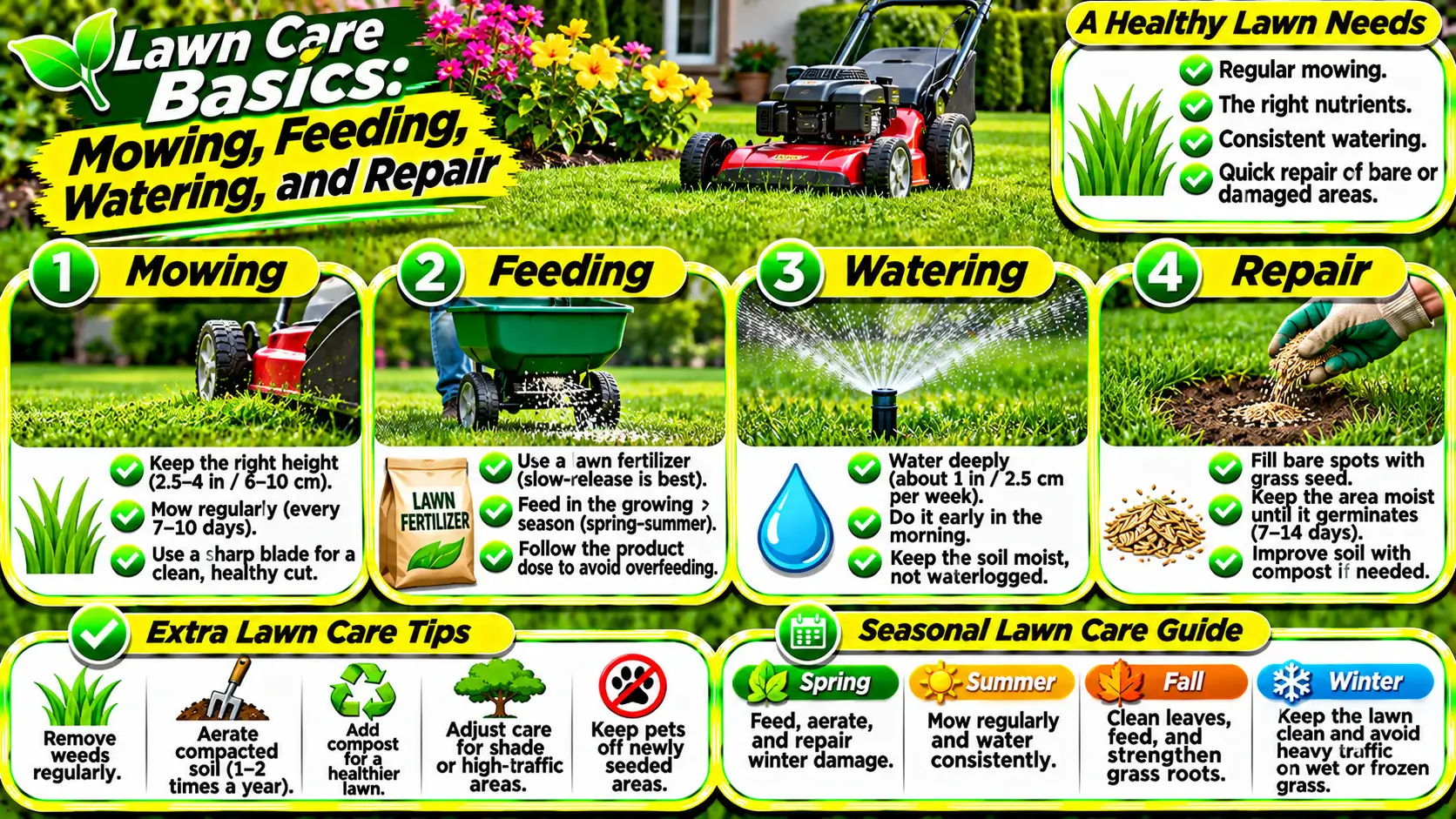
A healthy lawn is built through consistent care that suits the grass species, climate, soil, and way the area is used. Mowing too short, watering too frequently, or applying fertilizer without understanding the soil can weaken grass and encourage weeds. Lawn care is not a single calendar of universal tasks: warm-season grasses and cool-season grasses have different growth patterns, and local rainfall and temperatures matter.Begin by identifying the grass type if possible. Look at the leaf shape, growth habit, and whether it spreads by runners or forms clumps. If the lawn is a mixture, manage it according to the dominant species and the conditions in the area. Also consider whether you need a formal, closely maintained surface or a more relaxed lawn that supports biodiversity and requires fewer inputs.
Table of Contents
- Introduction
- Mow at an appropriate height
- Water deeply and only when needed
- Feed according to grass needs
- Improve soil and reduce compaction
- Repair bare and damaged patches
- Manage weeds and lawn pests
- Seasonal lawn care
- Reduce maintenance and environmental impact
- Adjust mowing to grass type and growth conditions
- Frequently Asked Questions
Mow at an appropriate height
Mowing height affects how much leaf area remains to capture light and support growth. Cutting grass too short can expose soil, stress roots, and create opportunities for weeds. The ideal height depends on the species and climate. Follow local guidance for the grass variety and avoid removing too much leaf tissue in a single mowing. If a lawn has become very tall, reduce its height gradually over several cuts rather than scalping it at once.Keep mower blades sharp. A dull blade tears grass tips, leaving ragged edges that can look brown and may increase stress. Mow when the lawn is dry enough for an even cut, unless local conditions or equipment instructions indicate otherwise. Change mowing direction periodically to reduce repeated wheel tracks and avoid compacting the same lines.
Water deeply and only when needed
Grass needs water to maintain growth, but frequent shallow irrigation can encourage shallow roots and waste water. Observe the lawn and soil before watering. Signs such as a persistent footprint, a dull or bluish cast, or blades beginning to fold may indicate water stress, but they should be interpreted alongside soil moisture and weather. Some grass types naturally enter dormancy during dry periods and may recover when conditions improve.When watering is necessary, apply enough to moisten the active root zone without creating runoff. Sprinkler coverage should be even, and heads should not water pavement or walls unnecessarily. Early morning is often a practical time because wind and evaporation may be lower. Follow local water restrictions and consider whether a less intensively managed lawn would be more sustainable in a dry climate.
Feed according to grass needs
Fertilizer can support lawn growth, but excessive applications may cause rapid soft growth, increase mowing requirements, and contribute to nutrient runoff. The right fertilizer type and timing depend on grass species, soil condition, and local growing season. A soil test can help identify pH or nutrient limitations and prevent unnecessary applications.Follow the product label for application rate and method. Do not apply fertilizer to saturated soil or before heavy rainfall when nutrients may wash away. Sweep granules off paving and keep them out of drains and waterways. Avoid fertilizing a lawn that is severely stressed by drought or heat until growing conditions improve. Correct mowing, watering, and soil problems before assuming that fertilizer is the answer.
Improve soil and reduce compaction
Compacted soil restricts the movement of air, water, and roots. It is common in lawns that receive frequent foot traffic or vehicle pressure. If water runs off quickly or the soil is hard and dense, compaction may be a factor. Aeration can help in some situations, but the method and timing should suit the grass type and soil moisture. Core aeration removes small plugs, while other methods create openings without removing soil.Do not aerate when the ground is extremely wet or dry. In wet conditions, equipment can smear soil and cause further compaction; in very dry soil, it may be difficult to penetrate. Topdressing with suitable material may help improve surface condition, but avoid applying a thick layer that smothers grass. For persistent drainage or compaction problems, assess the underlying soil and traffic patterns rather than repeating surface treatments.
Repair bare and damaged patches
Bare patches may result from heavy traffic, pet activity, shade, pests, disease, poor drainage, or incorrect mowing. Identify the cause before reseeding or replacing turf. If the area remains shaded, a sun-loving grass may fail again. If water collects, improve drainage or choose a different ground treatment. If foot traffic is the problem, add stepping stones or a defined path to reduce repeated wear.Prepare the patch by removing dead material and loosening the surface as appropriate. Use seed or turf suited to the existing lawn and local climate. Follow recommended sowing depth and watering instructions. Keep the area from drying during establishment, but avoid waterlogging. Limit foot traffic until the new grass is established and can tolerate use.
Manage weeds and lawn pests
Weeds often exploit thin turf, compacted soil, incorrect mowing height, or bare ground. Improve lawn density through suitable mowing, watering, and soil care rather than relying only on weed treatments. Hand-remove isolated weeds when practical, taking care to remove roots of perennial species. Identify lawn pests and diseases before applying any control product. Not every discoloration or insect indicates a serious problem.Encourage a diverse garden around the lawn where appropriate. Flowering borders can provide habitat for beneficial insects, and a small area of less intensively managed vegetation may support wildlife. If herbicides or pesticides are considered, follow local regulations and label instructions, protect people and pets, and avoid application near water. Use the least disruptive effective method for the identified problem.
Seasonal lawn care
In warm-season climates, many grasses grow actively during warmer months and slow down when temperatures fall. In cooler climates, cool-season grasses may grow most strongly during spring and autumn and struggle in intense summer heat. Adjust mowing, watering, feeding, and renovation work to the active growth period of the grass. Do not apply a cool-climate lawn calendar to a tropical or subtropical lawn without adapting it.Before seasonal changes, inspect mower equipment, irrigation coverage, and the condition of the turf. Remove leaves or debris that block light and airflow, but avoid stripping all organic material from surrounding garden beds. If the lawn is not performing well, consider whether it is appropriate for the site at all. Ground covers, native plantings, or permeable paths may be better options for difficult areas.
Reduce maintenance and environmental impact
A lawn does not need to be uniformly short and heavily fertilized to be useful. Reduce the size of lawn areas that are difficult to maintain, and use planting beds or suitable ground covers where practical. Keep mower blades sharp, avoid unnecessary irrigation, and apply fertilizer only when needed. Leave grass clippings on the lawn when they are short and healthy if local practice and the mower allow it; remove excessive clumps that could smother the surface.Maintain equipment safely and store fuels and chemicals responsibly. Keep clippings out of storm drains and waterways. A lawn managed for the actual use of the space can require fewer resources than one maintained to an unrealistic standard. Decide what level of appearance and durability is needed, then choose a routine that supports those goals.
Conclusion
Good lawn care starts with identifying the grass and understanding the site. Mow at a suitable height, water according to soil moisture, feed only when needed, and address compaction or bare patches at their source. Regular inspection helps distinguish normal seasonal changes from pests, disease, or poor growing conditions.A resilient lawn is not created by the most frequent mowing or the largest fertilizer application. It comes from consistent, species-appropriate care and a willingness to adapt the landscape where grass is not the best choice.
Lawn care tasks through the season
| Task | Good practice | What to avoid |
|---|---|---|
| Mowing | Cut at a height suitable for the grass species | Removing too much leaf blade at once |
| Watering | Water deeply when needed, based on soil and weather | Frequent shallow watering |
| Feeding | Use soil tests and grass-specific timing | Applying excess nitrogen |
| Repair | Match seed or sod to the existing lawn | Repairing without correcting the underlying cause |
| Weed control | Maintain dense turf and identify weeds first | Applying products without checking the label |
For more detailed guidance, consult Penn State Extension lawn management guidance.
Related articles:
- How to Keep Weeds Under Control in Garden Beds
- Mulching a Garden: Types, Benefits, and Common Mistakes
Lawn care tasks by season and condition
| Task | Good practice | Key consideration |
|---|---|---|
| Mowing | Keep grass at a suitable height for its species | Avoid removing too much leaf in one cut |
| Watering | Water deeply when needed rather than frequent shallow watering | Adjust for rainfall and soil type |
| Feeding | Use soil-test results and grass requirements | Avoid unnecessary nitrogen applications |
| Repairing bare spots | Match seed to climate, light, and use | Prepare soil and keep seed moist while germinating |
| Weed management | Identify weeds and improve turf density | Choose control methods suited to the weed and lawn |
For further practical guidance, consult University of Minnesota Extension lawn care resources.
Explore these related guides:
- How to Improve Garden Soil Without Overusing Fertilizer
- How to Keep Weeds Under Control in Garden Beds
Adjust mowing to grass type and growth conditions
There is no single mowing height that suits every lawn. Cool-season grasses, warm-season grasses, and fine-bladed or coarse-bladed species differ in their preferred height and response to shade, drought, and traffic. Identify the grass before setting the mower. As a general stress-reduction rule, avoid removing more than about one-third of the leaf height in one cut; if the lawn has become overgrown, raise the mower and reduce the height gradually over successive mowings rather than scalping it.
| Condition | Mowing adjustment | Reason |
|---|---|---|
| Hot or dry weather | Keep the species-appropriate height; mow less often if growth slows | Leaf area helps shade soil and protect crowns |
| Shaded lawn | Use the higher end of the recommended range for that grass | Leaves need sufficient area to capture light |
| Overgrown grass | Remove no more than roughly one-third at a time | Reduces sudden stress and scalping |
| Wet or waterlogged turf | Wait until the surface is firm enough to mow safely | Reduces rutting, compaction, and tearing |
Keep mower blades sharp and avoid mowing when grass is wet if clumping or tearing is likely. Colorado State University’s lawn care basics explains mowing height and the one-third guideline, but its species recommendations are for Colorado lawns. Use local turfgrass guidance for the species and climate in your region.
Related Gardening Guides
Explore these related guides for more practical ideas and gardening advice:
- Create a Low-Maintenance Landscape That Stays Beautiful
- Design a Garden Layout That Is Both Beautiful and Practical
- Improve Garden Soil Without Overusing Fertilizer
Frequently Asked Questions
How often should I mow a lawn?
Mow according to the grass species, growth rate, and season rather than a fixed weekly schedule. Avoid removing too much leaf at once and keep blades sharp for a clean cut.
Should I water a lawn every day?
Most established lawns do not need daily watering. Check soil moisture, rainfall, grass type, and local restrictions, and water deeply when needed rather than keeping the surface constantly wet.
When should I fertilize a lawn?
Timing depends on the grass type, climate, soil test, and active growth period. Use a suitable product at the label rate and avoid feeding dormant or heat-stressed turf unless local guidance recommends it.
How can I repair bare patches in a lawn?
Identify the cause first, such as compaction, shade, pests, disease, or foot traffic. Prepare the area and reseed or patch with a grass type suited to the site and season.

