Introduction
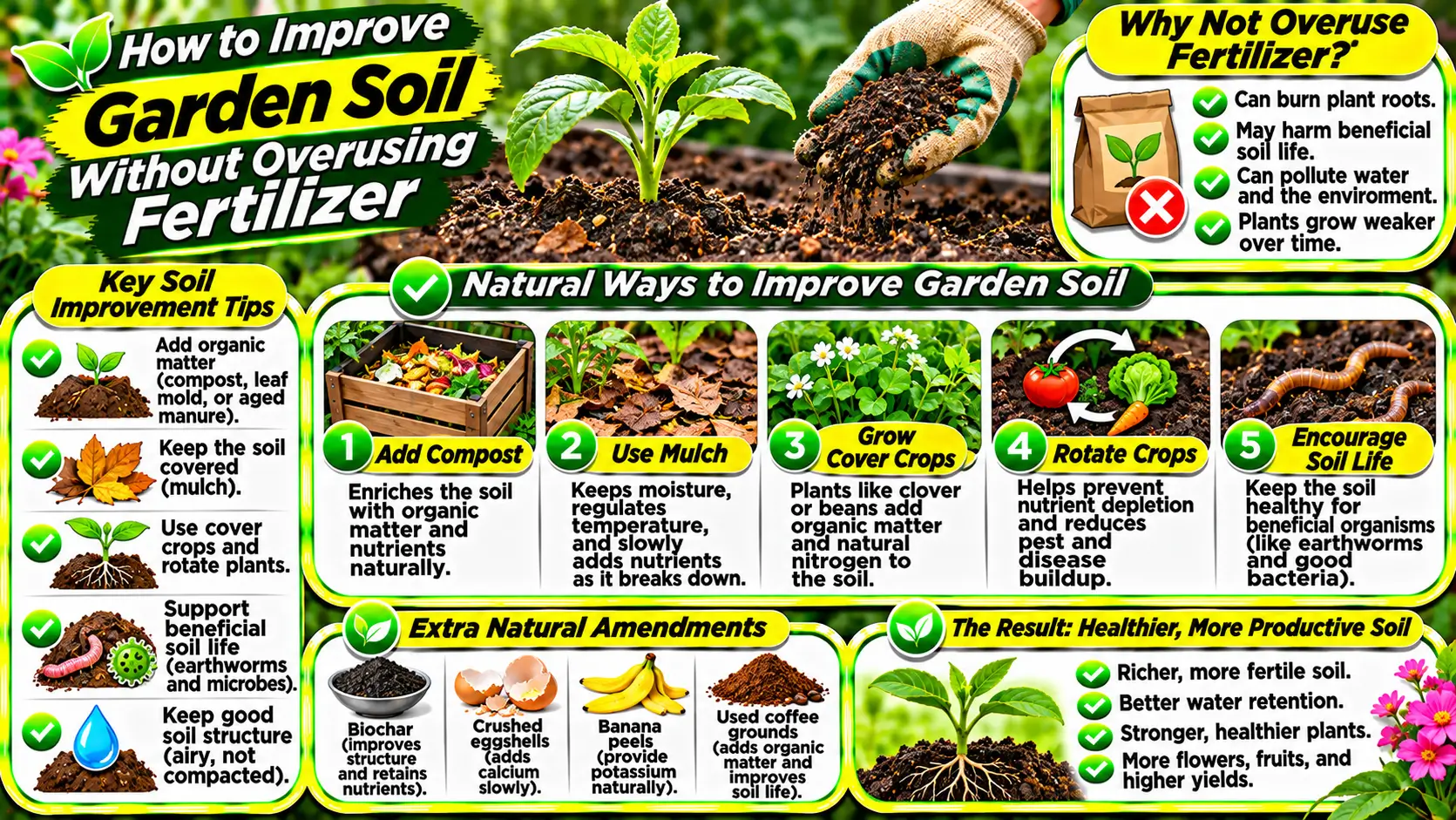
Healthy garden soil is more than a place for roots to stand. It stores water, provides air, supports microorganisms, and supplies nutrients that plants use to grow. When plants look weak, adding fertilizer may seem like the quickest solution, but poor growth can also come from compacted soil, poor drainage, unsuitable pH, damaged roots, or inadequate light. Applying nutrients without understanding the cause can waste money and create imbalances.A better approach is to assess the soil first and improve its physical condition over time. Observe how water enters and drains, how easily a hand tool moves through the bed, and whether the soil contains visible organic matter. Consider a soil test if nutrient levels or pH are uncertain. Then choose amendments based on the actual problem rather than following a universal recipe.
Table of Contents
- Introduction
- Understand soil texture and structure
- Use compost and organic matter thoughtfully
- Protect soil with mulch and living roots
- Avoid unnecessary digging and compaction
- Check pH and nutrients before feeding
- Choose fertilizer carefully
- Improve drainage without damaging the site
- Build a long-term soil routine
- Turn a soil test into an amendment plan
- Frequently Asked Questions
Understand soil texture and structure
Soil texture describes the relative amounts of sand, silt, and clay. Sandy soil generally drains quickly and may hold fewer nutrients. Clay soil can retain water and nutrients but may drain slowly or compact when handled wet. Loam describes a useful balance of particle sizes, but even a loamy soil can have poor structure if it is compacted or low in organic matter.Structure refers to how particles form aggregates and pores. Good structure allows water to enter, excess water to drain, and air to reach roots. Avoid digging or walking on soil when it is saturated because pressure can collapse pores. Use defined paths and raised beds where repeated access is needed. Gentle handling preserves the channels formed by roots and soil organisms.
Use compost and organic matter thoughtfully
Mature compost can add organic matter and improve the structure of many garden soils. It may help sandy soil retain moisture and support aggregation in clay-heavy soil. Spread an appropriate layer on the surface or incorporate it shallowly where the bed is being prepared. Avoid using unfinished compost that still heats, smells strongly, or contains recognizable undecomposed material in large amounts.Compost quality varies. Use material that is free from persistent herbicide residues, contaminants, and viable weed seeds. If you make compost at home, maintain a suitable mix of green and brown materials, adequate moisture, and airflow. Do not assume that adding more compost every season is always better; repeated heavy applications can raise phosphorus or salt levels. A soil test can help guide long-term use.
Protect soil with mulch and living roots
Bare soil is exposed to sun, wind, and raindrop impact. A suitable mulch layer can reduce evaporation, moderate temperature, and limit some weed growth. Organic mulches gradually break down and contribute organic matter. Keep mulch away from plant crowns and woody stems, and choose a material suited to the plants and climate. In some dry-climate or rock-garden plantings, heavy organic mulch may not be appropriate.Living roots also protect soil. Ground covers, cover crops, and dense perennial plantings can reduce erosion and support soil organisms. Choose species suited to local conditions and avoid plants that become invasive. In vegetable beds, cover crops may be useful between growing periods, but their timing and termination method should be planned so they do not compete with the next crop.
Avoid unnecessary digging and compaction
Frequent deep digging can break soil aggregates and disturb earthworms, fungal networks, and other organisms. Dig only when necessary, such as when preparing a new bed or removing a persistent root system. For routine planting, use a narrow tool and disturb only the area required. In established beds, surface compost and mulch may improve conditions without repeated turning.Compaction is especially common on paths, around work areas, and in wet beds. Keep foot traffic on designated routes and avoid using heavy equipment on soft ground. If a bed is severely compacted, determine how deep the problem extends before attempting to loosen it. Deep ripping or mechanical aeration may be appropriate in some settings, but can damage roots and should not be done casually around established plants.
Check pH and nutrients before feeding
Soil pH influences how available different nutrients are to plants. A nutrient may be present but difficult for roots to absorb when pH is outside the preferred range for a species. A soil test can identify pH and often provides information about nutrient levels. Use a reliable local testing service and follow its sampling instructions; collecting soil from several representative points usually gives a more useful picture than testing a single spot.Do not add lime, sulfur, or other pH amendments without a reason. The correct amount depends on soil type, current pH, and the desired change. Likewise, do not apply a general fertilizer simply because a plant is not growing quickly. First check light, water, root health, and whether the species is naturally slow-growing.
Choose fertilizer carefully
When a nutrient deficiency is confirmed or a crop has a known requirement, choose a fertilizer that supplies the needed nutrients in a suitable form. Read the guaranteed analysis and application instructions. Follow the label rate, avoid applying fertilizer to dry or stressed roots, and keep products away from waterways and drains. More fertilizer does not mean faster or healthier growth.Different plants have different nutrient needs. Leafy vegetables, flowering ornamentals, fruiting crops, and native plants may respond differently to feeding. Some native or drought-adapted species are suited to low-fertility soils and can develop weak, excessive growth when overfed. Apply nutrients during active growth when appropriate and avoid feeding plants during dormancy unless specific guidance recommends it.
Improve drainage without damaging the site
If water remains on the surface or soil stays saturated, investigate the cause. Compaction, a hard layer, a high water table, poor grading, or blocked drainage may be involved. Adding a small amount of sand to heavy clay is not a universal solution and can create a dense mixture. Organic matter may improve structure over time, but it will not correct every drainage problem.Do not redirect runoff toward a neighbor’s property or building foundation. In some sites, raised beds, a different plant selection, or a professionally designed drainage solution may be more appropriate. Choose plants that tolerate the site’s natural moisture if major changes are not practical. Healthy soil management begins with working with the site rather than trying to force every bed into the same condition.
Build a long-term soil routine
Soil improvement is gradual. Keep a record of amendments, fertilizer applications, crop performance, and soil-test results. Add organic matter only when useful, maintain mulch where appropriate, keep living roots in the soil when practical, and avoid compaction. Rotate vegetable families where relevant and remove diseased plant residues according to local guidance.Watch for changes in water infiltration, root development, and plant vigor. If a bed improves after reducing traffic or adding a suitable organic amendment, continue the approach without automatically increasing inputs. If plants remain unhealthy, revisit the diagnosis. A systematic approach is more effective than repeatedly applying products in response to symptoms.
Conclusion
Improving garden soil does not require frequent fertilizer applications. Start by understanding texture, structure, drainage, pH, and plant needs. Protect the soil from compaction, use mature compost and mulch appropriately, and maintain living roots where possible. Apply fertilizer only when there is a clear need and follow the product instructions.Healthy soil develops through consistent, moderate care. By observing the bed and making targeted improvements, gardeners can support stronger roots, better water management, and more resilient plants while avoiding unnecessary inputs.
Soil improvement options and their uses
| Practice | Potential benefit | Best-use consideration |
|---|---|---|
| Add mature compost | Improves organic matter and soil structure | Use clean, finished compost in suitable amounts |
| Keep soil covered | Reduces erosion and moisture loss | Use mulch suited to the crop and climate |
| Grow cover crops | Protects soil and can add organic matter | Select species for season and rotation |
| Reduce compaction | Improves pore space and root growth | Avoid working wet soil |
| Apply fertilizer | Replaces nutrients when a deficiency is confirmed | Base rates on soil tests and crop needs |
For more detailed guidance, consult Penn State Extension soil management resources.
Related articles:
- How to Improve Garden Soil Without Overusing Fertilizer
- How to Start and Maintain a Home Compost Pile
Soil improvement choices compared
| Amendment or practice | Main contribution | Best use |
|---|---|---|
| Mature compost | Organic matter and gradual soil improvement | Incorporate modest amounts based on soil condition |
| Leaf mold | Organic matter and improved moisture behavior | Mulch or soil amendment where suitable |
| Mulch | Surface protection and moisture moderation | Apply over soil without piling against stems |
| Cover crops | Living roots and biomass | Protect and improve bare beds between crops |
| Soil testing | Identifies pH and nutrient needs | Before adding lime, fertilizer, or mineral amendments |
For further practical guidance, consult University of Minnesota Extension soil testing guidance.
Explore these related guides:
- How to Start and Maintain a Home Compost Pile
- Mulching a Garden: Types, Benefits, and Common Mistakes
Turn a soil test into an amendment plan
A soil test is most useful when it answers a specific management question. Before sampling, divide the garden into areas that differ in use, soil appearance, drainage, or past management. Take several small cores from one uniform area, mix them in a clean container, and submit the sample using the laboratory’s depth and preparation instructions. Do not combine a vegetable bed, lawn, and ornamental border into one sample if they are managed differently.
Read the recommendations for the crop or intended planting, not just the nutrient numbers. A high phosphorus result, for example, is a reason to avoid adding phosphorus-containing fertilizer unless a qualified recommendation says otherwise. A pH adjustment should be based on measured pH, soil type, and the needs of the plants; adding lime or sulfur by guesswork can create a new imbalance. Organic matter can improve soil structure, but compost also adds nutrients and salts, so repeated heavy applications are not automatically beneficial.
Use the laboratory’s locally calibrated recommendations because extraction methods and target ranges vary by region. Penn State Extension’s soil testing guidance explains sampling and interpretation. Keep the report with the date, sample location, and amendments applied so the next test can show whether the changes helped rather than relying on repeated visual guesses.
Related Gardening Guides
Explore these related guides for more practical ideas and gardening advice:
- Start and Maintain a Home Compost Pile
- Use Compost Tea Responsibly in the Garden
- Mulching a Garden: Types, Benefits, and Common Mistakes
Frequently Asked Questions
Can compost replace fertilizer in every garden?
Compost improves organic matter and can supply some nutrients, but it may not meet every crop’s nutrient requirements. Use soil tests and plant needs to decide whether additional fertilizer is appropriate.
How often should I add organic matter to garden soil?
The need depends on soil condition, crop rotation, and the type and amount of organic material used. Apply suitable, mature material in measured amounts and reassess soil condition over time.
Can too much fertilizer damage soil?
Yes. Excess nutrients and salts can harm roots, disrupt nutrient balance, and move into waterways. Apply fertilizer only when there is a clear need and follow product instructions.
What is the best way to protect soil between plantings?
Use mulch, living cover crops, or suitable plant residues to reduce erosion and protect soil structure. Choose a method that fits the next crop and local conditions.

6 thoughts on “How to Improve Garden Soil Without Overusing Fertilizer”