After a heavy shower, observe where water enters, moves through, and leaves the property. Look for roof downspout outlets, compacted paths, low points, blocked drains, and places where water crosses a slope. A puddle may be caused by a blocked outlet, a compacted surface, a high water table, or slow infiltration; each requires a different response. Photograph the same locations during and after rain to distinguish a short-lived puddle from repeated saturation.
Do not simply divert runoff toward a neighbor, public path, building foundation, septic area, or unstable slope. Before installing a drain, swale, retaining feature, or rain garden, check local drainage rules, underground utilities, soil infiltration, and safe overflow routes. On steep or eroding sites, professional advice may be necessary because an incorrectly placed channel can concentrate flow and worsen erosion.
UF/IFAS Extension’s heavy-rain garden guidance recommends checking erosion, saturation, plant injury, and soil compaction after storms. The right response is to slow, spread, or safely convey runoff without creating a new hazard. Regional rainfall intensity, soil type, and local regulations should guide the design.
Related Gardening Guides
Explore these related guides for more practical ideas and gardening advice:
- Improve Soil Drainage in Garden Beds Without Drying Them Out
- Landscape a Sloped Garden with Terraces, Planting, and Drainage
- Design Garden Paths and Walkways That Are Practical and Beautiful
Introduction
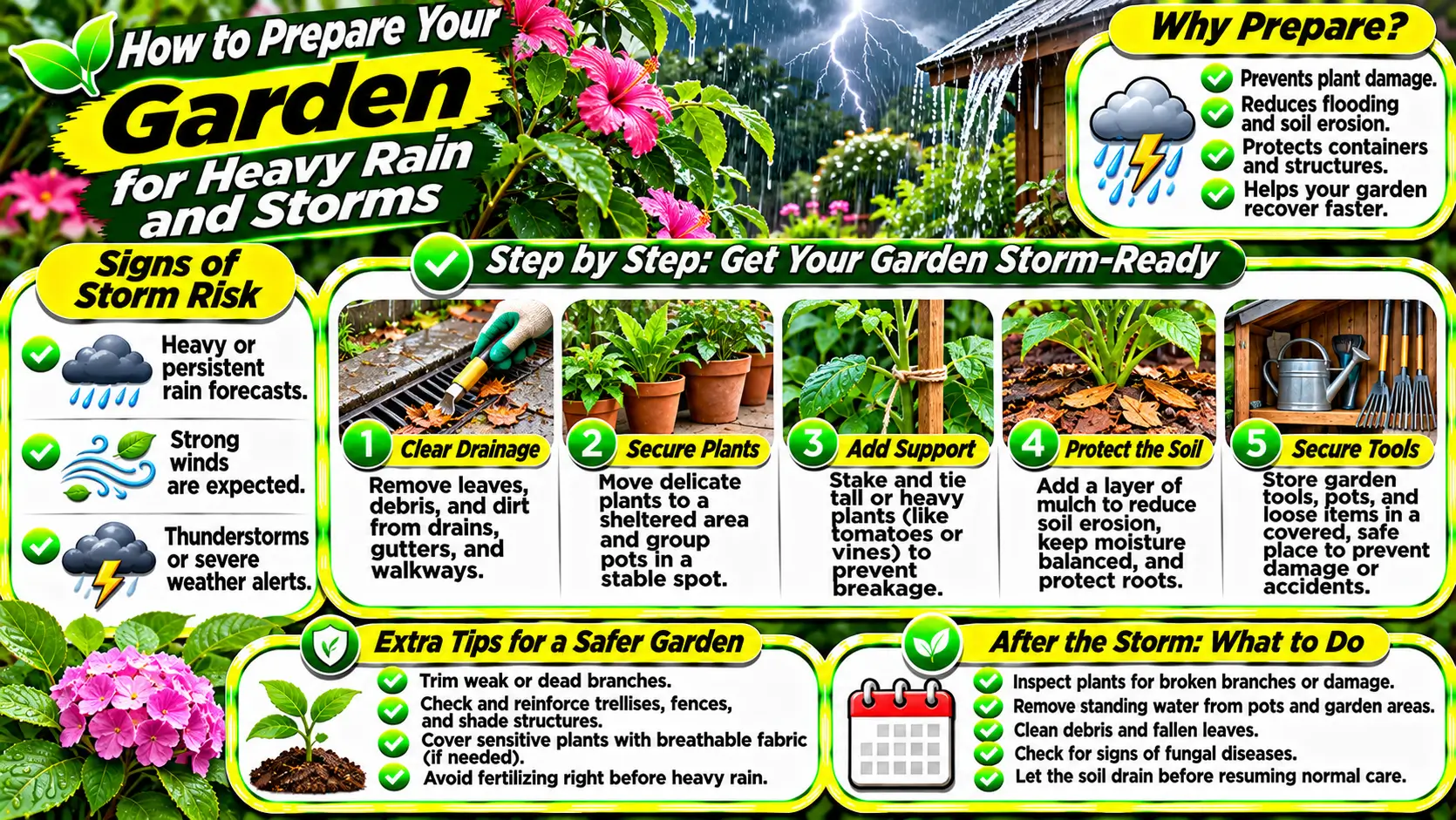
Heavy rain and storms can damage a garden through flooding, soil erosion, broken branches, waterlogged roots, and displaced containers. Preparation reduces some risks, although no garden can be made completely storm-proof. The most useful steps are to manage water movement, secure loose objects, protect vulnerable plants, and keep drainage systems clear. After a storm, careful inspection helps identify hazards before cleanup begins.The right preparation depends on the site. A sloped garden may be vulnerable to runoff and erosion, while a low-lying bed may flood. A balcony can experience strong gusts that overturn pots, and a mature tree may have branches that require professional inspection. Learn how water normally moves through the property and identify places where it collects or enters from neighboring land.
Table of Contents
- Introduction
- Inspect and clear drainage routes
- Reduce erosion on slopes
- Protect containers and balcony plants
- Prune only what is necessary before a storm
- Prepare soil and planting beds
- Secure tools, furniture, and garden equipment
- During the storm: prioritize safety
- Inspect the garden after heavy rain
- Help plants recover
- Trace stormwater flow before changing garden drainage
- Frequently Asked Questions
Inspect and clear drainage routes
Before the rainy period, clear leaves and debris from garden drains, channels, gutters, and downspout outlets. Make sure water can move away from buildings without being directed toward a neighbor’s property or a natural waterway in an unsafe way. Check that drain covers are secure and that soil or mulch has not blocked openings.Observe the garden during ordinary rainfall to understand where water flows. If it consistently pools near a foundation or in a planting bed, investigate the cause rather than simply digging a temporary trench. Major grading or drainage changes can affect neighboring properties and should be planned carefully. For persistent flooding, consult a qualified drainage or landscape professional.
Reduce erosion on slopes
Bare soil on a slope can be washed away during intense rain. Establishing suitable ground cover, maintaining mulch, and using appropriate erosion-control materials can help protect the surface. The best approach depends on slope angle, soil type, rainfall intensity, and access. A shallow slope may be managed with dense planting, while a steep or unstable slope may need engineered support.Avoid disturbing a slope immediately before heavy rain. Do not create channels that concentrate runoff and increase erosion lower down. Use locally suitable plants with root systems that help hold soil, and protect newly planted areas until they establish. Where soil movement threatens buildings, paths, or neighboring land, seek professional assessment rather than relying on planting alone.
Protect containers and balcony plants
Move lightweight containers to sheltered positions where they cannot fall or become projectiles in strong wind. Secure hanging baskets and remove loose saucers or decorative objects. Place pots on stable surfaces and ensure drainage holes are open. Do not stack containers where they could topple. If a balcony is exposed, follow building rules and avoid attaching improvised screens or covers that could catch the wind.For plants in small containers, heavy rain can saturate the potting mix. Raise pots slightly so water can drain and remove standing water from saucers. Move sensitive plants under a suitable shelter if possible, but ensure that the location still has adequate airflow. Avoid leaving plants in a sealed, dark space for extended periods.
Prune only what is necessary before a storm
Remove clearly dead, broken, or hazardous branches when it is safe and appropriate to do so. Do not heavily prune healthy trees in an attempt to make them storm-proof. Improper cutting can create weak regrowth and long-term structural problems. Large branches, trees with cracks or decay, and work near buildings or power lines should be assessed by a qualified arborist.Check climbing plants and tall perennials. Secure loose stems to suitable supports and remove items that could be blown away. Do not tie branches so tightly that stems are damaged. Inspect trellises and fences for loose fixings, but avoid working at height or handling unstable structures when high winds are approaching.
Prepare soil and planting beds
Use mulch to reduce soil splash and protect exposed surfaces, but keep drainage channels and plant crowns clear. A moderate layer of suitable material can reduce erosion and help soil structure. On already saturated beds, avoid adding thick layers that may slow surface drying or cover sensitive crowns. Do not work or walk repeatedly on waterlogged soil because it can become compacted.If a bed has poor drainage, consider whether the plants are suited to the site. Raised beds or moisture-tolerant species may be appropriate in some situations, but major changes should be planned with water movement in mind. Avoid placing loose compost, potting mix, or lightweight materials where runoff can carry them into drains.
Secure tools, furniture, and garden equipment
Store lightweight furniture, empty pots, watering cans, tools, and decorations in a secure location. Close and latch sheds, greenhouses, and storage areas. Check that greenhouse panels, shade structures, and covers are properly fixed according to their design. Do not rely on improvised ropes or weights that could fail in strong wind.Disconnect or protect electrical garden equipment according to the manufacturer’s instructions. Keep extension cords and powered tools away from standing water. Never handle electrical equipment in wet conditions or approach downed power lines. If a storm is imminent, prioritize personal safety over saving plants or garden items.
During the storm: prioritize safety
Stay indoors during severe weather and follow official local warnings. Do not attempt to clear drains, prune branches, or move heavy containers while strong winds or lightning are present. Floodwater can conceal holes, sharp objects, and electrical hazards. Avoid walking through moving water and keep children and pets away from flooded areas.If water threatens a building, follow local emergency guidance. Do not enter a flooded structure where electrical systems may be compromised. Garden tasks can wait until conditions are safe. A damaged plant is replaceable; personal safety is not.
Inspect the garden after heavy rain
Once conditions are safe, walk the property and look for blocked drains, standing water, eroded soil, broken branches, leaning supports, and displaced containers. Photograph significant damage before cleanup if insurance or property records may be needed. Check trees for hanging branches, cracks, exposed roots, or sudden changes in lean. Keep away from unstable limbs and arrange professional inspection when necessary.Remove debris from paths and drains using safe tools. Wear gloves and sturdy footwear, and be cautious around sharp branches and contaminated floodwater. Do not immediately dig or compact saturated beds. Allow soil to drain before carrying out major repairs. If roots are exposed, seek advice on whether they can be covered safely without burying the trunk flare.
Help plants recover
Many plants recover from temporary waterlogging if drainage improves and roots remain healthy. Avoid adding fertilizer to saturated or stressed plants. Check whether the root zone is still wet and allow it to drain. Remove broken stems with clean tools, making appropriate cuts, but do not strip away healthy foliage unnecessarily. For plants buried by sediment, gently remove material from leaves and crowns when conditions permit.If a plant remains wilted in wet soil, root damage may be present. Improve drainage and avoid repeated watering. Replace plants only after the cause of failure is understood; otherwise the same problem may recur. In areas with contaminated floodwater, follow public health and local agricultural guidance before using affected soil for edible crops.
Conclusion
Preparing a garden for heavy rain and storms means managing water, reducing erosion, securing containers and equipment, and identifying hazards before severe weather arrives. Clear drainage routes, protect vulnerable plants, and avoid unnecessary pruning or soil disturbance. During a storm, follow official safety guidance and stay away from floodwater, unstable trees, and electrical hazards.Afterward, inspect the garden carefully, restore drainage, and give saturated soil time to recover. Thoughtful preparation cannot prevent every loss, but it can reduce damage and make post-storm recovery safer and more manageable.
Garden storm preparation checklist
| Risk area | Preparation | After the storm |
|---|---|---|
| Loose containers and furniture | Move indoors or secure safely | Check for damage and unstable items |
| Drainage routes | Clear gutters, drains, and channels | Look for pooling and erosion |
| Young trees and tall plants | Use appropriate support where needed | Inspect for broken limbs and root movement |
| Garden beds | Cover exposed soil and protect vulnerable plants | Repair washouts and remove debris |
| Electrical irrigation equipment | Disconnect or protect according to manufacturer guidance | Inspect safely before restarting |
For more detailed guidance, consult University of Georgia Extension storm and landscape preparation guidance.
Related articles:
- Garden Irrigation Maintenance: Checking Hoses, Drip Lines, and Sprinklers
- How to Transplant Garden Plants Without Unnecessary Stress
Storm preparation priorities for the garden
| Risk | Preparation | Why it helps |
|---|---|---|
| Standing water | Clear drains and inspect low spots before heavy rain | Reduces avoidable pooling |
| Soil erosion | Maintain ground cover and protect exposed soil | Slows runoff and soil loss |
| Loose containers | Move or secure lightweight pots and garden items | Limits wind damage |
| Weak branches | Remove dead or hazardous limbs using safe practices | Reduces breakage risk |
| New transplants | Delay planting if severe weather is forecast | Gives plants time to establish |
| After the storm | Inspect drainage, roots, and damaged plants | Helps prioritize recovery work |
For further practical guidance, consult University of Minnesota Extension guidance on managing rainwater in landscapes.
Explore these related guides:
- Improve Soil Drainage in Garden Beds Without Drying Them Out
- Landscape a Sloped Garden with Terraces, Planting, and Drainage
Trace stormwater flow before changing garden drainage
After a heavy shower, observe where water enters, moves through, and leaves the property. Look for roof downspout outlets, compacted paths, low points, blocked drains, and places where water crosses a slope. A puddle may be caused by a blocked outlet, a compacted surface, a high water table, or slow infiltration; each requires a different response. Photograph the same locations during and after rain to distinguish a short-lived puddle from repeated saturation.
Do not simply divert runoff toward a neighbor, public path, building foundation, septic area, or unstable slope. Before installing a drain, swale, retaining feature, or rain garden, check local drainage rules, underground utilities, soil infiltration, and safe overflow routes. On steep or eroding sites, professional advice may be necessary because an incorrectly placed channel can concentrate flow and worsen erosion.
UF/IFAS Extension’s heavy-rain garden guidance recommends checking erosion, saturation, plant injury, and soil compaction after storms. The right response is to slow, spread, or safely convey runoff without creating a new hazard. Regional rainfall intensity, soil type, and local regulations should guide the design.
Related Gardening Guides
Explore these related guides for more practical ideas and gardening advice:
- Improve Soil Drainage in Garden Beds Without Drying Them Out
- Landscape a Sloped Garden with Terraces, Planting, and Drainage
- Design Garden Paths and Walkways That Are Practical and Beautiful
Frequently Asked Questions
What should I do first before a heavy rainstorm?
Check drains, gutters, channels, and low points for blockages, and secure movable containers and garden equipment. Avoid working on unstable slopes or in floodwater.
Should I prune trees before a storm?
Remove dead or clearly hazardous branches when it is safe and appropriate, but avoid rushed major pruning. Large or unstable limbs should be assessed by a qualified arborist.
How can I protect potted plants from heavy rain?
Move vulnerable containers to a sheltered location where practical, ensure drainage holes are clear, and prevent pots from sitting in standing water. Secure tall plants against wind.
How do I prevent soil erosion during intense rain?
Keep soil covered with suitable plants or mulch, direct runoff safely, and use site-appropriate erosion controls. Steep or unstable areas may require professional assessment.


3 thoughts on “How to Prepare Your Garden for Heavy Rain and Storms”