Introduction
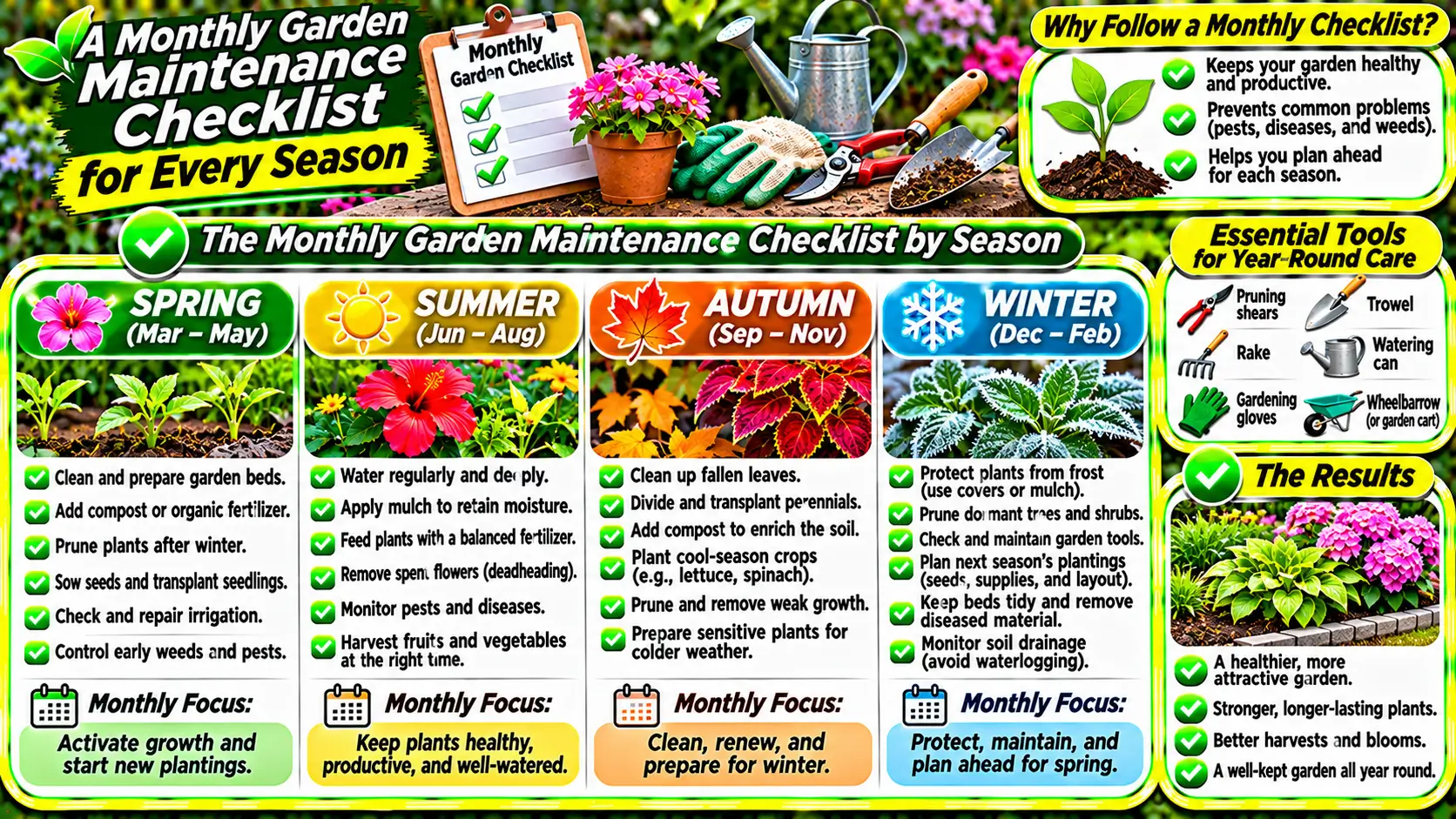
A garden stays healthy through regular observation and small, timely tasks rather than occasional intensive work. A monthly maintenance routine makes it easier to notice changes, prevent avoidable problems, and spread work across the year. The exact calendar depends on climate: a garden in a tropical region may follow wet and dry seasons, while a temperate garden may have distinct spring, summer, autumn, and winter tasks. Use the checklist as a flexible framework and adjust it to local rainfall, temperature, plant types, and growing cycles.Begin each month with a walk through the garden. Look at new growth, leaf color, soil moisture, drainage, supports, paths, and containers. Check the undersides of leaves for insects and examine stems for damage. Note which plants are flowering, setting seed, or entering dormancy. A short written record helps distinguish normal seasonal changes from symptoms that need attention.
Table of Contents
- Introduction
- January: review structure and plan
- February: inspect soil and drainage
- March: prepare planting areas
- April: manage new growth
- May: inspect pests and support
- June: prepare for heat or heavy rain
- July: maintain, harvest, and tidy
- August: monitor stress and containers
- September: renew and divide where suitable
- October: manage leaves and prepare structures
- November: reduce stress and check protection
- December: review and reset
- A routine that works in every climate
- Adapt the monthly checklist to local growing cycles
- Frequently Asked Questions
January: review structure and plan
Start the year by reviewing the garden’s overall structure. Identify plants that have outgrown their spaces, areas where water collects, and places where soil remains exposed. Check fences, trellises, raised beds, irrigation lines, and tool storage. Repair small problems before they become larger ones. In climates where January is a cool or dormant period, avoid pruning plants that are preparing to flower on old wood until you understand their flowering cycle.Make a simple plan for the year. List plants that need dividing, containers that need refreshing, and areas where you want to add ground cover or improve soil. Check seed packets and plant labels for sowing and planting times suited to your region. Avoid buying plants before confirming that their mature size and light requirements fit the available space.
February: inspect soil and drainage
Use this month to assess soil condition. Look for compacted paths, bare patches, and beds that remain waterlogged after rain. Avoid walking on wet soil because pressure can damage its structure. Where beds need organic matter, use a suitable, mature material and spread it according to the needs of the plants. Do not assume that every bed needs fertilizer; a soil test can help identify nutrient or pH issues.Clear blocked drains and check that downspouts do not discharge water toward foundations or neighboring properties. In containers, confirm that drainage holes are open and that potting mix has not become dense or sour-smelling. Replace badly deteriorated mix when appropriate, and clean empty pots before reusing them.
March: prepare planting areas
As conditions become suitable for active growth, remove persistent weeds before they set seed. Prepare planting areas by loosening only the soil that needs attention and avoiding unnecessary disturbance around established roots. Add compost where it is useful, then level beds and plan spacing based on mature plant size. If you are starting seeds, follow the recommended depth, temperature, and light instructions for each crop or ornamental.Inspect supports for climbing plants and tall perennials. Secure loose stakes and replace ties that are cutting into stems. Check newly emerging growth for slug, snail, or insect damage. Early inspection is often easier than trying to manage a large population later. Use targeted methods after identifying the organism rather than treating every insect as a pest.
April: manage new growth
During active growth, monitor watering more frequently. Newly planted specimens have smaller effective root systems than established plants and may dry out quickly. Water at the root zone and adjust frequency to rainfall, soil texture, and container size. Avoid keeping soil constantly saturated. Remove damaged leaves and dead stems with clean tools, but delay major pruning until you know whether the plant flowers on old or new growth.Thin seedlings and divide crowded groups where the species and season make this appropriate. Keep a record of plants that are growing too close together. Check mulch depth and refresh it where necessary, leaving a gap around stems and trunks. Mulch should conserve moisture and suppress weeds without burying plant crowns.
May: inspect pests and support
As temperatures rise, check plants at least weekly for aphids, mites, scale insects, and chewing damage. Look beneath leaves and along new stems. Some insects are beneficial, so identify them before taking action. If a problem is limited to a few shoots, pruning or washing the affected area may be sufficient. Use pesticides only when necessary, following product directions and local regulations.Tie climbing stems loosely to supports and guide them before they become tangled. Check the stability of stakes after strong wind or heavy rain. Remove spent flowers where doing so encourages continued flowering, but leave seed heads on plants where they provide food or natural interest. Keep paths clear of fallen leaves and branches that may become slippery.
June: prepare for heat or heavy rain
Adapt the garden to the main weather risks of the season. In hot, dry periods, water deeply when needed, preferably at a time that reduces rapid evaporation. Prioritize newly planted beds and containers. In rainy periods, inspect drainage, remove debris from channels, and watch for fungal problems in crowded planting. Do not respond to every wilted leaf with more water; check the root zone first because waterlogged roots can also cause wilting.Move vulnerable containers away from intense reflected heat if possible. Check that hanging baskets and balcony planters are secure. If a heatwave is forecast, postpone transplanting and heavy pruning unless a plant health issue requires immediate action. Protect young plants with temporary shade where suitable.
July: maintain, harvest, and tidy
Mid-season maintenance is about consistency. Remove weeds while they are small, harvest herbs and vegetables regularly, and trim only the growth that needs shaping. Check irrigation emitters for blockages and leaks. A system that appears to be running may still deliver uneven water, so inspect the soil around several plants rather than assuming every area receives the same amount.Review plant spacing. If foliage has become crowded, remove selected stems or thin plants to improve airflow. Do not shear shrubs without considering their natural form and flowering cycle. Collect diseased plant material separately and dispose of it according to local guidance. Healthy trimmings can often be composted if they are not invasive or carrying persistent pests or diseases.
August: monitor stress and containers
Containers can dry quickly in warm, windy weather. Check them more often than garden beds and water thoroughly when the mix needs it. Empty saucers after watering unless a particular plant is being grown in a suitable water-retentive system. Inspect roots when a plant dries unusually fast or becomes unstable in its pot. Repot only when needed, choosing a container with drainage and a size appropriate to the root ball.Watch for sun scorch, leaf drop, and stalled growth. These symptoms may relate to heat, water stress, root problems, or pests. Change one factor at a time where possible so you can observe the result. Avoid heavy fertilizer applications to stressed plants; correct the growing conditions first.
September: renew and divide where suitable
In climates where temperatures moderate, this can be a useful time to refresh beds, divide suitable perennials, and establish new plants before the next period of stress. In other regions, use the beginning of a reliable rainy period for planting. Check local guidance for each species. Remove dead or diseased material and improve soil only where necessary.Review the garden’s performance. Which plants thrived with little intervention? Which required more water, pruning, or pest management than expected? Consider replacing poorly suited plants with alternatives that better match the site. A garden becomes easier to maintain when plant choices reflect actual conditions rather than repeated attempts to force a mismatch.
October: manage leaves and prepare structures
Fallen leaves can be valuable organic material. Leave a light layer in suitable beds or collect healthy leaves for composting. Remove thick, wet accumulations from lawns, paths, and crowns of plants that need airflow. Do not compost diseased leaves or invasive seed heads unless your composting method reliably destroys them. Clean gutters and inspect drainage before periods of heavy rainfall.Check stakes, trellises, fences, and raised-bed edges. Store or secure lightweight equipment before storms. In areas with cooler seasons, protect sensitive plants according to their needs. In warm climates, October may instead be a useful month for planting and soil preparation ahead of the dry season.
November: reduce stress and check protection
Adjust watering to changing weather rather than maintaining a summer schedule. Inspect plants for signs of stress after storms, strong wind, or temperature changes. Remove broken branches cleanly and check that supports remain stable. If cold weather is expected, move sensitive containers to shelter and use appropriate protection for vulnerable plants. In hot climates, prepare mulch and irrigation for the approaching dry period.Clean and sharpen hand tools, disinfect them when moving between plants with suspected disease, and store them dry. Review fertilizers, potting mixes, and pest-control products; keep them in original containers and follow safety instructions. Dispose of expired products according to local rules rather than pouring them into drains or soil.
December: review and reset
Finish the year by recording what worked and what needs attention. Note watering problems, pest outbreaks, successful plantings, and areas that require better drainage or shade. Remove hazardous debris, clean paths, and organize tools. Do not over-clean every bed: some stems, leaves, and seed heads provide shelter and food for wildlife through suitable seasons.Use the quieter period to plan a manageable set of improvements. A garden does not need to be redesigned every year. Prioritize tasks that improve plant health, safety, water use, and access. Schedule larger projects for a season when conditions and plant growth make the work appropriate.
A routine that works in every climate
Regardless of the calendar, a few checks are useful throughout the year. Observe soil moisture before watering, inspect plants for pests, remove hazardous or diseased material, keep drainage open, and make sure supports are secure. Adjust the frequency according to rainfall, temperature, plant maturity, and container size. A newly planted shrub needs more attention than an established one, while a small pot in direct sun may need daily checks during hot weather.Keep maintenance realistic. A short weekly walk and one focused task each month can prevent a backlog. Use a notebook or simple digital list to record what you notice. The aim is not to make the garden perfect but to understand its patterns and respond before small issues become expensive repairs.
Conclusion
A monthly garden maintenance checklist provides structure without forcing every garden into the same calendar. Use local seasons and plant growth cycles to decide when to water, prune, divide, feed, and protect. Regular inspection, sensible soil care, and early attention to pests and drainage are more valuable than doing every task on a fixed date.Start with the conditions in your garden, keep notes, and adjust the checklist each year. Consistent, modest maintenance helps plants establish, keeps paths and structures safe, and makes gardening more enjoyable throughout the seasons.
Monthly garden maintenance priorities
| Period | Priority tasks | Adapt to local conditions |
|---|---|---|
| Start of growing season | Inspect soil, tools, irrigation, and beds | Use local frost and rainfall patterns |
| Active growth | Weed, monitor pests, prune selectively, and water as needed | Check plant growth rather than calendar alone |
| Hot or dry period | Check moisture, mulch, and container stress | Adjust irrigation to heat and wind |
| Wet or stormy period | Check drainage, erosion, and plant stability | Keep drains and runoff routes clear |
| End of season | Clean tools, remove diseased debris, and plan changes | Leave beneficial habitat where appropriate |
For further practical information, consult University of Minnesota Extension gardening guides.
Explore these related guides:
- Create a Low-Maintenance Landscape That Stays Beautiful
- Garden Irrigation Maintenance: Checking Hoses, Drip Lines, and Sprinklers
More related garden guides:
Adapt the monthly checklist to local growing cycles
A month-by-month list is a planning aid, not a universal gardening calendar. January does not represent winter everywhere, and the same month can be a wet season in one region and a dry season in another. In tropical and subtropical climates, rainfall patterns, elevation, day length, and irrigation access may be more useful planning signals than northern-hemisphere seasons. In temperate regions, frost dates and plant dormancy may be more important.
Build a local version by recording the first and last typical frost dates where relevant, the onset of rainy and dry periods, the main flowering and fruiting windows, and periods of extreme heat or wind. Then assign tasks to observable triggers: prune a spring-flowering shrub after its flowers fade; inspect irrigation before a dry spell; divide a perennial when it is actively growing but conditions are mild; and prepare drainage before the rainy season. Do not force a task into a named month if the plant or weather is not ready.
Keep a short garden log with dates, rainfall, planting, pest observations, and outcomes. After one full growing cycle, use it to revise the checklist for the next year. Local botanical gardens, agricultural extension services, and regional horticultural organizations can help verify planting windows and species-specific timing. This makes the checklist a record-based tool rather than a copied calendar that may not fit the site’s climate.
Related Gardening Guides
Explore these related guides for more practical ideas and gardening advice:
- Create a Low-Maintenance Landscape That Stays Beautiful
- Garden Irrigation Maintenance: Checking Hoses, Drip Lines, and Sprinklers
- How to Prepare Your Garden for Heavy Rain and Storms
Frequently Asked Questions
Should I follow the same garden maintenance schedule every year?
Use a seasonal checklist as a guide, then adjust it for local weather, plant types, soil, and the actual condition of the garden. Calendar months do not correspond to the same growing conditions everywhere.
What garden tasks should be done every month?
Regularly observe plant health, check irrigation, remove problem weeds, inspect for pests, and keep paths and tools safe. The exact tasks depend on the season and garden type.
When should I prune trees and shrubs?
Follow species-specific guidance and consider flowering time, dormancy, wildlife, and safety. Large branches or hazardous trees should be assessed by a qualified arborist.
How can I make garden maintenance easier?
Group plants by water and care needs, keep tools accessible, use mulch appropriately, and schedule small routine checks before problems become difficult to manage.

