Introduction
Pruning is the selective removal of plant growth to improve structure, manage size, remove damaged material, or encourage a desired form. Done correctly, it can help shrubs remain balanced, keep paths clear, and improve air circulation. Done at the wrong time or too severely, it can remove flower buds, expose plants to stress, or create weak regrowth. The most important pruning decision is not where to cut but whether the plant needs cutting at all.Different plants respond in different ways. Some shrubs flower on growth produced the previous year, while others flower on new shoots. Many herbaceous perennials die back seasonally and need only selective cleanup. Trees may require structural pruning that is best handled by a qualified arborist, especially when branches are large or near buildings and power lines. Identify the plant and its growth habit before beginning.
Table of Contents
- Introduction
- Choose the right pruning tools
- Know why you are pruning
- Understand flowering cycles
- Make clean, well-positioned cuts
- Prune shrubs without over-shearing
- Prune perennials and ornamental grasses
- Pruning climbers and fruiting plants
- Common pruning mistakes
- A simple pruning workflow
- Use flowering stage and plant response to choose pruning time
- Frequently Asked Questions
Choose the right pruning tools
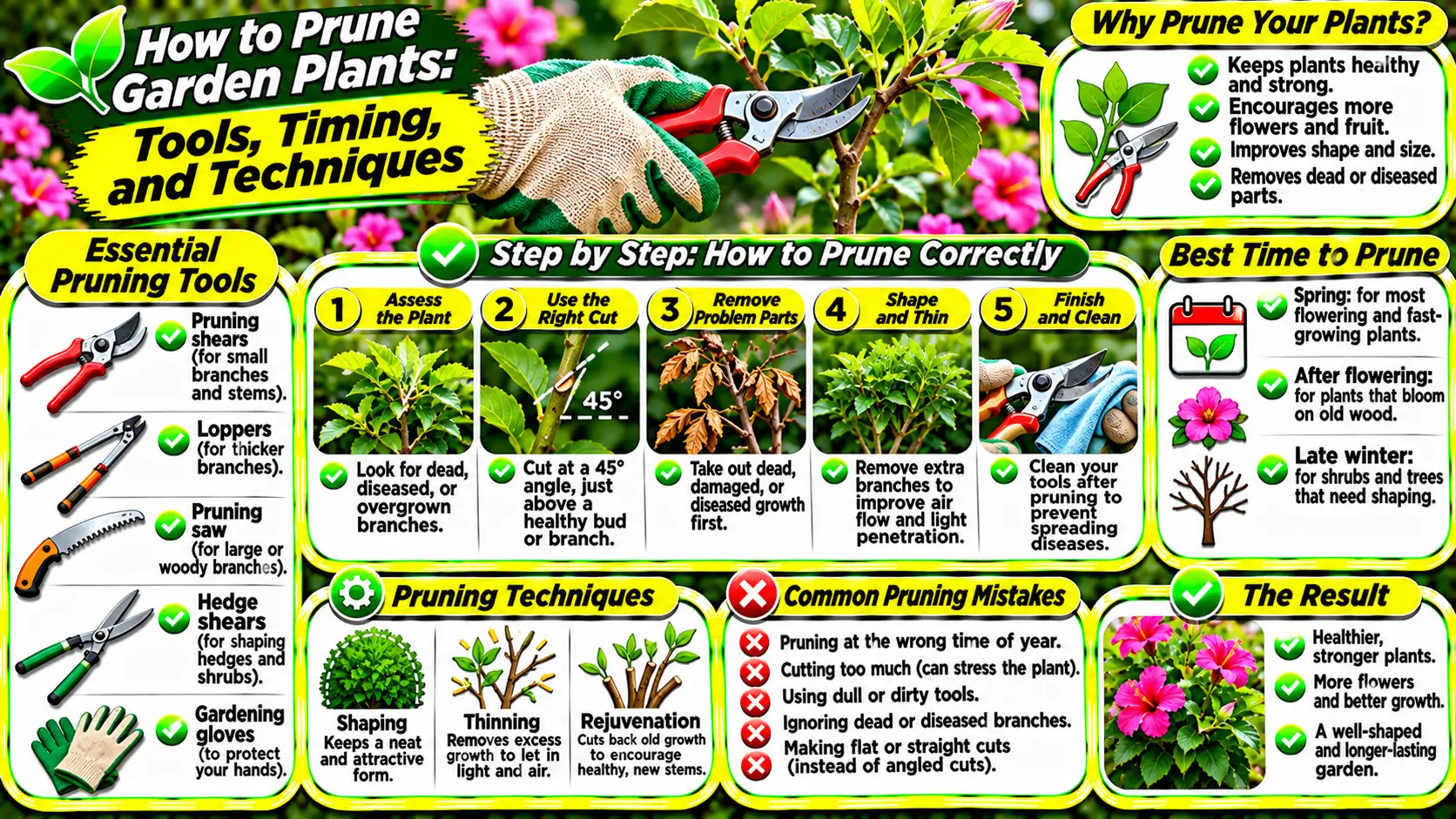
Hand pruners are useful for small stems that fit comfortably within their cutting capacity. Bypass pruners make a scissor-like cut and are generally suitable for living stems. Anvil pruners press a blade against a flat surface and may be more appropriate for dry material, but they can crush delicate living stems. Loppers provide extra leverage for thicker branches, while pruning saws are designed for branches beyond the capacity of hand tools.Use tools that are sharp, clean, and comfortable to hold. Dull blades can tear tissue and make uneven cuts. Disinfect tools when moving between plants with suspected disease, following a suitable cleaning method. Wear gloves and eye protection where appropriate. Never use a tool beyond its rated cutting capacity or attempt to cut branches overhead while standing on an unstable ladder.
Know why you are pruning
Before making a cut, identify its purpose. Remove dead, broken, diseased, or crossing branches where necessary. Thin crowded growth to improve airflow and light penetration. Shape a shrub lightly to maintain access to paths and windows. Reduce a plant’s size only when the species tolerates that type of pruning. Avoid cutting simply because a plant looks untidy; some natural forms are healthier and more attractive when left largely intact.For young shrubs and trees, early structural training can prevent future problems. Remove competing leaders or poorly placed branches only when appropriate for the species and growth stage. Large trees should not be topped to control height. Topping can create weak regrowth and long-term structural defects. If a tree has major limbs, decay, cracks, or branches near electrical infrastructure, seek qualified professional advice.
Understand flowering cycles
The timing of pruning often depends on when a plant produces flower buds. Shrubs that flower on old wood may set buds during the previous growing season. Pruning them just before flowering can remove much of the display. These plants are often pruned soon after flowering, allowing time for new growth to mature. Shrubs that flower on new wood may be pruned during dormancy or before active growth, depending on species and climate.Do not rely on a broad rule for all shrubs. Learn the species or cultivar and check a reliable local pruning guide. Climbers, roses, fruit trees, and ornamental shrubs may have different requirements. If you do not know the plant, observe it for a season and make only necessary safety or health cuts until its flowering habit is clear.
Make clean, well-positioned cuts
For a branch that joins a larger stem, locate the branch collar, the slightly swollen area at the base. A proper cut generally stays just outside this collar rather than flush against the trunk or leaving a long stub. The collar contains tissue involved in the plant’s response to the wound. Cutting into it can slow closure, while a long stub may die back.For smaller stems, cut just above a healthy outward-facing bud when shaping is appropriate. Angle and position should avoid leaving a large exposed stub or damaging the bud. Do not apply wound paint routinely unless a qualified local recommendation or specific plant-health situation calls for it. Plants generally have their own mechanisms for compartmentalizing wounds, and unnecessary coatings may interfere with those processes.
Prune shrubs without over-shearing
Many shrubs look best when their natural branching structure is preserved. Selective thinning removes chosen stems back to a main branch or the base, allowing light and air into the interior. Heading cuts shorten a stem and encourage branching below the cut. Both techniques have uses, but repeated shearing can create a dense outer shell and a bare interior.If a shrub needs a formal hedge, choose a species that tolerates clipping and trim it at suitable intervals. Keep the base slightly wider than the top where appropriate so lower foliage receives light. Avoid cutting into old bare wood unless the species is known to regenerate from it. Some evergreens do not recover well from severe cuts into leafless areas.
Prune perennials and ornamental grasses
Herbaceous perennials may be cut back after flowering, during dormancy, or in spring, depending on the species and local climate. Some seed heads provide winter interest and food for wildlife, so leaving them standing can be beneficial. Remove diseased foliage when necessary and avoid placing infected material in a home compost system unless it reaches conditions known to manage the pathogen.Ornamental grasses often retain attractive structure through a dormant season. Cut back only when new growth timing and species requirements make it appropriate. Avoid cutting evergreen or semi-evergreen grasses too low if their crowns are not suited to hard renovation. Divide crowded clumps when the species and season allow, using clean tools and replanting divisions promptly.
Pruning climbers and fruiting plants
Climbers need pruning based on their attachment method and flowering cycle. Remove dead or tangled stems and guide new growth along supports. Some flowering vines bloom on previous-season growth, while others flower on current shoots. A severe cut at the wrong time can remove the next display. Check cultivar-specific instructions before reducing a mature climber.Fruit trees and shrubs need pruning for structure, light, airflow, and productive growth, but techniques differ by crop. Stone fruit, pome fruit, berries, and grapes do not share one universal pruning calendar. Consider disease risks and local climate, and use clean tools. If a fruit tree is large or has complex structural problems, professional guidance can prevent unsafe or damaging cuts.
Common pruning mistakes
Frequent mistakes include pruning at the wrong time, removing too much growth, cutting flush to a trunk, leaving long stubs, and using blunt tools. Another mistake is trying to control a plant that is simply too large for the location. Repeated severe pruning may create more work and stress than replacing it with a species suited to the available space.Avoid pruning during extreme heat, drought, or other periods when the plant is already stressed unless removing damaged or hazardous material is necessary. Do not make large cuts from a ladder without proper equipment and training. Never prune near power lines. A qualified arborist should assess large trees and work that could affect people, buildings, or utilities.
A simple pruning workflow
Begin by identifying the plant and checking local guidance for timing. Walk around it and decide which branches must be removed for health or safety. Clean and sharpen the appropriate tools. Remove dead or damaged material first, then step back and reassess before making any shaping cuts. Work gradually, preserving the plant’s natural form and avoiding unnecessary removal.After pruning, collect debris and dispose of diseased or invasive material responsibly. Water according to the plant’s needs, but do not automatically fertilize heavily. Monitor the plant for new growth and signs of stress. Keep notes about flowering and regrowth so future pruning can be timed more accurately.
Conclusion
Good pruning is selective, informed, and moderate. Identify the plant, understand when it flowers, choose tools suited to the branch size, and make clean cuts that respect the plant’s structure. Remove damaged growth when needed, but avoid routine severe cutting or shearing that creates long-term problems.For large trees, difficult access, or branches near utilities, use a qualified professional. For ordinary shrubs and perennials, a careful approach and reliable species-specific guidance will make pruning safer and more effective.
Pruning timing by plant group
| Plant group | General timing principle | Important caution |
|---|---|---|
| Spring-flowering shrubs | Often prune after flowering | Many set flower buds on older wood |
| Summer-flowering shrubs | Often prune in late dormant season or as species requires | Confirm species-specific recommendations |
| Herbaceous perennials | Remove damaged or spent growth as appropriate | Some seed heads provide winter habitat |
| Evergreens | Light shaping during active growth when suitable | Avoid cutting beyond green growth on many species |
| Diseased branches | Remove promptly when safe and appropriate | Clean tools between cuts where disease spread is possible |
For further practical information, consult University of Minnesota Extension pruning guide.
Explore these related guides:
- How to Clean, Sharpen, and Maintain Garden Tools
- How to Divide Perennials and Rejuvenate Crowded Plants
More related garden guides:
- How to Divide Perennials and Rejuvenate Crowded Plants
- How to Prepare Your Garden for Heavy Rain and Storms
Use flowering stage and plant response to choose pruning time
For flowering shrubs, the key question is often whether buds form on last season’s wood or on growth produced in the current season. Many spring-flowering shrubs set buds during the previous growing season; pruning before they flower can remove much of the display. These plants are generally pruned soon after flowering. Many summer-flowering shrubs bloom on new growth and can be pruned before that growth begins. Confirm the species before applying either rule because exceptions are common.
| Flowering habit | Typical timing principle | Common risk of mistiming |
|---|---|---|
| Flowers on previous-season growth | Prune after flowering | Removing next season’s developing buds |
| Flowers on current-season growth | Prune before active growth, where species guidance supports it | Removing new shoots that would carry flowers |
| Grown for fruit or seed | Follow crop-specific pruning guidance | Reducing the harvest or seed crop |
| Dead, broken, or hazardous branches | Assess and remove promptly when safe | Leaving damaged wood or a safety hazard |
These are biological timing principles, not fixed calendar months. In tropical and subtropical regions, flowering and growth may follow rainfall or irrigation rather than a cold-season dormancy period. University of New Hampshire Extension’s pruning basics explains the distinction between previous-season and current-season flowering wood; verify the species and local climate before making major cuts.
Related Gardening Guides
Explore these related guides for more practical ideas and gardening advice:
- How to Divide Perennials and Rejuvenate Crowded Plants
- Choose Trees and Shrubs for a Balanced Landscape
- How to Clean, Sharpen, and Maintain Garden Tools
Frequently Asked Questions
Can I prune all garden plants at the same time of year?
No. Timing depends on species, flowering habit, climate, and the reason for pruning. Pruning at the wrong time can remove flower buds or expose plants to stress.
How much of a plant can I prune at once?
The safe amount varies by species and condition. Avoid severe pruning unless the plant can tolerate it and the timing is appropriate; remove dead or damaged growth selectively.
Should pruning tools be disinfected between plants?
Clean tools between plants when disease is suspected or when working with infected material. This helps reduce the risk of spreading pathogens through cuts.
Does pruning always encourage more flowers?
No. Some plants flower on new growth and may respond to pruning, while others flower on older stems. Identify the flowering cycle before cutting.


One thought on “How to Prune Garden Plants: Tools, Timing, and Techniques”