Introduction
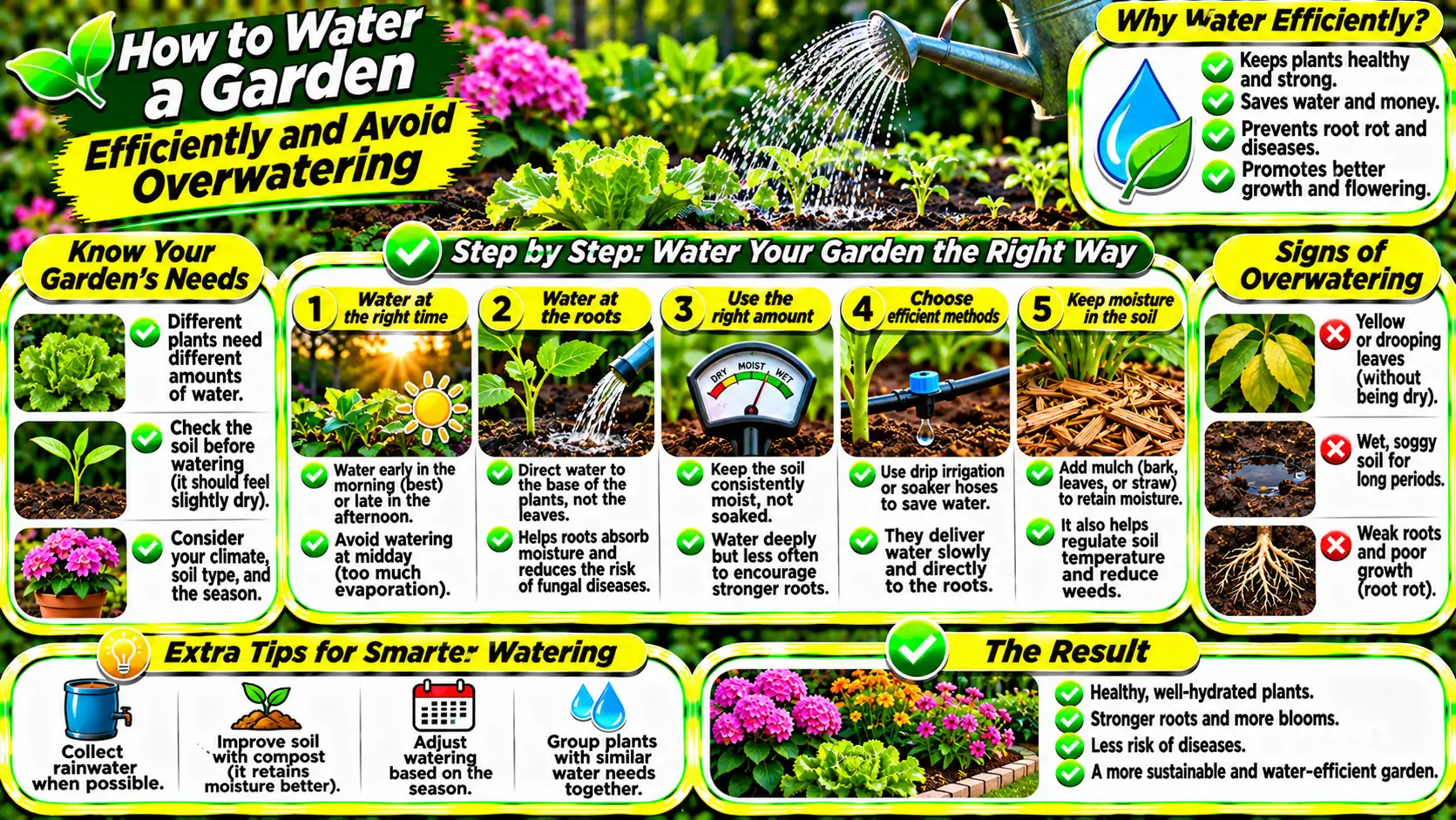
Water is essential for plant growth, but watering more often does not necessarily make a garden healthier. Too little water can cause wilting, poor establishment, and reduced flowering or harvest. Too much water can fill the air spaces in soil, deprive roots of oxygen, and encourage root diseases. Efficient watering means applying the right amount to the right place at the right time, while accounting for rainfall, soil type, plant maturity, and weather.A reliable routine begins with observation. Check the soil near the root zone before watering, especially in containers and newly planted beds. Look at the plant’s growth and consider recent weather. A fixed daily schedule may waste water after rain or fail to meet demand during a heatwave. Learn how quickly different parts of the garden dry and adjust accordingly.
Table of Contents
- Introduction
- Understand soil and water movement
- Check moisture before watering
- Choose the right time of day
- Use targeted watering methods
- Water newly planted plants differently
- Reduce water loss with garden design
- Collect and use rainwater responsibly
- Recognize overwatering and underwatering
- Calibrate watering to the root zone and recent weather
- Frequently Asked Questions
Understand soil and water movement
Sandy soils drain quickly and may need more frequent watering in smaller applications. Clay soils hold water longer but can become saturated and may absorb water slowly when dry or compacted. Loamy soils often balance drainage and water retention, although structure and organic matter still matter. Raised beds and containers behave differently from open ground because they have limited volume and may be exposed to wind and heat.Water should reach the active root zone rather than merely wetting the surface. Shallow, frequent sprinkling can encourage roots to remain near the surface, where they are more vulnerable to drying. In suitable soils, slower, deeper watering can encourage a more extensive root system. However, the correct depth and frequency depend on species, soil, and climate; plants adapted to dry conditions may need the soil to dry between applications.
Check moisture before watering
Use a finger, small trowel, or moisture meter to assess the soil at a depth relevant to the plant. The surface can look dry while the root zone remains moist, or it can look damp after a brief shower while deeper soil is dry. For containers, learn the difference in pot weight between a freshly watered and a drier state. Check several locations because moisture can vary within the same bed.Plants also provide clues, but symptoms are not always straightforward. Wilting can indicate dry soil, waterlogged roots, heat stress, or root damage. Yellow leaves may result from several causes. If a plant looks stressed, check soil moisture and drainage before adding water. Repeatedly watering a plant with root rot can make the problem worse.
Choose the right time of day
Watering early in the day often reduces evaporation and gives foliage time to dry if it becomes wet. This can be useful in gardens where fungal disease is a concern. In very hot or windy conditions, avoid watering during the hottest part of the day when a large proportion may evaporate. Evening watering may be practical in some climates, but prolonged leaf wetness overnight can increase disease pressure in susceptible plants.The best time is also affected by local water restrictions and the type of irrigation system. Follow municipal guidance where it applies. If a plant is severely dry, water it when you can rather than waiting for an ideal time. The priority is to deliver water to the root zone efficiently and safely.
Use targeted watering methods
A watering can or hose with a gentle nozzle is useful for small gardens and containers. Direct water toward the soil rather than repeatedly wetting leaves. Soaker hoses and drip irrigation can deliver water slowly near plant roots, reducing runoff and evaporation when installed and maintained correctly. Drip emitters should be checked for blockages, leaks, and uneven output.Sprinklers cover larger areas but may wet paths and hard surfaces as well as plants. Wind can distort their pattern and reduce efficiency. Adjust sprinkler heads so water reaches the intended bed, and run the system long enough to soak the soil without creating runoff. If water begins to flow away, pause and allow it to infiltrate before continuing.
Water newly planted plants differently
New plants need close monitoring because their roots have not yet spread into the surrounding soil. Water the root ball and adjacent soil so roots are encouraged to grow outward. Check moisture more frequently during the first weeks after planting, especially in hot or windy weather. Do not keep the root ball permanently saturated; oxygen is still necessary for root function.Trees and shrubs may need supplemental watering through their establishment period, which can extend beyond the first few weeks. The exact duration depends on plant size, soil, rainfall, and climate. Apply water slowly over the root zone rather than only at the trunk. A layer of mulch can help conserve moisture, but keep it away from direct contact with stems and trunks.
Reduce water loss with garden design
Mulch can reduce evaporation, moderate soil temperature, and limit weed competition. Use an appropriate material and depth for the plant community, leaving space around stems and crowns. Organic mulch gradually breaks down and may improve soil structure, while mineral mulch behaves differently and can increase heat in some locations. Choose based on climate, plant needs, and maintenance preferences.Group plants with similar water requirements. Place drought-tolerant species in areas that dry quickly and moisture-loving plants where irrigation can be managed separately. Reduce unnecessary lawn areas if they require substantial watering, and use suitable ground covers or planted beds where appropriate. Improve soil structure when needed, and avoid compacting beds by walking on them when wet.
Collect and use rainwater responsibly
Rain barrels or tanks can capture roof runoff for garden use where local rules allow. Keep collection systems covered and screened, use secure lids, and prevent standing water from becoming a mosquito habitat. Ensure that the roof material and stored water are suitable for the intended plants. Water collected from roofs may not be appropriate for edible crops if contaminants are present, so understand local guidance before using it.Do not divert runoff in ways that damage foundations, neighboring properties, or natural waterways. Rainwater harvesting is most useful when paired with efficient irrigation and a realistic understanding of storage capacity. A small tank may empty quickly during a long dry period, so it should supplement rather than replace a water plan.
Recognize overwatering and underwatering
Underwatering may cause dry, brittle leaf edges, drooping, slow growth, and soil pulling away from the sides of a pot. Overwatering may produce persistent wet soil, yellowing leaves, soft stems, fungus gnats, and root decline. These signs overlap with other problems, so inspect roots and soil conditions before deciding what is happening.If soil remains saturated, stop adding water until the plant’s needs and drainage are assessed. Check whether the container has holes and whether the mix has broken down. In garden beds, investigate compaction, runoff, or a high water table. If roots are damaged, improve conditions and remove severely affected material only when appropriate. Do not use fertilizer as a quick fix for a plant with water-related root stress.
Conclusion
Efficient garden watering depends on soil moisture, plant needs, weather, and the way water is delivered. Check the root zone before watering, apply water where roots can use it, and adjust frequency for containers, new plantings, and established beds. Drip systems, mulch, rainwater collection, and grouping plants by water needs can improve efficiency.Avoid treating wilting as an automatic signal to water. Check for both dry and saturated soil, and respond to the underlying condition. A garden that receives thoughtful, targeted watering is healthier and uses water more responsibly than one maintained by a rigid schedule.
Garden watering methods compared
| Method | Best use | Watch for |
|---|---|---|
| Drip irrigation | Delivering water near roots in beds and containers | Clogged emitters and uneven flow |
| Soaker hose | Slow watering along rows or borders | Leaks and pressure differences |
| Hand watering | Small areas and individual containers | Shallow, inconsistent watering |
| Sprinkler | Broad planted areas or lawns | Wind drift and unnecessary leaf wetness |
| Rainwater collection | Supplementing irrigation where permitted | Safe storage and mosquito prevention |
For further practical information, consult University of Minnesota Extension watering guidance.
Explore these related guides:
- Garden Irrigation Maintenance: Checking Hoses, Drip Lines, and Sprinklers
- Prepare Your Garden for Heavy Rain and Storms
More related garden guides:
- How to Prepare Your Garden for Heavy Rain and Storms
- Mulching a Garden: Types, Benefits, and Common Mistakes
Calibrate watering to the root zone and recent weather
Instead of following a fixed weekly schedule, check moisture where the active roots are located. The surface can look dry while deeper soil remains wet, or a light shower may wet only the top few centimeters. Use a trowel or soil probe at several points in the bed and compare the moisture at shallow and deeper levels. Water when the root zone is beginning to dry for that plant, then check whether the water has reached the intended depth.
Adjust the interval after rainfall, during heat or wind, and as plants grow. Sandy soils usually drain faster than fine-textured soils; raised beds and containers may dry faster than in-ground beds. Newly planted specimens have a smaller effective root zone than established plants, so check them more frequently without keeping the root ball continuously saturated. If water runs off before soaking in, apply it in shorter cycles with pauses rather than increasing the total duration blindly.
Record how long a watering zone runs and inspect the soil afterward. This simple calibration reveals clogged emitters, uneven sprinkler coverage, and runoff that a timer alone cannot detect. Local extension irrigation guidance should determine crop-specific targets; weather, soil texture, plant stage, and container size all change demand.
Related Gardening Guides
Explore these related guides for more practical ideas and gardening advice:
- Garden Irrigation Maintenance: Checking Hoses, Drip Lines, and Sprinklers
- Prepare Your Garden for Heavy Rain and Storms
- Mulching a Garden: Types, Benefits, and Common Mistakes
Frequently Asked Questions
What is the best time of day to water a garden?
Early morning is often practical because plants can take up water before the hottest part of the day and foliage has time to dry. Adapt timing to local climate, irrigation method, and water restrictions.
How can I tell when garden soil needs water?
Check moisture below the surface near the root zone rather than relying only on dry-looking topsoil. Plant type, soil texture, recent rain, and weather all affect watering needs.
Is drip irrigation better than sprinklers?
Drip irrigation can deliver water close to roots and reduce wet foliage, while sprinklers suit some lawns and broad plantings. Choose according to the layout, crop, soil, and system maintenance needs.
Can overwatering look like underwatering?
Yes. Roots damaged by saturated soil may not take up water effectively, so plants can wilt even when the soil is wet. Check both plant symptoms and root-zone moisture before watering again.


2 thoughts on “How to Water a Garden Efficiently and Avoid Overwatering”