Introduction
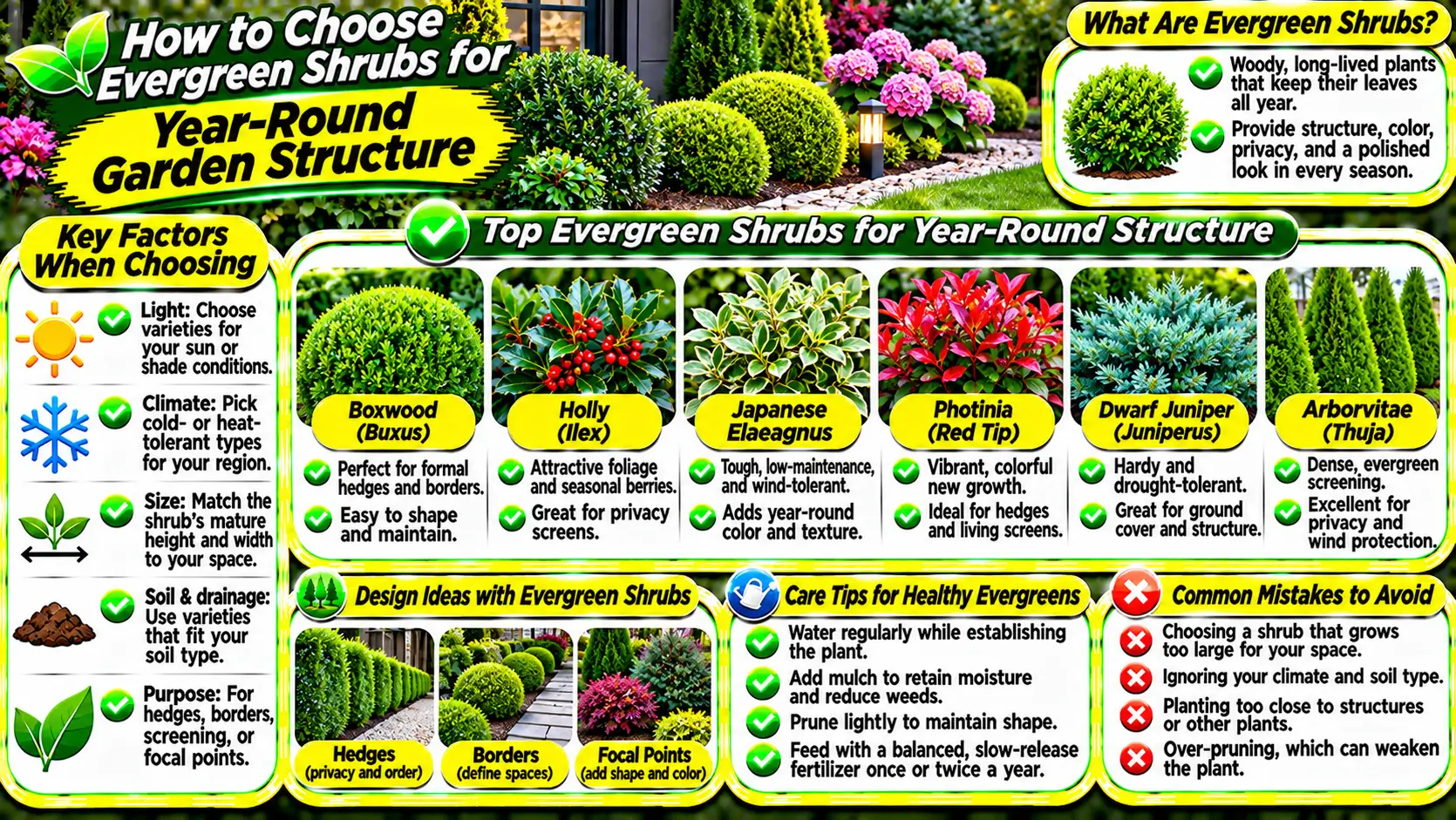
Evergreen shrubs provide continuity in a garden when flowering plants are dormant or deciduous trees have lost their leaves. They can form a screen, define a path, soften a wall, create a backdrop for seasonal flowers, or give a small courtyard a sense of structure. The term evergreen describes plants that retain foliage through the year, but it does not mean that leaves never fall. Most evergreens replace older leaves gradually, and some may shed more noticeably during stress or seasonal change.Choosing the right shrub requires more than selecting a shape at the nursery. Mature height and width, local climate, soil drainage, sunlight, water availability, and maintenance all affect long-term performance. A shrub that eventually grows far beyond its allotted space may need repeated severe pruning. A species adapted to cool conditions may struggle in tropical heat, while a drought-tolerant plant may decline in poorly drained soil. Begin with the site and its limitations.
Table of Contents
- Introduction
- Measure the planting space first
- Match shrubs to climate and exposure
- Understand evergreen shrub types
- Soil, drainage, and watering
- Planting and spacing correctly
- Pruning and long-term maintenance
- Design uses for evergreen shrubs
- Buying checklist and common mistakes
- Compare mature size, screening value, and maintenance
- Frequently Asked Questions
Measure the planting space first
Measure the width and height available, including the space needed for paths, windows, fences, and neighboring plants. Read the mature dimensions on the plant label, then allow room for natural growth and airflow. Nursery specimens are often young and compact, so their current size is a poor guide to their eventual footprint. Avoid planting a large shrub close to a wall simply because it fits in its container today.Think about the purpose of the planting. A low evergreen may define a border without blocking views. A medium shrub can frame an entrance or provide a backdrop. A taller, denser shrub may create privacy, but it should not block essential access or reduce visibility near driveways. If you need a screen, consider the mature height and density of several plants rather than placing a single shrub too close to the boundary.
Match shrubs to climate and exposure
Use plants suited to the local climate and the actual microclimate of the garden. Coastal sites may experience salt spray and wind. Urban courtyards can become hotter because of paving and reflected heat. Elevated or exposed gardens may experience stronger winds and cooler nights. A sheltered wall can create a warmer pocket than the surrounding landscape. These differences matter even within the same town.Check whether the shrub prefers full sun, partial shade, or shade. Full-sun plants generally need several hours of direct sunlight, while shade-tolerant plants can manage with less. Deep shade is different from bright shade beneath a light canopy. Observe the site over a full day if possible. Also consider how nearby trees will change the amount of light as they grow. A plant selected for today’s sunny space may be shaded in a few years.
Understand evergreen shrub types
Broadleaf evergreens have leaves that are generally wide and often glossy or textured. They can create a lush appearance and may produce flowers or berries. Needle-leaved and scale-leaved evergreens, including many conifers, offer fine textures and often strong architectural forms. Some shrubs have colorful new growth, variegated foliage, or leaves that change tone with temperature. These features can add interest even when flowers are absent.Do not assume that all evergreens are equally dense or equally suitable for clipping. Some species naturally form compact mounds, while others develop open branching. A naturally compact shrub may need little pruning. A fast-growing screening plant may require more frequent maintenance. If you want a formal hedge, choose a species that tolerates repeated trimming and check whether it can regenerate from the parts you plan to cut.
Soil, drainage, and watering
Before planting, assess drainage. Dig a test hole and observe how quickly water disappears after filling it. Persistently wet soil can cause root problems for shrubs that need oxygen around their roots. If drainage is poor, consider a raised planting area, a suitable alternative species, or professional advice before making major changes. Do not simply place gravel in the bottom of a planting hole; this does not correct a poorly drained site.Improve soil based on its actual condition. Incorporating organic matter can improve structure in many soils, but the best approach depends on whether the soil is sandy, clay-heavy, compacted, or already rich. Avoid creating a small pocket of very different soil that holds water around the root ball. Water newly planted shrubs thoroughly and monitor them during establishment. Once established, watering frequency depends on species, soil, rainfall, and heat. Deep, appropriate watering is generally more useful than frequent shallow sprinkling.
Planting and spacing correctly
Plant at a suitable time for the local climate, avoiding periods of extreme heat or drought when possible. Water the root ball before planting. Dig a hole wider than the root ball but no deeper than its original soil level. Loosen circling roots gently when necessary, and position the shrub so the top of the root ball is level with or slightly above the surrounding soil where drainage is a concern. Backfill with the excavated soil unless a site-specific amendment is recommended.Water slowly to settle the soil around the roots, then apply an organic mulch layer while keeping it away from direct contact with the stem. Mulch helps moderate soil temperature and reduce evaporation. Space shrubs according to their mature width and intended effect. A hedge may be planted closer than individual specimen shrubs, but overcrowding can reduce airflow and increase maintenance. Allow enough room for access to prune, inspect, and clean around the plants.
Pruning and long-term maintenance
Prune to remove dead, damaged, or crossing branches and to maintain a healthy structure. The correct timing depends on the species and whether it flowers on old or new growth. Pruning immediately before a flowering period may remove buds. Avoid automatically shearing every evergreen into a tight geometric shape; repeated surface clipping can create a dense outer layer while the interior becomes bare. Selective cuts that preserve natural branching often produce a healthier appearance.Use sharp, clean tools and avoid removing too much foliage at once. If a shrub has outgrown its space, determine whether it tolerates renovation pruning before cutting it back hard. Some evergreens do not regrow reliably from old bare wood. Inspect plants periodically for scale insects, mites, leaf spots, and signs of root stress. Diagnose the cause before applying any treatment. Good spacing, suitable watering, and healthy growing conditions prevent many recurring problems.
Design uses for evergreen shrubs
Evergreen shrubs can create a visual framework around seasonal planting. A simple arrangement might use one taller shrub as a focal point, low mounds to define a border, and flowering perennials in front. Repeating a small number of species can make a garden feel coherent, while contrasting leaf size and texture prevents the planting from appearing flat. In a small garden, choose fewer varieties and give each enough room to show its natural form.For privacy, combine shrubs with different heights rather than creating an excessively tall solid wall that dominates the space. For a narrow side passage, use upright or columnar forms only where mature width allows safe passage. Near an entrance, choose plants that do not obstruct lighting, steps, or sightlines. Consider the appearance from inside the home as well as from the garden; an evergreen can provide a useful view through a window during every season.
Buying checklist and common mistakes
At the nursery, check the botanical name as well as the common name because common names can refer to different species. Ask about mature size, local hardiness, water needs, pruning response, and any known invasive behavior in your region. Look for healthy foliage, firm stems, and roots that are not severely circling or emerging from the drainage holes in a dense mass. Avoid plants with widespread leaf damage, sticky residue, webbing, or soft, discolored stems.Common mistakes include buying for current appearance alone, planting too close together, ignoring drainage, and choosing a species that needs more water or pruning than the gardener can provide. Another mistake is assuming an evergreen will remain attractive without care. All shrubs need monitoring, occasional pruning, and appropriate watering during establishment. A thoughtful choice at the beginning can reduce years of corrective work.
Conclusion
Evergreen shrubs are valuable because they give a garden structure and foliage throughout the year. The strongest selection begins with the planting space: measure it, understand its light and soil, and identify the job the shrub must perform. Then compare mature dimensions, climate suitability, texture, maintenance needs, and the plant’s response to pruning.Choose healthy specimens with clear labels, plant at the correct depth, water carefully during establishment, and leave room for mature growth. A small group of well-matched evergreen shrubs can provide privacy, define outdoor rooms, and support seasonal planting without overwhelming the garden.
Evergreen Shrub Selection at a Glance
| Shrub role | What to look for | Key planning point |
|---|---|---|
| Low border | Compact mature height and dense branching | Keep clear of paths and allow for spread |
| Privacy screen | Suitable mature height and foliage density | Check boundary space, wind exposure, and local suitability |
| Specimen shrub | Distinctive foliage, form, or seasonal interest | Provide room to show its natural shape |
| Container planting | Compact roots and tolerance of restricted soil volume | Plan regular moisture checks and winter or heat protection |
| Coastal or exposed site | Documented tolerance of local wind, salt, and heat | Choose regionally adapted species rather than relying on generic labels |
For species selection and care advice, consult University of Minnesota Extension’s trees and shrubs resources, then confirm recommendations with a local horticultural or extension service because climate suitability varies by region.
Related reading: choosing trees and shrubs for a balanced landscape, designing garden borders, and selecting ground covers for different conditions.
Compare mature size, screening value, and maintenance
Evergreen does not mean maintenance-free. Before choosing a shrub for year-round structure, compare its mature height and width with the available space, the amount of clipping it will need, and whether it can tolerate the site’s exposure. A plant that must be sheared several times each year to stay within its allotted space is probably the wrong long-term choice. Also check whether the species naturally develops a dense habit or becomes open and leggy in shade.
| Design purpose | Selection question | Long-term issue to check |
|---|---|---|
| Privacy screen | Will the mature height and density block the intended view? | Spacing, airflow, and access for pruning |
| Foundation planting | Will the plant remain clear of windows, paths, and utilities? | Repeated shearing or blocked access |
| Small-space structure | Is the mature width genuinely compact? | Root space and eventual crowding |
| Windbreak or boundary | Can the species tolerate local wind and soil conditions? | Wind exposure and secure establishment |
UF/IFAS Extension’s Right Plant, Right Place guidance recommends evaluating function, mature size, soil, light, water, and maintenance together. Use local plant references for mature dimensions and avoid treating a shrub’s nursery size as a reliable guide to its eventual footprint.
Related Gardening Guides
Explore these related guides for more practical ideas and gardening advice:
- Choose Trees and Shrubs for a Balanced Landscape
- Design Garden Borders for Year-Round Interest
- Choose Ground Cover Plants for Different Garden Conditions
Frequently Asked Questions
Do evergreen shrubs keep all their leaves year-round?
They retain foliage through the year but still replace older leaves. Some species shed more noticeably during seasonal change or stress.
How do I choose the right size evergreen shrub?
Check the shrub’s expected mature height and width, growth rate, and natural shape. Allow enough space so it does not require repeated severe pruning.
Can evergreen shrubs grow in shade?
Some tolerate partial or full shade, while others need direct sun to maintain dense growth. Match the species to the actual light conditions at the planting site.
How often should evergreen shrubs be pruned?
Pruning needs vary by species and purpose. Remove dead or damaged growth as needed and schedule shaping according to the plant’s growth and flowering habit.
2 thoughts on “How to Choose Evergreen Shrubs for Year-Round Garden Structure”