Introduction
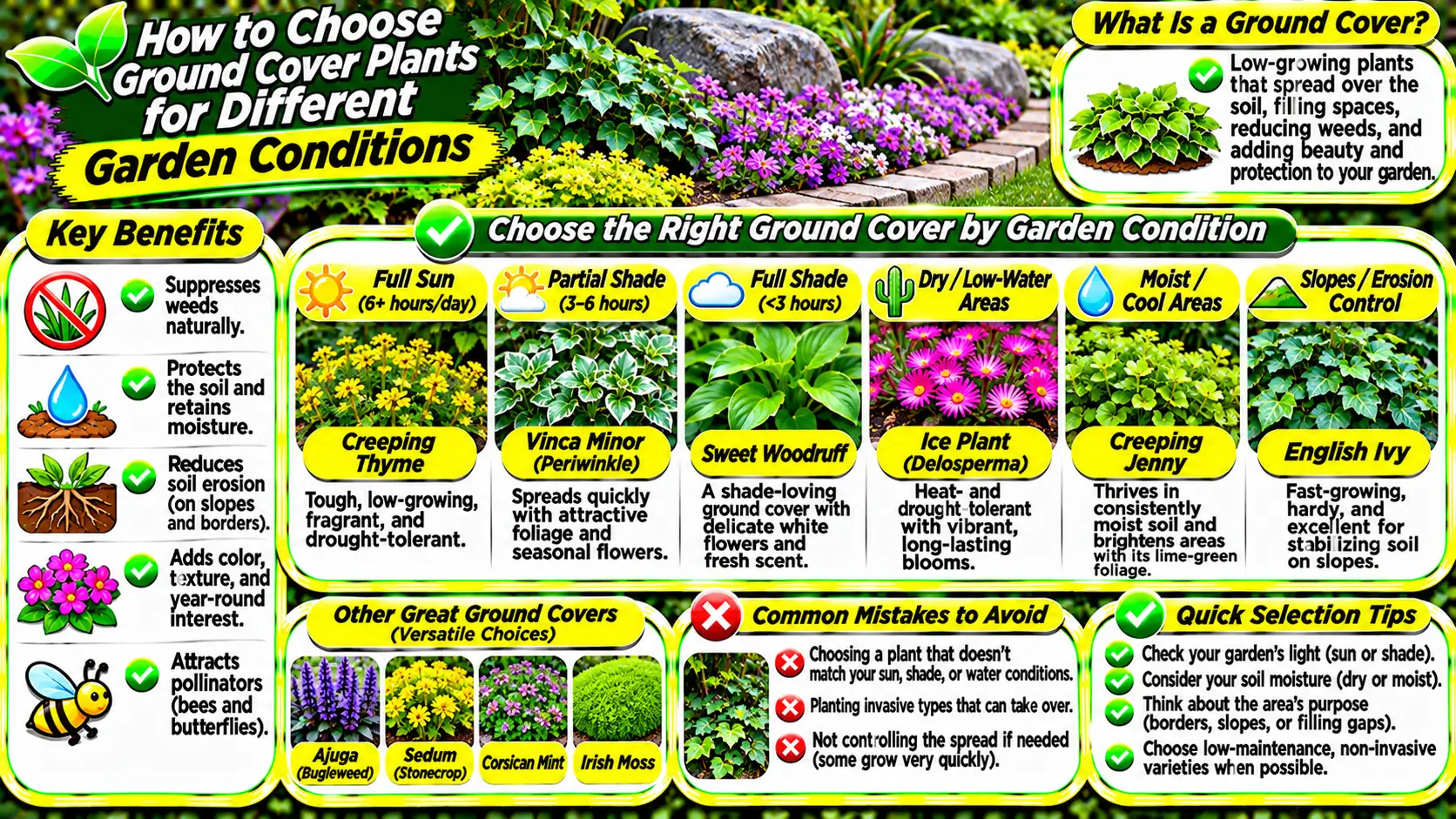
Ground cover plants grow close to the soil and can help connect planting beds, soften edges, reduce exposed soil, and create a visual transition between larger plants. Some form dense mats, others spread by runners, and some grow as low mounds. A suitable ground cover may reduce the need for repeated weeding and help protect soil from direct sun and rain impact. However, no plant is a universal solution. The right choice depends on light, soil moisture, climate, slope, foot traffic, and how much spreading you are prepared to manage.Before selecting a ground cover, identify the problem you want it to solve. Is the area difficult to mow, too shady for lawn grass, exposed to erosion, or simply in need of a low border? Decide whether the planting should be evergreen, flowering, edible, or purely functional. Then choose a species whose mature growth habit fits the space and is not invasive in your region.
Table of Contents
- Introduction
- Ground covers for sunny areas
- Ground covers for shade
- Ground covers for dry or low-water areas
- Ground covers for slopes and erosion control
- Ground covers and foot traffic
- Spacing and establishment
- Spread, boundaries, and invasive potential
- Maintenance and seasonal care
- Estimate coverage and control the spread of groundcovers
- Frequently Asked Questions
Ground covers for sunny areas
Sunny sites often suit low-growing plants that tolerate heat and direct light, provided the soil and water conditions are appropriate. Some creeping herbs and low perennials can work well in sunny borders, but their performance differs by climate. Plants adapted to dry Mediterranean conditions may decline in humid, waterlogged soil. Conversely, a species that prefers regular moisture may need frequent irrigation in a hot exposed bed.Check the plant’s mature height and spread. A ground cover that grows much taller than expected can hide edging, smother smaller plants, or require repeated trimming. Flowering ground covers can attract pollinators, but choose varieties that do not spread aggressively beyond the intended area. In hot climates, a layer of suitable mulch may help new plants establish while their foliage fills in, but do not bury crowns or stems.
Ground covers for shade
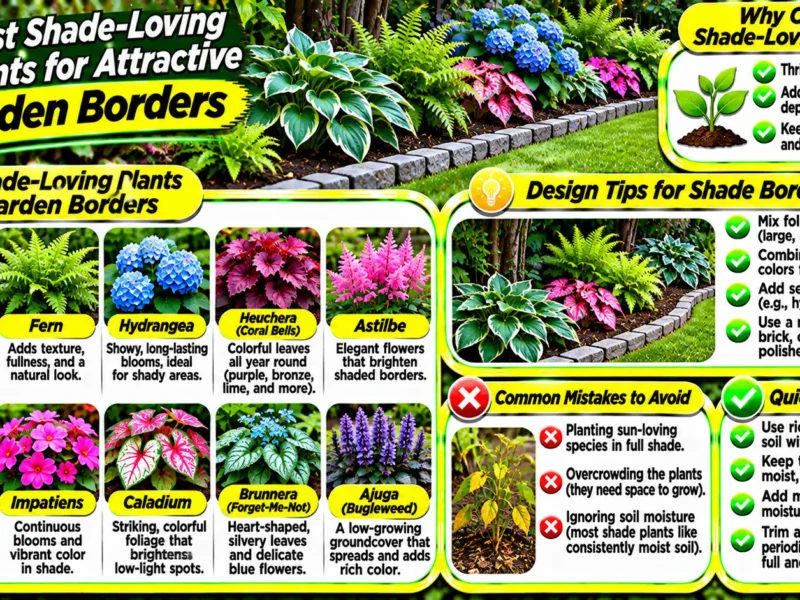
Shaded areas can be challenging because many lawn grasses and flowering plants need more light than the site provides. Shade-tolerant ground covers can create a continuous planting beneath trees or along north-facing walls, but the degree of shade matters. Bright filtered light beneath a high canopy differs from deep shade under dense evergreen branches. Root competition from trees can also make the soil dry even when the area looks sheltered.Observe how much light reaches the ground and whether tree roots absorb water quickly. Select plants adapted to both the light level and moisture pattern. Ferns and certain low foliage perennials may work in moist, sheltered shade, while other species tolerate dry shade once established. Avoid digging deeply around mature tree roots. Plant smaller plugs or pots carefully and water them as they establish without creating prolonged saturation around tree trunks.
Ground covers for dry or low-water areas
In dry areas, select plants adapted to the local rainfall pattern and soil drainage. Low-growing succulents may suit some warm, sunny locations, while drought-tolerant grasses or woody perennials may be better in other climates. A plant described as drought tolerant still needs water while establishing, and it may require supplemental irrigation during unusually long dry periods.Avoid choosing a dry-climate ground cover for a site that remains wet after rain. Root oxygen is essential, and many drought-adapted plants decline in saturated soil. Improve the site or select a species suited to its actual moisture conditions. Once plants establish, water deeply when needed rather than giving frequent shallow sprinklings. A mixed planting of species with similar water requirements can be more resilient than a single variety across a site with changing conditions.
Ground covers for slopes and erosion control
Ground covers can help stabilize soil on slopes by developing roots and reducing the impact of raindrops on bare ground. The best species depends on slope angle, soil type, rainfall intensity, and the amount of maintenance access. A plant with a dense fibrous root system may help bind surface soil, while a spreading shrub may provide deeper structure. In severe erosion areas, planting alone may not be enough; drainage management, erosion-control matting, or professional landscape advice may be necessary.Planting on a slope can be difficult because water runs off before it soaks in. Small planting pockets, temporary erosion-control materials, and careful watering may help during establishment. Avoid creating channels that direct runoff toward buildings or neighboring properties. Keep access routes safe and do not use plants that become slippery or obstruct steps. Choose a species that can be maintained without repeatedly walking on unstable ground.
Ground covers and foot traffic
Not every ground cover tolerates walking. Some withstand occasional light foot traffic, while others are ornamental and should not be stepped on. If people will cross the area regularly, consider stepping stones or a defined path with plants between them. This reduces damage and makes maintenance easier. Check the plant’s recovery after light compression and whether it becomes slippery when wet.A low-growing plant can soften a path edge, but keep it from spreading across the walking surface. Trim growth that hides paving or creates a trip hazard. In high-traffic areas, durable paving or a lawn alternative specifically suited to foot traffic may be more appropriate than a delicate flowering mat. Match the surface to how the space is actually used, not only how it looks in a garden photograph.
Spacing and establishment
Ground covers need time to fill an area. Plant spacing depends on the mature spread and the desired speed of coverage. Closer spacing may create a quicker visual result but increases the initial cost and can create competition if plants are too crowded. Wider spacing costs less but leaves more exposed soil for longer, so weed management and mulch may be needed during establishment.Prepare the soil by removing persistent weeds and correcting drainage issues where possible. Avoid unnecessary deep cultivation on slopes or around established tree roots. Set each plant at the correct depth and water thoroughly. Keep the area free of competing weeds while the ground cover develops. Do not assume that a dense planting will automatically suppress every weed; some aggressive weeds can grow through or over the new plants.
Spread, boundaries, and invasive potential
A plant that spreads rapidly can be useful in a large, contained area but troublesome in a small border. Research whether the species spreads by runners, rhizomes, seed, or fragments. Check local invasive species information before planting, because a ground cover that behaves well in one region may escape cultivation in another. Avoid using invasive plants near natural habitats, waterways, or conservation areas.Create clear boundaries with edging, paths, or regular inspection. Remove unwanted runners before they root and collect seed heads if self-seeding becomes excessive. Do not dump garden waste in natural areas. If a plant becomes difficult to control, identify it correctly and follow local disposal advice. A slower-growing native or regionally appropriate alternative may take longer to fill the space but require less long-term intervention.
Maintenance and seasonal care
Ground covers still need care after they form a mat. Remove dead foliage, check for pests and disease, and thin crowded patches when airflow becomes poor. Some species benefit from a light trim after flowering; others should not be cut into old woody growth. Learn the plant’s growth cycle before pruning. Refresh mulch only where it is useful and avoid covering the crowns of plants.Inspect irrigation so water reaches the root zone rather than running off the surface. If sections decline, investigate the cause before replacing them. Uneven sunlight, compacted soil, drainage problems, pests, or competition from tree roots may explain patchy growth. Correcting the underlying issue is more effective than repeatedly planting replacements that face the same conditions.
Conclusion
Ground cover plants can make a garden easier to manage and more visually connected, but their success depends on matching the species to the site. Consider sun or shade, soil moisture, slope, foot traffic, mature spread, and local ecological suitability. Choose plants that provide the function you need without becoming difficult to control.Prepare the area, space plants according to their growth habit, and manage weeds while the planting establishes. Monitor boundaries and seasonal growth so the ground cover remains an asset rather than a maintenance problem. With careful selection, low-growing plants can protect soil, soften hard edges, and create a coherent garden floor.
Ground cover selection by site condition
| Site condition | Traits to look for | Potential concern |
|---|---|---|
| Full sun | Heat and sun tolerance | Water needs during establishment |
| Shade | Low-light adaptation | Competition from tree roots |
| Dry slope | Deep or spreading roots and drought tolerance | Establishment before erosion occurs |
| Moist area | Species tolerant of wet soil | Standing water and root rot |
| Near paths | Low-growing, durable, non-invasive habit | Spread into paving or neighboring beds |
| Wildlife garden | Locally appropriate native species | Avoid invasive or aggressive introductions |
For further practical information, consult University of Minnesota Extension ground cover guidance.
Explore these related guides:
- Best Shade-Loving Plants for Attractive Garden Borders
- Best Native Plants for a Resilient, Wildlife-Friendly Garden
More related garden guides:
Estimate coverage and control the spread of groundcovers
Groundcover spacing should reflect the plant’s mature width, growth rate, and the time available for the area to fill in. Closer spacing can reduce the period when bare soil is exposed, but it also increases the initial plant cost and may create crowding, poor airflow, or competition as plants mature. Wider spacing saves plants at installation but leaves more room for weeds and erosion during establishment. Use the nursery’s mature spread and a locally tested spacing recommendation rather than assuming every species should be planted at the same distance.
Before planting, remove perennial weeds and identify how the groundcover spreads: runners, stolons, rhizomes, self-seeding, or expanding crowns. Install a physical edge or choose a less vigorous species where it meets lawn, paths, or neighboring planting beds. Check local invasive-plant lists before buying a fast-spreading groundcover; a plant that is manageable in one region can escape cultivation in another.
University of Maryland Extension’s groundcover guide discusses spacing trade-offs, weed removal, wildlife value, and aggressive growth. It also cautions that many groundcovers do not tolerate repeated foot traffic. Treat a planting as established only after it has filled enough of the soil surface to compete effectively, not simply because the plants have survived their first few weeks.
Related Gardening Guides
Explore these related guides for more practical ideas and gardening advice:
- Best Shade-Loving Plants for Attractive Garden Borders
- Choose Trees and Shrubs for a Balanced Landscape
- Create a Vertical Garden: Structures, Plants, and Maintenance
Frequently Asked Questions
What makes a ground cover suitable for a garden?
Choose one that matches the site’s sunlight, soil moisture, climate, slope, and expected foot traffic. Its mature spread and maintenance needs should also fit the area.
Can ground cover plants prevent weeds completely?
No. A dense, healthy planting can reduce open soil and suppress many weeds, but weeds may still establish before the ground cover fills in or in gaps that develop.
Are all spreading ground covers safe to plant?
No. Some spread aggressively or become invasive outside cultivation. Check regional invasive-plant guidance and choose a species appropriate for your local ecosystem.
How should I prepare soil before planting ground cover?
Remove persistent weeds, address drainage or compaction where practical, and prepare the planting area according to the selected species. Water during establishment and mulch between young plants if needed.
4 thoughts on “How to Choose Ground Cover Plants for Different Garden Conditions”