Introduction
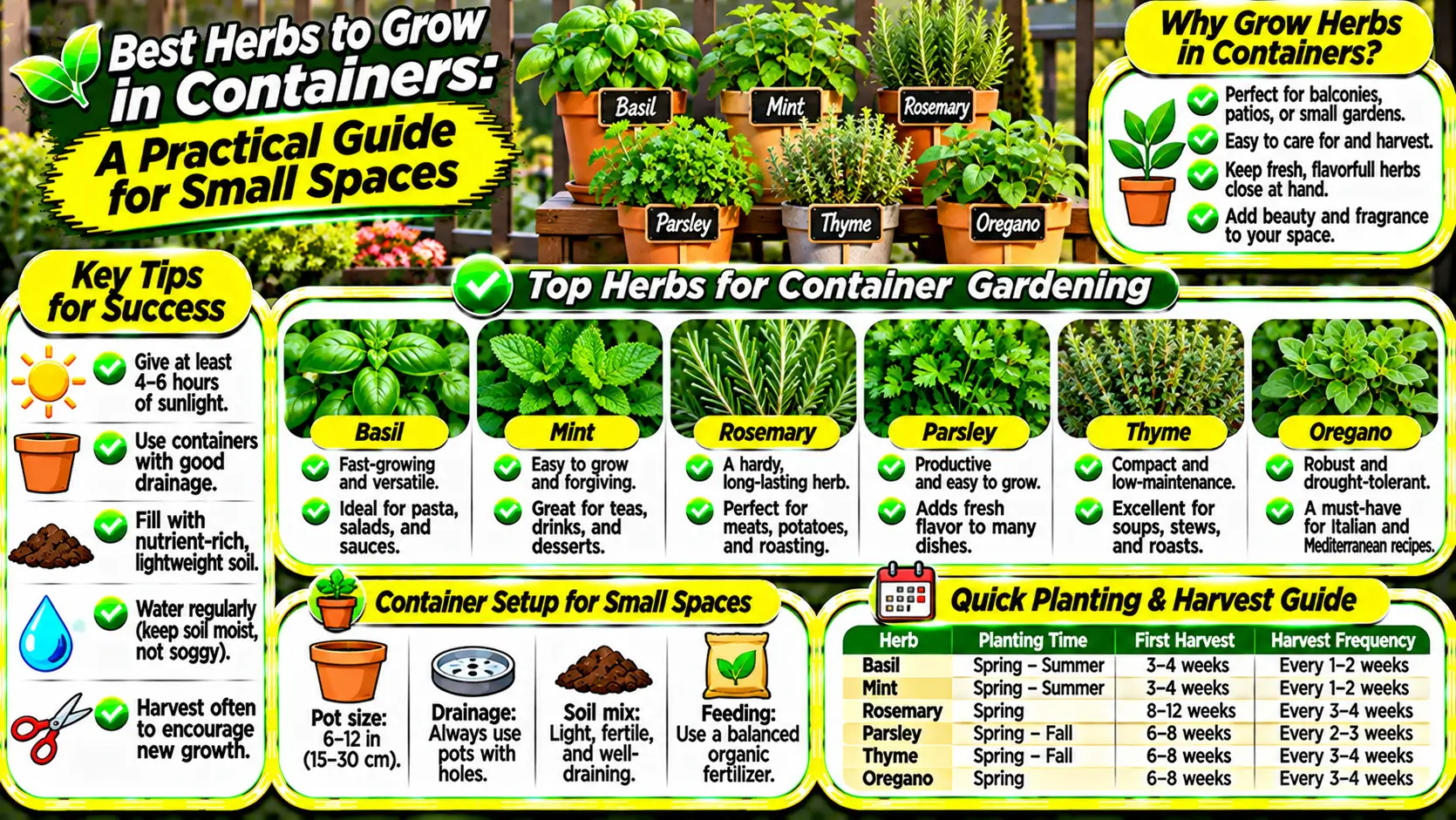
Growing culinary herbs in containers makes fresh leaves accessible even when there is no garden bed. A balcony, patio, sunny windowsill, or a few well-lit steps can support a useful collection. Containers also make it easier to control soil quality, move plants to better light, and keep vigorous herbs from spreading through the garden. Success depends on selecting herbs that suit the available conditions rather than trying to grow every variety in one pot.Start by observing sunlight. Many Mediterranean herbs, including rosemary, thyme, oregano, and sage, prefer several hours of direct sun and sharply drained growing media. Basil and parsley also appreciate good light, but their watering needs and temperature preferences differ. Mint tolerates some shade and moisture but spreads aggressively, making it a strong candidate for its own container. Group plants only when their light and moisture needs are compatible.
Table of Contents
- Introduction
- Choosing containers and drainage
- Basil for warm, sunny locations
- Rosemary, thyme, oregano, and sage
- Parsley, chives, and cilantro
- Mint deserves its own pot
- Potting mix, feeding, and watering
- Harvesting and ongoing care
- Designing a small container herb garden
- Group container herbs by water and harvest needs
- Frequently Asked Questions
Choosing containers and drainage
Choose a container with drainage holes. Without an exit for excess water, the lower part of the pot can remain saturated even when the surface looks dry. The container should be large enough for the herb’s mature root system but not excessively large, because a very large volume of wet mix can dry slowly around a small root ball. A pot that is too small dries rapidly and may restrict growth. Check the plant label and consider how often you can water.Plastic pots are lightweight and retain moisture longer, while unglazed terracotta loses water through its sides and may dry more quickly. Either can work if watering is adjusted. In hot, windy locations, terracotta may require more frequent checks. Place saucers underneath to protect surfaces, but empty standing water after irrigation. If you use decorative pots without holes, keep the herb in a removable nursery pot rather than planting directly into a sealed container.
Basil for warm, sunny locations
Basil is a productive annual herb in warm conditions. It grows well in a medium-sized pot with rich but free-draining potting mix and regular moisture. Give it strong light and protect it from cold temperatures. Pinch the growing tips above a pair of leaves to encourage branching, and remove flower spikes if you want to keep harvesting leafy growth. Once basil begins flowering, leaves may become smaller or change in flavor, although flowers can still attract pollinators when the plant is outdoors.Harvest a little at a time rather than stripping the plant. Cutting above a pair of healthy leaves encourages new side shoots. Water when the top layer begins to dry, but do not keep the roots saturated. Basil can be sensitive to cold, so move containers indoors or protect them when temperatures fall. If growing indoors, provide the brightest available window and rotate the pot so stems do not lean strongly toward the light.
Rosemary, thyme, oregano, and sage
These Mediterranean herbs generally prefer sunny positions and a gritty, well-draining mix. Rosemary can become a woody shrub over time, so choose a pot with enough room and prune lightly to maintain shape. Avoid cutting deeply into old bare wood, where regrowth may be limited. Allow the surface of the medium to dry between waterings, and never leave the roots standing in water.Thyme stays relatively compact and can spill over the edge of a pot. Oregano is vigorous and benefits from regular trimming. Sage develops broader leaves and needs airflow around its foliage. They can share a large container if there is enough space and the mix drains freely, but separate pots make it easier to tailor watering. Harvest young growth regularly and avoid removing too much foliage at once. In humid climates, good spacing and airflow help reduce problems associated with persistently wet leaves.
Parsley, chives, and cilantro
Parsley grows well in a deeper pot because it develops a substantial root system. It can tolerate partial shade, especially in hot climates, and prefers consistent moisture. Harvest outer stems near the base, leaving the central growing point intact. Flat-leaf and curly types are both useful in the kitchen; choose based on flavor and preferred texture.Chives are compact and suitable for small pots. They produce narrow leaves and edible flowers, and they can be cut regularly while leaving several inches of growth. Cilantro grows quickly but may bolt in heat, sending up a flower stalk and producing seed. Sow small batches at intervals rather than relying on one plant for an entire season. In warm conditions, give cilantro some afternoon shade and keep the medium evenly moist. Once it bolts, allow seeds to mature for coriander or replace the plant with a fresh sowing when conditions improve.
Mint deserves its own pot
Mint is easy to grow, but its spreading roots can crowd neighboring herbs. A dedicated container prevents it from taking over a shared planter. It often appreciates more moisture and can tolerate partial shade, though growth is usually fuller with good light. Keep the potting mix evenly moist but not waterlogged, and trim stems frequently to encourage fresh growth.Many mint types are available, including spearmint and peppermint. Their growth habits and flavors differ, so label pots clearly. Remove dead stems and divide crowded plants when growth becomes congested. Mint can be harvested often, but leave enough foliage for the plant to continue growing. If grown outdoors, check the pot for roots escaping through drainage holes and avoid placing it directly on soil where it can root into the ground.
Potting mix, feeding, and watering
Use a quality container potting mix rather than dense garden soil. Garden soil can compact in a pot, restrict airflow, and drain poorly. For herbs that prefer dry conditions, a mix formulated for containers with added coarse mineral material may improve drainage. For leafy herbs such as basil and parsley, a moisture-retentive but well-aerated mix is useful. Do not add a layer of gravel to the bottom as a substitute for drainage holes; the structure of the entire growing medium matters more.Water thoroughly until excess drains from the bottom, then allow the surface or upper portion of the mix to dry to the level appropriate for that herb. Small pots and windy balconies may need frequent checks. Feed lightly during active growth using a fertilizer labeled for edible plants, following its instructions. Heavy feeding can produce soft growth and reduce flavor in some herbs. Flush the pot occasionally with water if salts accumulate, ensuring that drainage is unobstructed.
Harvesting and ongoing care
Harvest in the morning after dew has dried, when leaves are fresh and temperatures are not yet at their highest. Use clean scissors and take small amounts from several parts of the plant. For leafy herbs, frequent pinching can keep plants compact and productive. For woody herbs, trim green tips without cutting far into old wood. Remove damaged leaves and inspect new growth for aphids, whiteflies, and other pests.Rotate containers if growth leans toward one direction. Raise pots slightly off a surface so drainage holes remain open, and move them away from harsh reflected heat if leaves scorch. Replace annual herbs when they decline, and repot perennial herbs when roots fill the container or the mix has deteriorated. A perennial herb may live for years in a suitable pot, but it will eventually need fresh growing medium and sometimes a larger container.
Designing a small container herb garden
A useful arrangement places the tallest herbs where they will not shade smaller plants. Put rosemary or sage toward the back of a planter, with thyme near the edge where it can trail. Keep mint in an individual pot. Use separate containers for herbs with different moisture preferences. Label each plant with its name and, if useful, a brief note such as “allow to dry slightly” or “keep evenly moist.”Consider how you cook. If you use basil, parsley, and chives often, place them close to the kitchen door. If the balcony receives only morning sun, focus on herbs that tolerate partial shade and be realistic about the performance of sun-loving Mediterranean varieties. A small, well-managed collection is more useful than a crowded assortment that receives inconsistent care.
Conclusion
Container herbs can turn a small outdoor or indoor area into a productive growing space. Basil, parsley, chives, cilantro, mint, rosemary, thyme, oregano, and sage each offer different flavors and growing habits. Their needs are not identical, so select containers and positions according to sunlight, drainage, and moisture preferences.Use pots with drainage, choose an airy container mix, harvest carefully, and check moisture rather than watering on a fixed schedule. With a little planning, even a few containers can provide fresh herbs for everyday meals and make gardening accessible in compact spaces.
Container Herb Growing Guide
| Herb | Light | Care note |
|---|---|---|
| Basil | Bright sun | Keep evenly moist and pinch tips |
| Rosemary | Full sun | Use freely draining mix |
| Thyme | Full sun | Avoid persistently wet compost |
| Mint | Sun to partial shade | Grow separately; it spreads vigorously |
| Parsley | Sun to partial shade | Use a deeper pot and steady moisture |
For further information, consult University of Minnesota Extension herb-growing guidance. Check local growing conditions and species-specific guidance before applying general recommendations.
- best native plants resilient wildlife friendly garden
- best climbing plants trellises fences vertical gardens
Group container herbs by water and harvest needs
One large mixed herb pot is convenient only when the plants have compatible growing requirements. Mediterranean herbs such as rosemary, thyme, and oregano generally prefer a free-draining mix and a chance for the root zone to dry between waterings. Basil, parsley, and cilantro usually need more consistent moisture and may perform poorly if kept as dry as rosemary. Mint spreads vigorously and is easiest to manage in its own container. Group pots by water demand rather than by culinary theme.
Harvesting also affects container performance. Frequent pinching of leafy herbs can encourage branching, but never remove so much foliage that a young plant cannot replenish itself. For basil, remove flower spikes when continued leaf production is the goal; for woody herbs, avoid repeatedly cutting into old leafless wood unless species guidance supports it. Inspect plants after harvest for weak growth, pests, and roots emerging from drainage holes.
University of Maryland Extension’s home herb-growing guidance discusses differences in herb culture and site requirements. Adjust watering to pot size, growing medium, temperature, and exposure; small containers in hot, windy locations may need much more frequent checks than larger pots in sheltered spaces.
Related Gardening Guides
Explore these related guides for more practical ideas and plant-care advice:
- Best Plants for Balconies: Choosing Varieties for Sun, Wind, and Space
- Container Gardening Outdoors: A Beginner’s Guide
- How to Choose Outdoor Plants Based on Sunlight
Frequently Asked Questions
Which herbs are easiest to grow in containers?
Basil, parsley, chives, thyme, oregano, and mint can all grow in containers when their light, moisture, and drainage needs are met. Mint is best kept in its own pot because it spreads vigorously.
Can I grow several herbs in one container?
Yes, but group herbs with similar light and watering requirements. Avoid combining moisture-loving herbs with those that prefer a drier growing medium.
What size pot do culinary herbs need?
Choose a pot large enough for the herb’s root system and mature growth, with drainage holes. Larger containers usually hold moisture more evenly than very small pots.
How often should container herbs be harvested?
Harvest lightly and regularly once plants are established, removing only a portion of the foliage at a time. Avoid stripping young plants or cutting them back beyond their ability to regrow.
One thought on “Best Herbs to Grow in Containers: A Practical Guide for Small Spaces”