Introduction
Garden tools work better and last longer when they are cleaned, maintained, and stored properly. Soil left on a spade can hold moisture against metal, sap can make pruning blades stick, and blunt edges can tear plant tissue rather than making clean cuts. Neglected tools may also transfer soil-borne organisms or plant pathogens between garden areas. A simple maintenance routine after use, combined with a more thorough seasonal inspection, can prevent many of these problems.Different tools need different care. A hand trowel, bypass pruner, pruning saw, hoe, and lawn mower do not share exactly the same maintenance requirements. Always follow the manufacturer’s instructions, especially for powered equipment. Disconnect power sources before cleaning or servicing, and never work on a blade while a machine can start unexpectedly.
Table of Contents
- Introduction
- Clean tools after each use
- Disinfect tools when disease is suspected
- Sharpen pruning blades safely
- Maintain wooden handles and metal surfaces
- Care for saws, hoes, and digging tools
- Powered equipment and mower maintenance
- Store tools to prevent damage
- Build a simple maintenance schedule
- Separate routine cleaning from disease disinfection
- Frequently Asked Questions
Clean tools after each use
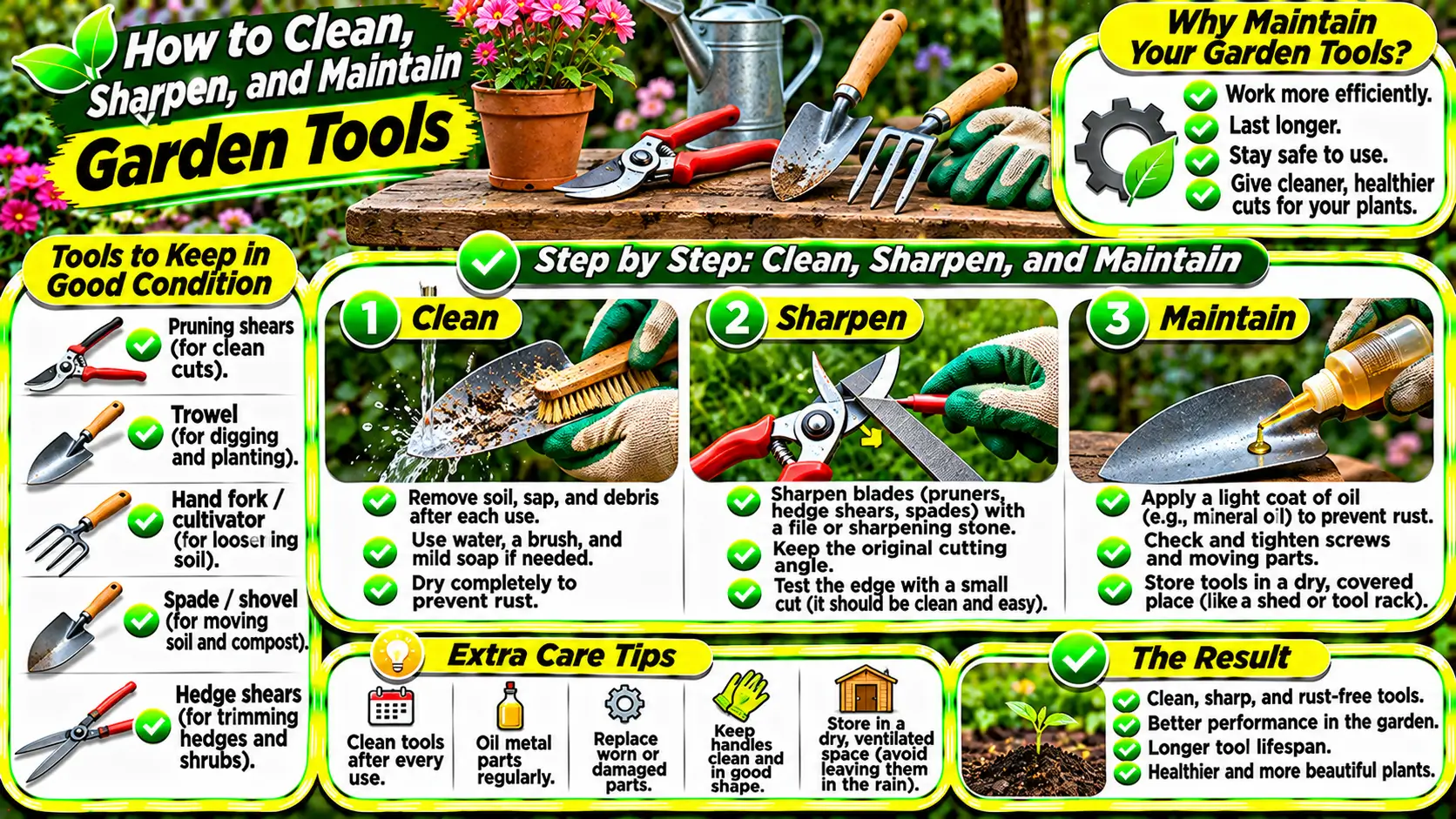
Remove loose soil from spades, forks, hoes, and trowels before storing them. A stiff brush can remove dried dirt from metal surfaces and joints. If soil is wet and sticky, rinse the tool and dry it thoroughly afterward. Do not leave metal tools soaking in water, because prolonged moisture encourages corrosion. Remove plant sap from pruning blades with a suitable cleaner recommended for the tool material, then wipe the surface dry.Pay attention to hinges, springs, and locking mechanisms. Dirt in a pruner joint can make the tool difficult to open and close. Wipe away debris and apply a small amount of suitable lubricant where the manufacturer recommends it. Avoid over-lubricating surfaces that will contact plant tissue, and wipe off excess oil so it does not attract dust.
Disinfect tools when disease is suspected
Cleaning and disinfecting are not the same. Cleaning removes soil and plant residue; disinfecting reduces the risk of carrying certain pathogens from one plant to another. When pruning a plant with suspected disease, remove visible debris first and then use a disinfectant appropriate for the tool and the pathogen risk. Follow product directions for concentration and contact time, and observe safety precautions.Do not assume one quick wipe eliminates every plant pathogen. Some organisms persist in soil or organic material, so visible dirt must be removed before disinfection can be effective. Use a separate set of tools for heavily diseased material when practical. Clean tools between affected plants, especially when working with a disease that can spread through contaminated blades. Dispose of infected plant debris according to local guidance rather than leaving it in the garden.
Sharpen pruning blades safely
Sharp pruning tools make cleaner cuts and require less force. Bypass pruners and loppers can often be sharpened with a suitable sharpening stone or tool designed for their blade shape. Follow the original bevel rather than changing the cutting angle. Work slowly, keeping fingers away from the edge, and secure the tool so it cannot slip. Some pruners have replaceable blades; if the blade is deeply chipped, bent, or badly worn, replacement may be safer than repeated sharpening.Do not sharpen every surface indiscriminately. On many bypass pruners, the cutting blade has a bevel while the opposing blade is designed as a counter blade. Removing too much material from the wrong surface can affect how the blades meet. Check the tool manual or use a professional sharpening service if you are uncertain. After sharpening, clean away metal filings and test the action on a suitable small stem rather than forcing the tool through a thick branch.
Maintain wooden handles and metal surfaces
Wooden handles can dry, crack, or loosen over time. Inspect them for splinters, movement at the joint, and signs of rot. Smooth small rough areas with appropriate sandpaper and apply a finish suitable for tool handles if recommended. Do not use a tool with a handle that is cracked or insecure; replace it before the handle fails during work.Metal surfaces should be kept clean and dry. A light protective coating of tool oil can help prevent rust on suitable metal parts, but avoid contaminating grips or cutting surfaces that need to remain clean. Remove rust carefully with a suitable abrasive or rust-removal method, taking care not to change the shape of a cutting edge. Deep pitting or structural corrosion may mean the tool should be replaced.
Care for saws, hoes, and digging tools
Pruning saws need clean teeth and an intact blade. Remove sap and debris according to the manufacturer’s instructions, and store the saw with its cover in place. Do not use a saw with a bent or cracked blade. Some saws are designed for replacement blades rather than sharpening, so check the model before attempting maintenance.Hoes and digging tools benefit from clean, sharp working edges. A hoe with a dull edge may require more force and can be harder to control. Use a file or sharpening method appropriate to the tool, wearing eye protection and securing the tool before working. Check spade sockets, rivets, and handle connections for movement. Tighten or replace components as needed, and retire tools with damaged heads or unstable handles.
Powered equipment and mower maintenance
Powered tools require additional precautions. Disconnect the battery, unplug the equipment, or remove the spark plug lead as directed by the manufacturer before cleaning or inspecting blades. Never reach beneath a mower deck while the blade could rotate. Use the specified procedure for tipping equipment, because some engines can leak oil or fuel if positioned incorrectly.Keep air intakes, guards, and cooling areas free of grass and debris. Inspect cables, plugs, batteries, and safety switches. Replace damaged parts with compatible components and do not bypass safety features. Mower blades should be sharpened and balanced according to the equipment manual; an unbalanced blade can cause vibration and damage. If you are unfamiliar with the work or the equipment requires specialized service, use an authorized repair professional.
Store tools to prevent damage
Store tools in a dry, ventilated location, protected from rain and direct ground contact. Hang long-handled tools where they cannot fall, and keep sharp edges covered or positioned safely. Small hand tools can be stored in a labeled container so they are easy to find. Keep chemicals, fuels, and lubricants in their original containers and away from children, pets, and ignition sources.Before long-term storage, clean and dry tools, inspect for damage, and apply suitable protective care. Remove batteries from equipment if the manufacturer recommends it, and store them under the specified temperature and charging conditions. Do not leave powered equipment exposed to moisture or extreme heat. A short storage routine prevents corrosion and makes tools ready for the next season.
Build a simple maintenance schedule
After each gardening session, remove soil and plant residue, dry metal surfaces, and return tools to their storage place. Once a month during active use, inspect pruners, loppers, saws, and handles for looseness or wear. Sharpen cutting tools when they begin to crush or tear stems rather than waiting until they become difficult to use. Before a new growing season, check every tool and replace unsafe items.Keep a small maintenance kit with a brush, cloth, sharpening tool, suitable lubricant, and approved disinfectant. Store these materials safely and follow all label instructions. A checklist can help households with several gardeners maintain tools consistently. Labeling shared tools also makes it easier to identify equipment that needs repair.
Conclusion
Well-maintained garden tools make routine work easier, support cleaner pruning, and reduce avoidable wear. Clean soil and sap after use, disinfect when disease risk requires it, keep cutting edges sharp, inspect handles and joints, and store equipment in a dry, secure place. Powered tools need additional safety steps and should be serviced according to their manuals.A few minutes of care after each session can prevent costly replacements and unsafe failures. Build a routine that matches the tools you own, and repair or replace damaged equipment before using it again.
Garden tool care and maintenance
| Tool | Routine care | Safety point |
|---|---|---|
| Pruners and shears | Remove sap, dry blades, sharpen, and lubricate pivots | Lock blades before cleaning or storage |
| Shovels and spades | Remove soil, dry metal, and inspect handles | Replace cracked handles |
| Hoes and cultivators | Clean and sharpen edges when appropriate | Store with edges protected |
| Sprayers | Rinse according to product label and manufacturer instructions | Never mix chemicals in unapproved equipment |
| Power tools | Follow service schedule and inspect guards | Disconnect power before maintenance |
For more detailed guidance, consult University of Minnesota Extension guidance on cleaning and maintaining garden tools.
Related articles:
- How to Transplant Garden Plants Without Unnecessary Stress
- How to Keep Weeds Under Control in Garden Beds
Garden tool maintenance schedule
| Tool | Routine maintenance | Safety point |
|---|---|---|
| Pruners and shears | Remove sap, dry, and sharpen cutting edges | Lock blades before cleaning or storage |
| Spades and hoes | Remove soil and dry metal surfaces | Check handles for cracks or looseness |
| Watering equipment | Flush hoses and inspect connectors | Replace damaged fittings |
| Power tools | Follow manufacturer service intervals | Disconnect power before maintenance |
| Shared tools | Clean and disinfect when disease transmission is possible | Use the correct product and contact time |
For further practical guidance, consult University of Minnesota Extension guidance on cleaning and disinfecting garden tools.
Explore these related guides:
Separate routine cleaning from disease disinfection
Cleaning removes sap, soil, and plant debris; disinfection is a separate step intended to reduce viable pathogens on a clean surface. Disinfectants work poorly when organic matter remains on the blade, so scrape or brush away debris and wash the tool before applying a suitable product. When pruning a plant with a suspected contagious disease, disinfect before moving to another plant that could be susceptible. The exact product and contact time depend on the pathogen and the label.
Do not assume every household cleaner is suitable for cutting tools. Bleach can corrode metal and damage sharp edges, while alcohol is flammable and is not effective against every plant pathogen in every situation. Never mix disinfectants. Follow the product label, protect skin and eyes as directed, and dry and oil metal parts after cleaning when appropriate. The University of Minnesota Extension’s tool sanitation guidance explains why cleaning must come first and notes important limits of common disinfectants.
Related Gardening Guides
Explore these related guides for more practical ideas and gardening advice:
- Design Garden Paths and Walkways That Are Practical and Beautiful
- Create a Low-Maintenance Landscape That Stays Beautiful
- Prepare Your Garden for Heavy Rain and Storms
Frequently Asked Questions
How often should I clean garden tools?
Remove soil and plant debris after use, especially when working with diseased plants. Dry tools before storage and inspect blades, joints, and handles regularly.
What should I use to disinfect pruning tools?
Use a suitable disinfectant method recommended by local horticultural guidance, and follow the product instructions. Clean visible sap and soil first because debris can reduce disinfectant effectiveness.
Can I sharpen garden tools at home?
Many hand tools can be sharpened with the correct file or sharpening tool, provided you follow the blade angle and use appropriate protection. Damaged or specialized tools may need professional servicing.
How should I store garden tools?
Store tools clean and dry in a secure, sheltered location. Protect metal from moisture, keep sharp edges covered, and hang tools where they will not create a trip or injury hazard.


One thought on “How to Clean, Sharpen, and Maintain Garden Tools”