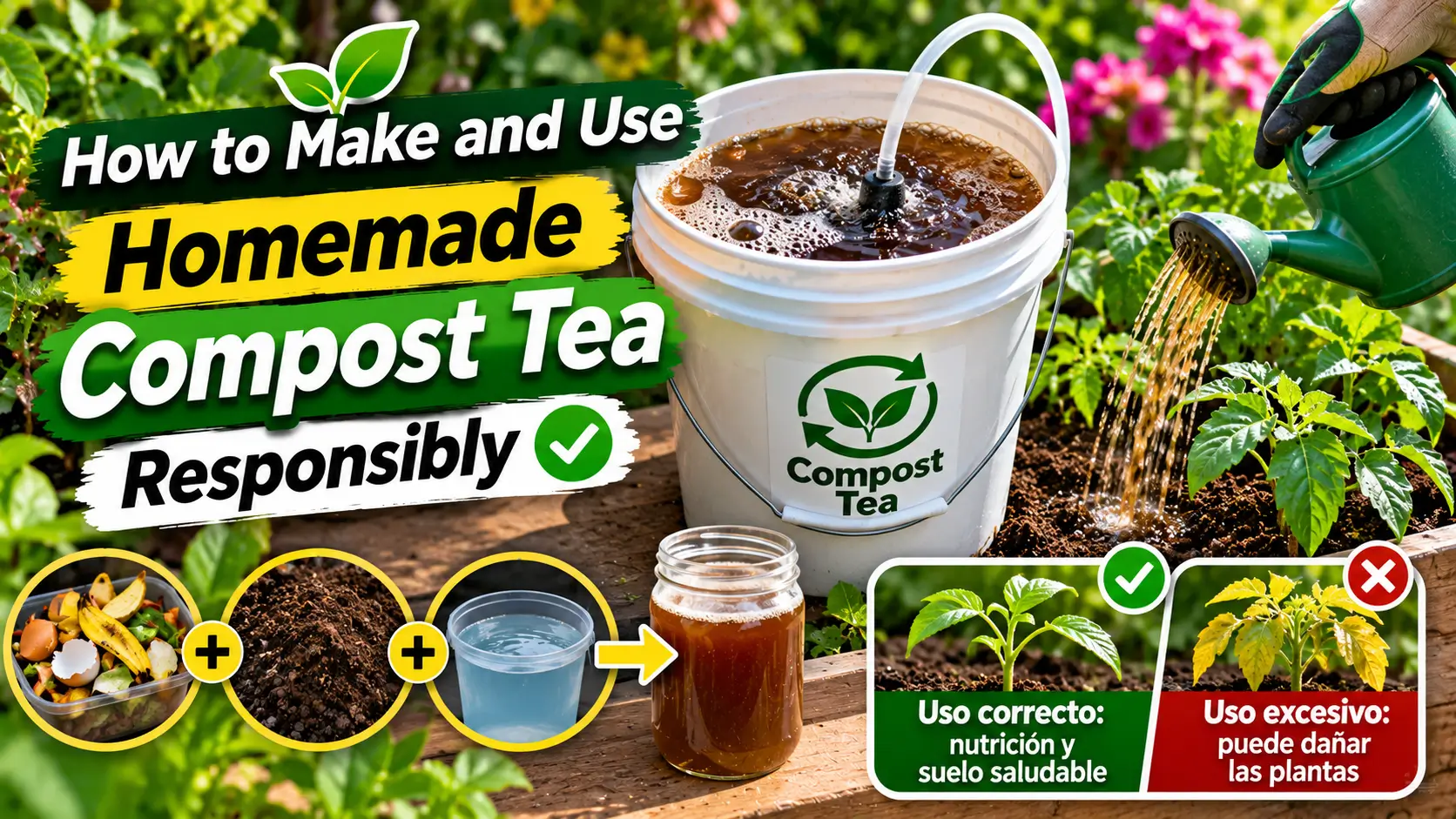
The phrase compost tea is used for several different liquid preparations made by steeping compost in water. Some are simple extracts, while others are actively aerated or brewed with additional ingredients. These preparations are not standardized, and their nutrient and microbial contents vary with the compost, water, temperature, equipment, and brewing time. A homemade liquid should not be assumed to be a tested fertilizer, pesticide, or disease treatment.
Table of Contents
- Compost extract versus actively brewed tea
- Start with mature compost
- Water and equipment hygiene
- A simple extraction method
- Why prolonged brewing can be risky
- Applying to soil rather than edible surfaces
- What compost tea can and cannot do
- Avoiding contamination
- Alternatives with clearer benefits
- Evaluating whether it helps
- Understand the food-safety limits
- When finished compost is the better choice
- Frequently Asked Questions
Compost extract versus actively brewed tea
A basic compost extract is usually made by mixing finished compost with water and separating the solids. Actively brewed preparations may use air pumps or other methods intended to encourage microbial activity. The two products are not identical, and neither has a guaranteed composition. More complicated brewing does not automatically make a better or safer product. If the goal is to improve soil organic matter, applying mature compost directly is often simpler and more predictable.
Start with mature compost
Use finished compost that has an earthy smell and a stable, crumbly texture. Avoid compost containing recognizable fresh food scraps, animal waste that has not been properly processed, or material with a rotten odor. Compost made from unknown sources may contain contaminants. For edible gardens, be especially cautious about feedstock and handling, and follow local food-safety guidance. Do not assume that steeping questionable compost in water makes it safe.
Water and equipment hygiene
Use clean containers, stirring tools, and water from a source suitable for the intended garden use. Wash equipment before and after preparation. Avoid containers previously used for chemicals, fuels, or other contaminants. Keep the preparation away from food preparation areas and drinking-water supplies. If you cannot clean and store equipment properly, do not prepare a liquid product that may contact edible plant parts.
A simple extraction method
For a basic extract, place a modest amount of finished compost in a clean porous bag or container, add water, and stir or agitate periodically during a short steep. Strain out solids before application so the liquid can be distributed without clogging watering equipment. Exact ratios and steeping times are not standardized, so do not treat a homemade recipe as a guaranteed nutrient concentration. Use the preparation promptly rather than storing it for long periods.
Why prolonged brewing can be risky
Warm, nutrient-rich water can support the growth of many microorganisms, not all of which are desirable. Without controlled conditions and testing, a home gardener cannot know which organisms have multiplied. Adding sugars or other foods can change microbial populations unpredictably. Avoid prolonged warm storage, and do not assume that bubbling or a pleasant smell proves a preparation is safe. If an extract smells rotten or unusual, discard it responsibly.
Applying to soil rather than edible surfaces
Where local guidance permits, a cautious use is to apply a simple extract to soil around ornamental plants rather than spraying it onto leaves or edible plant parts. Avoid contact with harvested produce, especially crops eaten raw. Do not use homemade compost liquids as a substitute for sanitation or food-safety practices. Follow any regional recommendations for compost-derived products in vegetable production.
What compost tea can and cannot do
Compost liquids may carry soluble nutrients and microorganisms, but their composition is variable. They should not be relied upon to cure fungal or bacterial diseases, control insects, or replace a soil fertility program. Claims of universal disease suppression or dramatic growth increases are not guaranteed. If plants need nutrients, use soil tests and a suitable labeled fertilizer or amendment. If plants show disease symptoms, identify the cause and follow appropriate management guidance.
Avoiding contamination
Do not use compost tea made from contaminated feedstock, pet waste, or material with unknown chemical exposure. Keep containers covered against insects and debris, but do not create sealed pressure conditions. Clean spills promptly. Wash hands after handling compost and liquids, and keep children and pets away from preparation equipment. If the liquid contacts skin or clothing, follow normal hygiene practices and clean the area.
Alternatives with clearer benefits
For most home gardens, mature compost applied directly to soil provides a more dependable way to add organic matter. Mulch protects the soil surface and moderates moisture. A soil test can identify nutrient needs, while a labeled fertilizer can supply a measured amount of a specific nutrient. These approaches are easier to evaluate than an untested liquid brew and can be integrated into a routine soil-care plan.
Evaluating whether it helps
If you choose to use a simple extract on appropriate ornamental plants, try it on a small area first and compare treated and untreated plants under similar conditions. Record the date, source compost, preparation method, and plant response. Avoid changing watering, fertilizer, and other care at the same time, because it becomes difficult to identify what caused any difference. Stop if plants show unexpected injury or if the preparation develops an unpleasant odor.
A responsible conclusion
Homemade compost tea is not a standardized product, and its safety and effectiveness depend on materials and preparation. Use only mature, known compost and clean equipment, avoid prolonged warm storage, and keep homemade liquids away from edible plant surfaces unless local guidance clearly supports their use. For many gardeners, finished compost, mulch, soil testing, and targeted fertilization offer more predictable benefits with fewer uncertainties.
Before applying an amendment or changing a soil practice, identify the condition you are trying to improve. Similar symptoms can have different causes, and a product that helps one soil may be unnecessary in another. Use observation and, where appropriate, a laboratory test to guide decisions. Avoid making several major changes at once, because it becomes difficult to tell which one produced the result.
Choose materials from reliable sources and read labels carefully. Composition, maturity, nutrient content, and application instructions can vary considerably between products. Do not assume that a material is safe simply because it is described as natural or organic. Keep records of the product, rate, date, and area treated, and follow any local restrictions that apply to gardens and food crops.
Healthy soil management is cumulative. Protect the surface, maintain suitable organic matter, avoid compaction, and water according to the root zone rather than a fixed calendar. These habits support soil structure and make it easier to manage nutrients. They are not instant fixes, but consistent practice is usually more sustainable than repeated attempts to correct symptoms with large quantities of amendments.
Consider the needs of the plants that will grow in the area. A vegetable bed, ornamental border, lawn, and container planting may require different approaches. Match amendments and practices to the crop, climate, drainage, and soil conditions. When a problem is severe or persistent, seek local horticultural or soil advice instead of repeating a treatment without confirming the diagnosis.
Review results over a full growing period. Note how soil behaves after rain, how quickly it dries, and whether plant growth improves. Retest when recommended, especially after significant amendments. A gradual plan allows you to adjust rates and timing while reducing waste, nutrient runoff, and avoidable stress to plants.
Aeration changes the oxygen conditions and microbial community in a brew, but it does not guarantee a consistent fertilizer or disease-control product. Read Oregon State University Extension’s explanation of compost-tea aeration for practical guidance.
Compost tea and compost extract compared
| Feature | Compost extract | Aerated compost tea |
|---|---|---|
| Preparation | Compost mixed with water and strained | Compost steeped with active aeration |
| Consistency | Varies with compost and water ratio | Also varies with ingredients and process |
| Safety | Can carry microorganisms from source materials | Aeration does not guarantee pathogen elimination |
| Use | Treat as an unstandardized garden extract | Use caution and avoid claims of guaranteed disease control |
Understand the food-safety limits
Compost tea is not sterile. Its microbial population depends on compost maturity and source, water quality, equipment cleanliness, temperature, and ingredients added during preparation. If compost contains animal manure or has not been properly processed, harmful organisms may survive. Adding sugar or other readily available food to stimulate microbial growth can also encourage unwanted organisms. A normal smell or appearance does not prove that a batch is safe.
| Intended use | Main concern | Prudent choice |
|---|---|---|
| Spraying edible leaves or produce | Direct contact with food eaten raw | Avoid homemade compost tea on edible plant parts |
| Applying around food crops | Potential contamination and uncertain microbial content | Follow applicable food-safety guidance; do not assume brewing removes pathogens |
| Applying to ornamental soil | Variable quality and uncertain benefit | Use finished compost or mulch for soil improvement |
| Using as disease treatment | Inconsistent research results | Use crop-specific disease controls with stronger evidence |
When finished compost is the better choice
University of Florida IFAS Extension reports that compost tea does not provide a measurable amount of plant nutrition and that evidence for disease suppression is inconsistent. It recommends potable water and mature compost and warns against sugar additions. University of Arizona Cooperative Extension discusses possible foodborne pathogen risks, particularly with animal-derived materials or unsuitable brewing practices. If the goal is to add organic matter or improve the soil surface, finished compost used as an amendment or mulch is easier to assess. If the goal is disease control, identify the disease and use proven measures rather than treating compost tea as a cure.
References: University of Florida IFAS Extension: Compost Tea; University of Arizona Cooperative Extension: Compost Tea 101; LSU AgCenter: Compost Tea.
Related Gardening Guides
Explore these related guides for more practical ideas and planning advice:
- How to Use Cover Crops to Protect and Improve Garden Soil
- How to Choose and Use Gypsum in Garden Soil
- How to Fertilize Plants in Pots and Containers Without Overfeeding
- How to Improve Soil Drainage in Garden Beds Without Drying Them Out
- Bone Meal Fertilizer: When to Use It and When to Avoid It
Frequently Asked Questions
Is compost tea proven to prevent plant diseases?
Evidence for consistent disease prevention in home gardens is limited and results vary with the compost, preparation, plant, and conditions. Do not treat compost tea as a substitute for sanitation, suitable growing conditions, or established disease management.
Can I use any compost to make compost tea?
Use mature, well-managed compost with known inputs. Avoid material contaminated by chemicals, animal waste handled unsafely, or unknown sources, and keep equipment clean.
Does compost tea need to be brewed for several days?
Longer brewing does not guarantee a better or safer product. Preparation conditions can encourage unwanted microbial growth, so follow reputable local guidance and avoid storing mixtures for extended periods.
Is compost tea safe to spray on edible crops?
Use caution, especially on edible plant parts. Follow local food-safety guidance, use clean materials and water, and do not apply products of uncertain microbiological quality to crops intended for consumption.

12 thoughts on “How to Make and Use Homemade Compost Tea Responsibly”