Introduction
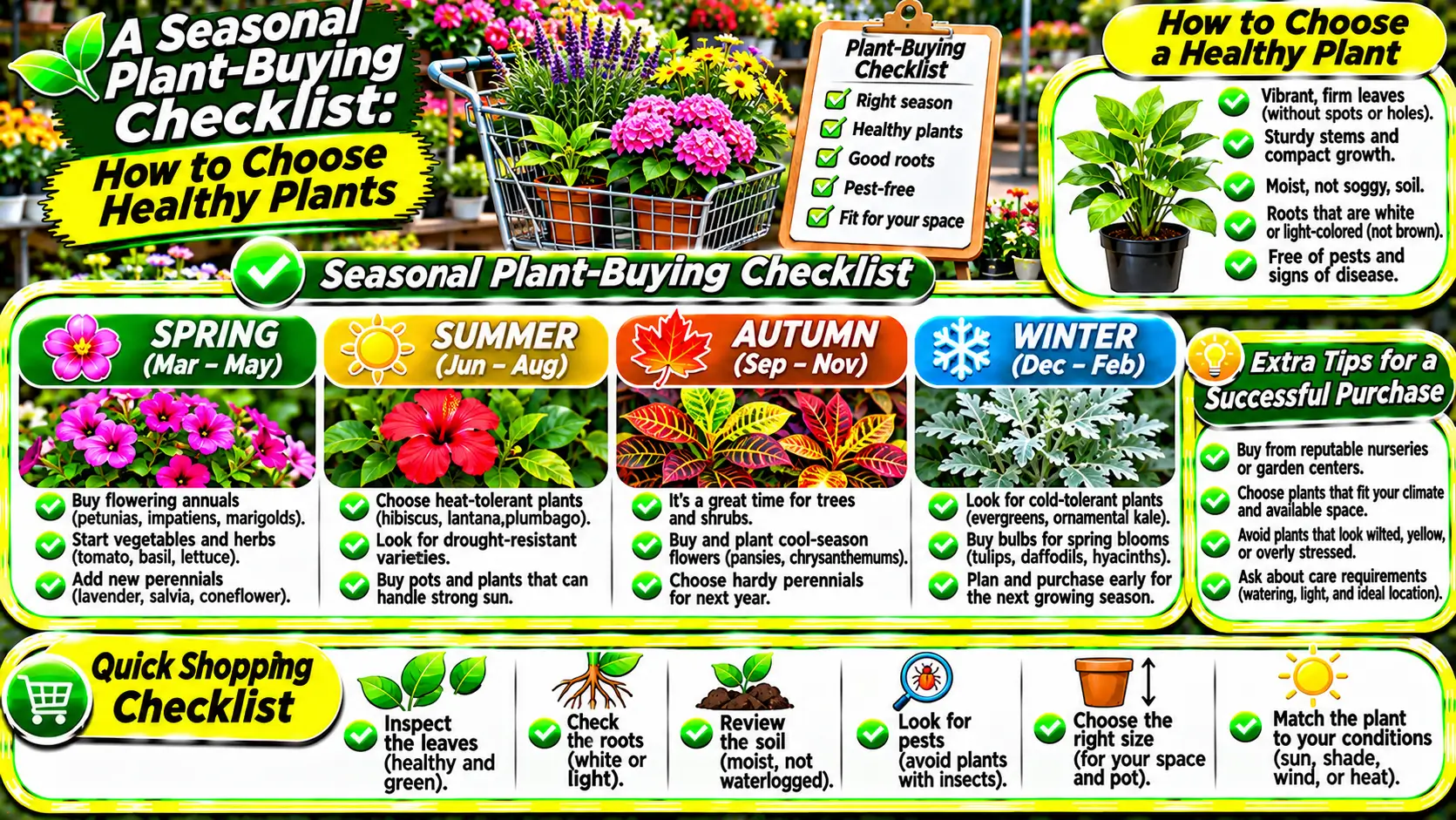
Buying plants can be exciting, but a healthy-looking display at a nursery does not guarantee that every specimen will thrive after it reaches your home. Plants may have been grown under different light, temperature, humidity, and watering conditions from those in your garden. Some may be stressed by transport, crowded pots, or pests that are difficult to see at first glance. A simple buying routine helps you choose plants that fit your space and reduces the chance of introducing problems to an established collection.The best purchase begins before you enter the nursery. Identify the planting location, measure the available space, estimate the amount of sunlight, and decide how much maintenance you can provide. Then make a shortlist of plants suited to those conditions. Buying with a purpose is more reliable than choosing solely by flower color or a discounted price.
Table of Contents
- Introduction
- Assess the planting site
- Use a seasonal plan
- Inspect foliage carefully
- Check stems, roots, and potting medium
- Read labels and ask useful questions
- Compare plant size and value
- Transport plants safely
- Acclimating and planting after purchase
- Common buying mistakes
- Inspect roots, pests, and plants before mixing purchases
- Frequently Asked Questions
Assess the planting site
Observe the site at different times of day. Record whether it receives direct morning sun, intense afternoon sun, bright shade, or deep shade. Note reflected heat from walls and paving, exposure to wind, and whether rain reaches the area. A balcony beneath an overhang may remain dry even during rainy weather, while a low garden bed may stay wet long after a storm.Check the soil or container conditions. Is the ground sandy, heavy, compacted, or well-drained? Does water collect after rain? For containers, consider the final pot size and whether it has drainage holes. If the site has a known limitation, such as persistent shade or shallow soil, select plants that tolerate it rather than hoping that extra fertilizer will solve the problem.
Use a seasonal plan
Seasonal timing affects how easily plants establish. In many climates, planting at the beginning of a moderate, reliably moist period gives roots time to develop before intense heat or cold. In tropical regions, rainfall patterns and local dry seasons may be more important than the four-season calendar. Ask local growers which planting windows are most reliable for the species you want.Consider the plant’s life cycle. Annual flowers may be purchased for a short seasonal display, while shrubs and trees are long-term investments. Some perennials are best planted when they are actively growing; others establish more easily during cooler or wetter periods. Bulbs, bare-root plants, and dormant specimens have their own timing requirements. Follow region-specific guidance rather than assuming one calendar applies everywhere.
Inspect foliage carefully
Look at the entire plant, not only the most attractive side. Healthy leaves should generally have color and firmness appropriate to the species. A few older yellow leaves may be normal, but widespread yellowing, blackened patches, distorted new growth, or extensive spotting deserve attention. Check both the upper and lower surfaces of leaves. Fine webbing, tiny moving insects, sticky residue, cottony clusters, and scale-like bumps can indicate pests.Look for signs of recent stress, including wilting, scorched edges, broken stems, and leaves that are falling in large numbers. Some symptoms may result from transport or temporary environmental changes, but several signs together suggest that the plant needs careful evaluation. Avoid buying a plant with an active pest problem unless you have the knowledge and facilities to isolate and treat it safely.
Check stems, roots, and potting medium
Stems should be firm and appropriate to the plant’s growth habit. Soft, dark, or collapsing tissue can indicate rot or injury. For woody plants, inspect the base of the stems and look for cracks or damage. A compact plant with sturdy branching may establish better than a tall, stretched specimen with weak growth, although natural form varies by species.If the nursery allows it, gently slide the root ball partly out of the pot. Healthy roots are generally firm; color varies by species and growing medium. A dense mass of circling roots can indicate that the plant has been in the container too long. Very few roots may mean the plant has not established well. The medium should not smell sour or rotten. Do not pull aggressively or damage the root ball during inspection. Ask staff if you are unsure whether a root condition is normal for that plant.
Read labels and ask useful questions
Check the botanical name, mature height and width, light requirements, water preferences, and any special soil needs. Common names can be ambiguous, so the botanical name helps you research the correct plant. Ask whether the specimen was grown outdoors or under shade cloth, how often it is watered, and whether it has been recently repotted. These details can help you plan the transition to your garden.For edible plants, ask about the growing conditions and whether any treatments have been applied. Follow label instructions and local food-safety guidance before harvesting. For plants intended for a home with pets or children, verify safety using a reliable, current source and the exact botanical name. Do not assume a plant is safe because it is commonly sold as a houseplant. If toxicity is uncertain, choose a clearly identified alternative.
Compare plant size and value
A larger plant is not always the better purchase. A smaller, well-rooted specimen may adapt more quickly than a large plant with a crowded root system. Compare the overall health, root condition, branching, and likely establishment time rather than judging value by height alone. For hedges or repeated borders, consistency of size and form can matter, but avoid buying a whole batch before checking that the species is suited to the site.Calculate the true cost of the purchase. A cheap plant may need a larger pot, fresh medium, support, or pest treatment. A more expensive specimen may already be established in a suitable container. Consider the cost of water and maintenance over time, especially for plants with high irrigation needs. A plant that fits your routine can be better value than one that requires constant attention.
Transport plants safely
Protect plants from strong wind, extreme heat, and crushing during transport. Do not leave them in a closed vehicle in direct sun. Keep foliage from being pressed against hot windows or rough surfaces. Secure tall plants so pots do not tip over, and keep delicate stems supported. If the journey is long, ask the nursery how to protect the root ball from drying.When you arrive, do not immediately place every new plant among established plants. Inspect it again and keep it separate for a short observation period when practical. This is especially useful for indoor collections, where pests can spread quickly. Remove packaging, check moisture, and allow the plant to adjust to its new environment. Avoid placing a shade-grown plant in harsh direct sunlight immediately after purchase.
Acclimating and planting after purchase
Gradually adjust plants to new light conditions. A plant grown under shade cloth may scorch if moved directly into full sun. Increase exposure over several days or longer, depending on the species and the difference between the nursery and destination conditions. Likewise, protect a plant accustomed to sheltered conditions from strong wind until it has adjusted.Plant at the correct depth and use a suitable growing medium. Water thoroughly after planting, allowing excess to drain. Do not automatically add fertilizer to every new plant; some nursery mixes already contain nutrients, and stressed roots may not benefit from additional feeding. Monitor moisture closely during the first weeks. Newly planted roots have not yet explored the surrounding soil, so the plant may need more frequent checks than an established specimen.
Common buying mistakes
One common mistake is buying a plant because it is flowering beautifully without checking whether the garden has enough light for it. Another is purchasing a fast-growing shrub without considering its mature dimensions. Gardeners may also overbuy several plants with identical needs, creating a collection that becomes difficult to water or maintain during a busy period. Start with a manageable number and learn how they respond.Avoid selecting plants with unclear labels, visible pest outbreaks, or damaged root systems simply because they are discounted. Do not assume that a plant marketed as easy-care will suit every climate. Finally, resist changing the entire garden at once. Test a new species in a small area or container before committing to a large planting, especially when local suitability is uncertain.
Conclusion
A thoughtful plant purchase is based on site conditions, plant health, mature size, and realistic maintenance needs. Prepare by observing light and soil, then inspect leaves, stems, roots, and labels at the nursery. Ask questions about growing conditions, transport plants carefully, and give them time to adjust before placing them permanently.The checklist does not need to make shopping complicated. It simply helps you slow down and choose plants that have a genuine chance to thrive. A few well-selected specimens are usually more rewarding than a large collection chosen without a plan.
Healthy plant buying checklist
| Inspection point | Healthy sign | Warning sign |
|---|---|---|
| Leaves | Typical color and firm growth for the species | Spots, webbing, insects, or widespread yellowing |
| Stems | Firm and free from major wounds | Soft, cracked, or rotting tissue |
| Roots | Firm roots appropriate to the container | Rot, foul odor, or severe circling |
| Potting medium | Moist but not waterlogged | Persistent saturation or extreme dryness |
| Plant label | Clear species and mature size information | Missing identity or vague care claims |
| Site suitability | Matches local light, soil, and climate | Likely to outgrow or struggle in the site |
For further practical information, consult University of Minnesota Extension guidance on buying plants.
Explore these related guides:
- Choose Trees and Shrubs for a Balanced Landscape
- Best Native Plants for a Resilient, Wildlife-Friendly Garden
More related garden guides:
- Best Plants for Balconies: Choosing Varieties for Sun, Wind, and Space
- Best Shade-Loving Plants for Attractive Garden Borders
Inspect roots, pests, and plants before mixing purchases
Do more than judge a plant by its flowers. Look at the undersides of leaves, growing tips, leaf joints, and stems for insects, webbing, scale-like bumps, sticky residue, spots, or distorted new growth. Check whether the potting medium is waterlogged, sour-smelling, or bone dry. If the plant can be safely slipped from its pot, look for a root system that holds the medium together without forming a dense circling mat; avoid pulling roughly on a plant that is not ready to be handled.
Reject plants with extensive soft or blackened stems, widespread leaf damage, active pest colonies, or roots that are severely crowded and unhealthy. A few cosmetic blemishes are not necessarily a problem, but unexplained symptoms deserve a question to the nursery staff before purchase. Read the botanical name, mature size, light and moisture needs, and any local restrictions on the species. Do not buy a plant simply because it is discounted if you have no suitable site or cannot plant it promptly.
When possible, keep new plants separate from established collections for an observation period and inspect them regularly before placing them among other plants. This is especially useful when buying many plants at once or when pest history is uncertain. Penn State Extension’s plant-buying guidance recommends checking foliage, stems, root condition, and moisture before purchase. Follow any local plant-health or quarantine requirements when moving plants between regions.
Related Gardening Guides
Explore these related guides for more practical ideas and gardening advice:
- Choose Trees and Shrubs for a Balanced Landscape
- Choose Ground Cover Plants for Different Garden Conditions
- Best Native Plants for a Resilient, Wildlife-Friendly Garden
Frequently Asked Questions
How can I tell if a nursery plant is healthy?
Look for firm stems, healthy foliage, balanced growth, and a root system that is not severely congested or rotten. Check leaf undersides and growing tips for pests or disease.
Should I buy a plant that has roots coming out of the pot?
A few visible roots do not automatically mean a plant is unhealthy, but dense circling roots or a tightly packed root ball can indicate that it is pot-bound. Inspect the root system if possible.
Is it better to buy plants in flower?
Flowers help confirm appearance, but they are not the only sign of quality. Prioritize healthy roots and foliage, suitable growing conditions, and a plant that is not showing stress.
How should I care for plants after bringing them home?
Protect them from sudden changes in sun, wind, and temperature. Check moisture, inspect for pests, and gradually acclimate plants before moving them into their final position.
One thought on “A Seasonal Plant-Buying Checklist: How to Choose Healthy Plants”