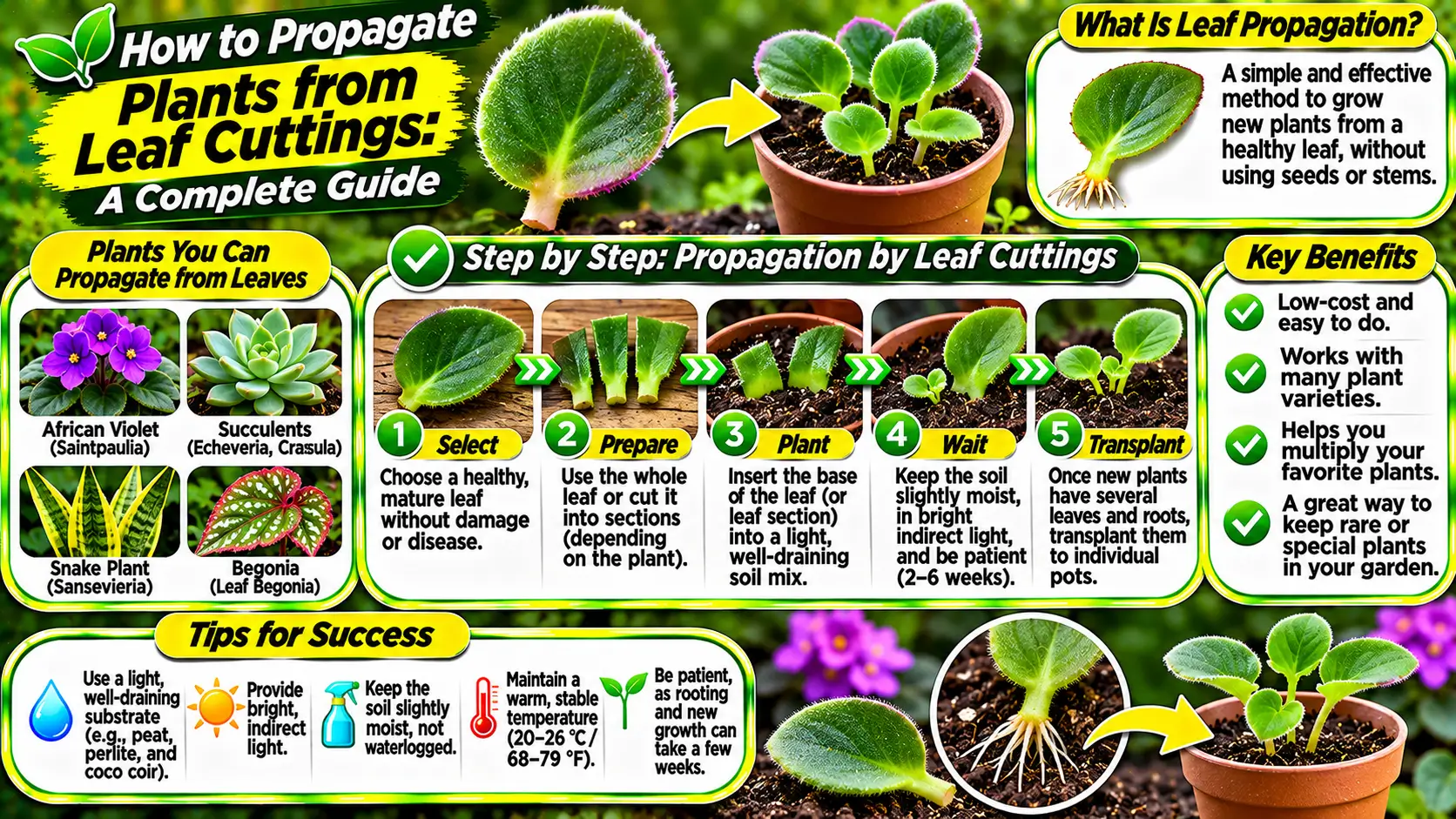
Leaf-petiole cuttings versus leaf-section cuttings
“Leaf cutting” covers more than one technique. A leaf-petiole cutting uses a whole leaf with its stalk, as in African violet propagation. A leaf-section cutting uses pieces of a leaf blade, as in some snake plants. Other plants need a stem node and cannot form a complete new plant from a detached leaf alone. Confirm the plant’s propagation biology before cutting; a leaf may produce roots without producing a new shoot.
Use a clean blade and a propagation medium that balances moisture with air space. Perlite, vermiculite, coarse sand, sphagnum, or combinations may be appropriate depending on the species. Keep the medium moist rather than saturated, provide bright indirect light, and maintain enough humidity to limit leaf dehydration without trapping stagnant, wet air around the cutting.
Preserve variegation and identify the growing point
Leaf propagation does not always preserve the appearance of a named cultivar. Some variegated snake plants, for example, lose their marginal pattern when grown from leaf sections because the color pattern depends on a layered tissue arrangement; division is the better method when retaining that cultivar trait is important. Before propagating a prized variegated plant, check whether the cultivar breeds true from leaf tissue.
| Cutting type | Example or requirement | Key point |
|---|---|---|
| Whole leaf with petiole | African violet | Insert the petiole into suitable medium; keep the leaf blade above the surface |
| Leaf blade section | Snake plant types that respond to leaf sections | Maintain correct orientation and allow time for plantlets to form |
| Leaf without a viable growth point | Species that require a stem node | Roots alone may not produce a new shoot |
| Variegated cultivar | Some chimeral varieties | Use division if leaf propagation would lose the cultivar pattern |
Iowa State University Extension separates leaf-petiole and leaf-section techniques and explains that the method depends on the plant. Its guidance also notes that water-rooted cuttings may experience stress when moved into potting mix. Use the species-specific method rather than treating all leaves as interchangeable propagating material.
Related Gardening Guides
Explore these related guides for more practical ideas and planning advice:
- How to Propagate Houseplants in Water: A Step-by-Step Guide
- How to Propagate Plants from Root Cuttings
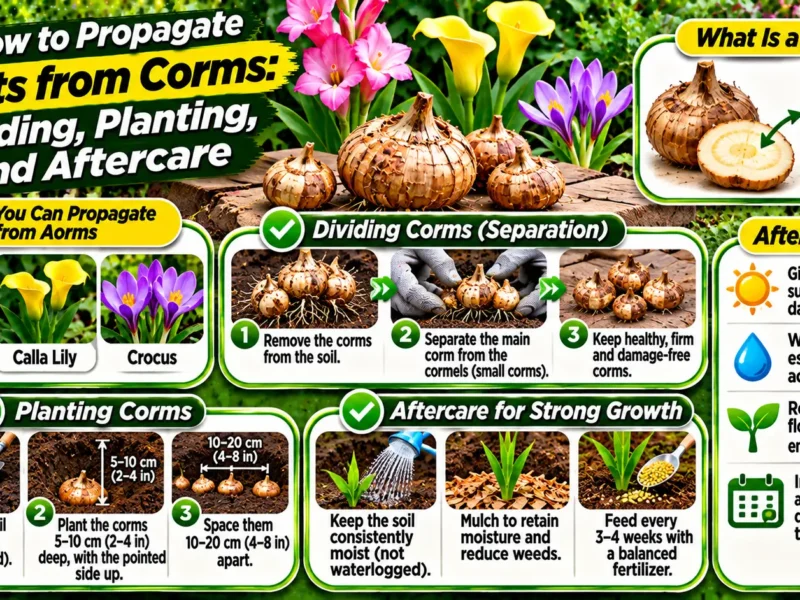
- How to Propagate Plants from Corms: Dividing, Planting, and Aftercare
Leaf propagation is a method of producing new plants from a leaf or a leaf section rather than from a stem or seed. It works especially well with selected succulents and many houseplants, but it is not suitable for every species. A successful leaf cutting must contain the tissues or structures needed to form roots and shoots. Some plants produce tiny plantlets along leaf edges, while others develop a new shoot from the base of a prepared leaf. Understanding the growth habit of the plant is the first step.
Table of Contents
- Choose a plant that can be propagated this way
- Select and prepare healthy leaves
- Allowing cut surfaces to dry when appropriate
- Choosing a propagation medium
- Positioning the leaf correctly
- Light, warmth, and humidity
- Watering during root formation
- Recognizing roots and new plantlets
- Separating and potting young plants
- Common mistakes and troubleshooting
- Building a repeatable propagation routine
- Leaf-petiole cuttings versus leaf-section cuttings
- Preserve variegation and identify the growing point
- Frequently Asked Questions
Choose a plant that can be propagated this way
Before removing a leaf, confirm that the species can reliably produce a new plant from leaf material. African violets, some begonias, snake plants, and several succulents are common examples, although the exact method differs. A leaf from a plant that normally requires a stem node may simply remain alive for a while without producing a new shoot. Use a healthy, mature parent plant with no visible pests, disease, or severe stress. Select a propagation method suited to the particular species rather than assuming all leaves behave alike.
Select and prepare healthy leaves
Choose firm leaves with normal color and no tears, rot, or pest damage. Use a clean, sharp blade or scissors when a cutting tool is needed. Some species root from a whole leaf with its petiole, while others require a section of the leaf blade or a piece of the base. Follow species-specific guidance for the correct cutting shape. Handle the leaf gently and avoid crushing the tissue, because damaged surfaces can lose moisture or become entry points for decay organisms.
Allowing cut surfaces to dry when appropriate
Certain succulents benefit from a short drying period that allows a cut surface to form a dry protective layer before it contacts the growing medium. This is not a universal rule. Thin leaves from tropical houseplants may wilt if left exposed for too long, while a succulent leaf may be more vulnerable to rot if planted immediately after a wet cut. Follow the needs of the plant and keep cuttings out of harsh direct sun during preparation.
Choosing a propagation medium
Use a clean, free-draining medium suited to the plant. Many leaf cuttings do well in a light propagation mix that holds some moisture while allowing air to reach the developing roots. A dense garden soil can remain wet for too long and may contain weed seeds or disease organisms. Containers should have drainage holes and be clean before use. Avoid filling a tray with a mix that is either powder-dry or saturated; slightly moist conditions are often a useful starting point.
Positioning the leaf correctly
Placement varies by species. A leaf with a petiole may be inserted shallowly so the base contacts the medium, while a succulent leaf may be laid on the surface with its base touching the mix. Leaf sections may need to be placed in a specific orientation to produce shoots. Label each tray with the plant name and date. Do not bury more of the leaf than the recommended method requires, because excessive contact with wet medium can encourage decay.
Light, warmth, and humidity
Most leaf cuttings need bright indirect light rather than intense direct sun. Strong sunlight can overheat a small container and dry the leaf before roots form. A stable, moderate temperature generally supports rooting, but ideal conditions vary by species. Some tropical plants benefit from higher humidity, while many succulents prefer good airflow and less moisture. If using a humidity cover, ventilate it and watch for condensation or mold. A sealed, constantly wet enclosure can create conditions that favor rot.
Watering during root formation
Keep the propagation medium lightly and consistently moist when the species requires moisture, but do not leave it waterlogged. Succulent leaves often need much less water than soft tropical leaves. Water around the cutting rather than repeatedly soaking the leaf surface. Use a container with drainage and empty excess water from trays. Check moisture with a finger or by lifting the container rather than following a rigid daily schedule. The correct interval depends on temperature, container size, medium, and plant type.
Recognizing roots and new plantlets
Root formation may occur before a visible shoot appears, and some leaves produce roots without ever developing a complete new plant. Look for small roots at the base, swelling growth points, or tiny plantlets. Avoid pulling the leaf to test whether it has rooted, since this can break fragile new roots. A parent leaf may gradually wrinkle or decline as stored resources are used. That change is not necessarily a sign of failure if a healthy plantlet is developing.
Separating and potting young plants
Wait until a plantlet has enough roots and leaves to survive independently. Some species are best left attached to the original leaf until the new growth is sturdy; others can be separated earlier according to their propagation method. Use a small pot and a suitable fresh mix. Handle roots gently and plant at the same depth at which the young plant was growing. Water carefully, then provide suitable light while the plant adjusts to its new container.
Common mistakes and troubleshooting
A leaf that turns mushy often indicates excess moisture, poor airflow, or contaminated material. A leaf that shrivels quickly may be too dry, exposed to excessive heat, or unsuitable for the chosen method. Mold can develop when leaves are crowded or kept in stagnant humidity. Remove decaying material promptly and reassess the environment. If no roots or shoots appear after a reasonable period for the species, check whether the parent plant was healthy and whether the leaf was prepared in the correct way.
Building a repeatable propagation routine
Keep notes about the species, leaf position, medium, watering, and time to rooting. Propagate more than one leaf when the plant is healthy and the method is known to work, but do not remove so much foliage that the parent plant is weakened. Clean tools between plants and keep labels with each batch. Leaf propagation rewards patience: some species respond quickly, while others take weeks or months. Consistent conditions and careful observation are more useful than frequent disturbance.
Keep a simple propagation log with the plant name, parent plant, date, preparation method, medium, and observations. A record helps distinguish a method that consistently works from one that succeeds only occasionally. It also prevents repeating avoidable mistakes, such as using the wrong part of a stem or keeping the medium too wet. Photographing progress at regular intervals can be useful when changes are slow.
Cleanliness is important throughout propagation. Wash containers before reuse, use fresh or properly prepared growing medium, and clean cutting tools between parent plants. Remove decaying material promptly and do not allow diseased leaves or stems to remain beside healthy propagations. These habits reduce the chance that a small problem will spread through an entire tray or batch.
Do not judge success only by the appearance of the top growth. New leaves can sometimes develop using stored energy before a cutting has formed enough roots. Conversely, a healthy root system may be developing before obvious top growth appears. Follow the expected timing for the species and avoid repeatedly pulling, unwrapping, or moving propagations to check progress.
Match moisture to the plant and method. A medium that is suitable for a soft tropical cutting may be too wet for a succulent or dormant woody stem. Drainage, container size, temperature, airflow, and humidity all influence how quickly water is lost. Check the actual condition of the medium and adjust rather than following a fixed watering schedule.
Be patient and plan for some losses. Even careful propagation does not guarantee that every cutting, leaf, seed, or division will establish. Taking a modest number of extra propagations can account for normal variation, but do not remove so much material that the parent plant is weakened. Choose healthy material, use a suitable method, and give new plants time to become established.
Leaf cutting method comparison
| Method | Typical use | Important consideration |
|---|---|---|
| Whole leaf with petiole | Plants such as African violets | Keep the petiole intact and insert at the correct depth |
| Leaf blade sections | Some begonias and similar plants | Maintain the correct orientation of each section |
| Leaf with stem section | Species that form shoots from a leaf-and-stem piece | Include a viable node when required |
| Succulent leaf | Some succulents | Allow the cut end to dry if the species requires it |
| Rooting environment | Clean, airy, lightly moist medium | Avoid waterlogging and excessive handling |
| Potting on | After plantlets and roots are sufficiently developed | Handle fragile new roots gently |
For expert background and practical recommendations, consult Penn State Extension guidance on propagating houseplants.
Explore these related guides:
More related gardening resources:
Additional related guides:
Leaf-petiole cuttings versus leaf-section cuttings
“Leaf cutting” covers more than one technique. A leaf-petiole cutting uses a whole leaf with its stalk, as in African violet propagation. A leaf-section cutting uses pieces of a leaf blade, as in some snake plants. Other plants need a stem node and cannot form a complete new plant from a detached leaf alone. Confirm the plant’s propagation biology before cutting; a leaf may produce roots without producing a new shoot.
Use a clean blade and a propagation medium that balances moisture with air space. Perlite, vermiculite, coarse sand, sphagnum, or combinations may be appropriate depending on the species. Keep the medium moist rather than saturated, provide bright indirect light, and maintain enough humidity to limit leaf dehydration without trapping stagnant, wet air around the cutting.
Preserve variegation and identify the growing point
Leaf propagation does not always preserve the appearance of a named cultivar. Some variegated snake plants, for example, lose their marginal pattern when grown from leaf sections because the color pattern depends on a layered tissue arrangement; division is the better method when retaining that cultivar trait is important. Before propagating a prized variegated plant, check whether the cultivar breeds true from leaf tissue.
| Cutting type | Example or requirement | Key point |
|---|---|---|
| Whole leaf with petiole | African violet | Insert the petiole into suitable medium; keep the leaf blade above the surface |
| Leaf blade section | Snake plant types that respond to leaf sections | Maintain correct orientation and allow time for plantlets to form |
| Leaf without a viable growth point | Species that require a stem node | Roots alone may not produce a new shoot |
| Variegated cultivar | Some chimeral varieties | Use division if leaf propagation would lose the cultivar pattern |
Iowa State University Extension separates leaf-petiole and leaf-section techniques and explains that the method depends on the plant. Its guidance also notes that water-rooted cuttings may experience stress when moved into potting mix. Use the species-specific method rather than treating all leaves as interchangeable propagating material.
Related Gardening Guides
Explore these related guides for more practical ideas and planning advice:
- How to Propagate Houseplants in Water: A Step-by-Step Guide
- How to Propagate Plants from Root Cuttings
- How to Propagate Plants from Corms: Dividing, Planting, and Aftercare
Frequently Asked Questions
Can every houseplant grow from a leaf cutting?
No. Some species can produce a new plant from a leaf or leaf section, while others need a stem node, petiole, or different propagation method. Confirm the correct method for the plant.
Does a leaf cutting need a piece of stem?
It depends on the species and cutting type. Some plants form new shoots from a leaf and petiole, while others need a section that includes a vein or specific growing tissue.
How long do leaf cuttings take to grow?
The timeline varies by species, temperature, light, and medium. Some form roots before visible shoots appear, so avoid disturbing them frequently while they develop.
Why is my leaf cutting rotting?
Rot can result from excess moisture, poor airflow, contaminated tools, or unsuitable tissue. Use a clean medium and container, avoid waterlogging, and follow the moisture requirements of the species.
One thought on “How to Propagate Plants from Leaf Cuttings: A Complete Guide”