Introduction
A balcony can become a productive garden even when floor space is limited. Containers can hold flowers, foliage plants, herbs, compact shrubs, and some vegetables, while rail planters and shelves make use of vertical space. The main challenge is that balconies often experience more extreme conditions than gardens at ground level. Wind can dry pots quickly, walls and paving can reflect heat, and an overhang may prevent rainfall from reaching plants. A balcony garden succeeds when plant choices are based on these conditions rather than on appearance alone.Before buying anything, observe the balcony during different parts of the day. Note direct sunlight, shade from nearby buildings, wind direction, rain exposure, and the weight limits or safety rules that apply to the structure. Decide how much time you can spend watering and pruning. A small collection of suitable plants is usually more successful than many containers with different and demanding needs.
Table of Contents
- Introduction
- Measure sunlight and exposure
- Select plants for wind tolerance
- Choose containers and growing media
- Plants for sunny balconies
- Plants for shaded balconies
- Watering and feeding in containers
- Arrange a small balcony garden
- Safety, maintenance, and seasonal changes
- Check balcony load, drainage, and wind safety
- Frequently Asked Questions
Measure sunlight and exposure
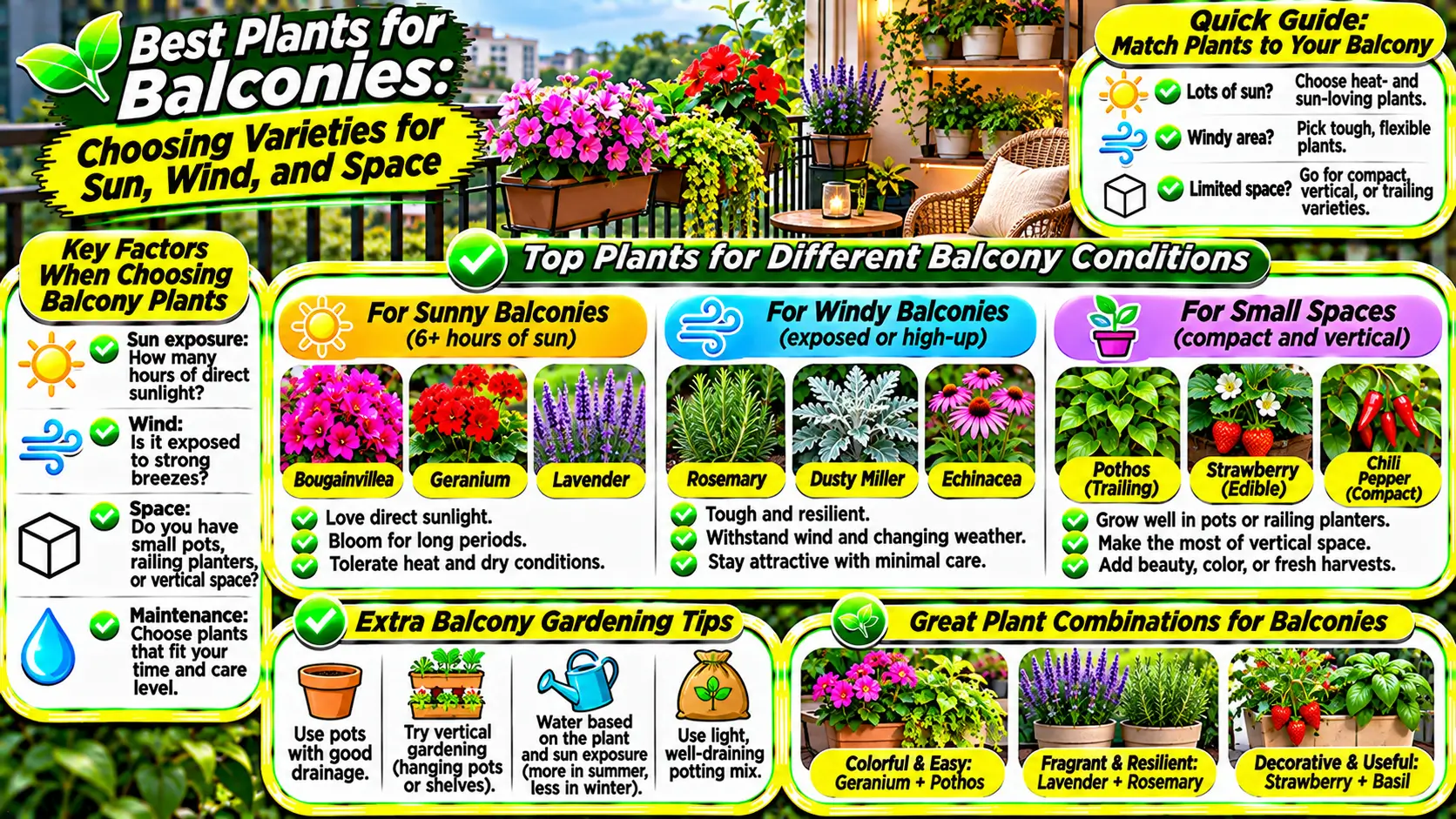
Sunlight changes with season and with the position of nearby buildings. A balcony that receives morning sun may stay relatively cool, while one exposed to afternoon sun can become hot. Observe the space for several days and distinguish direct sunlight from bright indirect light. The number of hours of direct sun is a useful starting point, but reflected heat and wind can change how plants experience that exposure.For a sunny balcony, consider species that tolerate strong light and the local temperature range. Herbs such as rosemary, thyme, and oregano may suit bright, well-drained positions. Flowering annuals and compact sun-loving perennials can provide seasonal color if they receive adequate water. For a shaded balcony, look for plants that tolerate lower light, but remember that deep shade can limit flowering and growth. Do not label a balcony simply sunny or shady without checking how conditions vary across the space.
Select plants for wind tolerance
Wind is one of the most important balcony factors. It can break tall stems, tear broad leaves, dry potting mix, and make lightweight containers unstable. Exposed upper floors may experience stronger gusts than sheltered ground-level patios. Choose compact plants with flexible stems or naturally sturdy growth where wind is frequent. Avoid placing tall, top-heavy specimens near railings unless their containers and supports are secure.Create shelter without blocking all airflow. A carefully positioned screen can reduce direct wind, but check building rules and ensure that it is securely installed. Grouping containers can create a more sheltered microclimate, provided plants still receive enough light and air. Use heavier, stable pots where appropriate and keep saucers or loose objects from becoming hazards. Never hang containers where they could fall onto people below.
Choose containers and growing media
Every container should have drainage holes. A sealed decorative pot can hold water around roots and cause oxygen deprivation. If you like the look of a pot without holes, use it as an outer cover for a nursery pot that can be removed for watering and drainage. Container size should suit the plant’s root system and mature size. Small pots dry quickly, especially in sun and wind, while very large pots can remain wet for too long if the plant has a small root system.Use a quality potting mix formulated for containers, not dense garden soil. Different plants need different levels of drainage and moisture retention. Herbs from dry climates generally need an airy mix, while leafy plants may prefer a medium that holds moisture but still drains freely. Keep drainage holes clear and raise pots slightly if they sit flat against a surface. Consider the total weight of containers, wet growing media, water reservoirs, and mature plants, and follow building or property guidance on balcony load limits.
Plants for sunny balconies
A sunny balcony can support many herbs and flowering plants when watering is reliable. Rosemary, thyme, and oregano prefer strong light and well-drained media, making them useful choices for bright conditions. Basil also needs warmth and light but generally prefers more consistent moisture than Mediterranean woody herbs. Keep basil protected from cold and harvest its growing tips to encourage branching.For flowers, select compact varieties that are suited to the local climate and container culture. Some geraniums, petunias, and marigolds can perform well in sunny positions, but their watering and heat tolerance vary by cultivar. In very hot locations, even sun-loving plants may need protection from extreme reflected heat. Check pots daily during hot, windy weather and water when the root zone requires it rather than following a rigid schedule.
Plants for shaded balconies
Shaded balconies can still support attractive foliage. Ferns, some begonias, and other shade-tolerant ornamentals may be suitable where conditions are bright but direct sunlight is limited. Their needs vary: some prefer consistently moist media and protection from drying wind, while others need more airflow and careful watering. Identify the species before grouping plants together.A shaded balcony may not receive enough light for fruiting vegetables or heavy flowering. Choose foliage plants for reliable structure and use flowering species only when their light requirements match the site. If the balcony is very dark, consider whether a nearby brighter window or a movable container arrangement would work better. Rotate plants gradually if they are moved between different light levels, and avoid exposing shade-grown foliage suddenly to intense sun.
Watering and feeding in containers
Balcony containers often dry faster than garden beds because they have limited soil volume and are exposed on several sides. Check moisture in the root zone, not just the surface. Water thoroughly until excess drains out, then empty saucers so roots do not remain submerged. Self-watering containers can reduce daily effort for some plants, but they still need monitoring and occasional cleaning. They are not suitable for every species, particularly those that prefer to dry between waterings.Nutrients are gradually used or washed out of container media. Feed during active growth with a fertilizer appropriate for the plant and follow label directions. Avoid applying concentrated fertilizer to dry roots or assuming that more feeding will solve poor growth caused by inadequate light. Periodically refresh or replace potting mix when it becomes compacted, breaks down, or no longer drains properly. Repot when roots fill the container, using a pot only modestly larger than the previous one.
Arrange a small balcony garden
Plan the layout before filling the balcony with pots. Keep doors, drains, and access routes clear. Place taller plants where they will not shade smaller ones, and use rail planters only when they are designed and secured for that purpose. Shelves and vertical planters can increase growing area, but check their stability and ensure that water cannot drip onto neighbors or lower balconies.Group plants with similar light and moisture needs. A sunny herb group might include rosemary, thyme, and oregano, while a separate container holds basil that needs more regular moisture. Keep plants that need shade in a sheltered area. Repeating a few container styles or foliage colors can make a small balcony feel organized. Leave enough space to inspect leaves, prune, and water without damaging stems.
Safety, maintenance, and seasonal changes
Check balcony rules before installing large planters, screens, hanging baskets, or irrigation equipment. Avoid overloading railings and do not place unstable pots where they could fall. Use drip trays where needed and clean standing water regularly. If the balcony is accessible to children or pets, verify plant safety using the exact botanical name and keep potentially harmful plants out of reach.Inspect plants weekly for pests, damaged stems, and blocked drainage. Remove spent flowers where appropriate and trim growth that interferes with access. During extreme heat, move vulnerable pots into temporary shade if possible. During cold or stormy weather, protect or relocate plants according to their needs. Keep a simple note of which containers dry fastest; this helps establish a realistic routine and prevents both neglect and unnecessary watering.
Conclusion
The best balcony plants are those suited to the space’s actual sunlight, wind, temperature, and container conditions. Sunny balconies may support herbs and flowering plants, while shaded spaces can be attractive with foliage-focused choices. Compact growth, stable containers, reliable drainage, and manageable watering needs are especially important in exposed locations.Start with a few plants, observe how they respond, and expand gradually. A well-planned balcony garden should be safe, easy to access, and enjoyable to maintain. By matching plants to the conditions rather than forcing the space to suit a favorite species, even a small balcony can become a thriving green retreat.
Balcony plant choice by exposure
| Balcony condition | Plant traits | Container consideration |
|---|---|---|
| Hot, sunny, exposed | Sun and heat tolerant varieties | Larger pots reduce rapid drying |
| Windy and elevated | Compact, flexible, wind-tolerant plants | Secure containers and avoid top-heavy arrangements |
| Shaded | Foliage plants and shade-tolerant flowers | Ensure drainage and avoid overwatering |
| Limited floor area | Compact plants and vertical growing forms | Check load limits before adding heavy pots |
| Very hot walls | Heat-tolerant species | Monitor root-zone temperature and moisture |
For further practical information, consult University of Minnesota Extension container gardening guide.
Explore these related guides:
- Create a Vertical Garden: Structures, Plants, and Maintenance
- Design Narrow Garden Layouts for Small Spaces
More related garden guides:
- Best Shade-Loving Plants for Attractive Garden Borders
- Best Climbing Plants for Trellises, Fences, and Vertical Gardens
Check balcony load, drainage, and wind safety
Container choice is also a structural and water-management decision. Wet growing medium, mature plants, ceramic pots, saucers, and stored water can make a balcony garden substantially heavier than it appears when dry. Do not estimate the safe load from appearance or place a dense cluster of large planters on a balcony without checking building guidance or consulting the property manager or a qualified professional. Keep containers stable, prevent them from being blown or knocked over, and never attach heavy planters to railings unless the fixing system is designed and approved for that use.
Plan where excess water will go. Drainage holes must remain open, but runoff should not stain or damage the facade, drip onto people below, or create a slipping hazard. Use trays only if they can be emptied and do not leave roots standing in water. In exposed locations, group containers only where doing so does not overload the structure, use wind-tolerant species, and secure tall plants to appropriate supports. Strong wind can increase water loss and topple lightweight pots.
UConn Extension’s container gardening guidance explains how exposure, pot material, and wind affect plant care. Building rules and structural limits vary, so balcony safety must be checked locally before installing a large container collection or overhead structure.
Related Gardening Guides
Explore these related guides for more practical ideas and gardening advice:
- Create a Vertical Garden: Structures, Plants, and Maintenance
- Design Narrow Garden Layouts for Small Spaces
- Outdoor Garden Lighting Ideas for Safety and Ambience
Frequently Asked Questions
Which plants are best for a sunny balcony?
Choose compact plants that tolerate the amount of direct sun and reflected heat your balcony receives. Herbs and sun-loving flowers can work well when containers drain freely and watering is consistent.
How do I protect balcony plants from strong wind?
Use stable, appropriately sized containers, secure trellises and rail planters, and select naturally compact or wind-tolerant plants. Avoid placing lightweight pots where they can fall.
How often should balcony plants be watered?
Check the potting mix rather than following a fixed schedule. Small containers and exposed balconies may dry quickly, but watering frequency depends on weather, plant size, pot material, and drainage.
Can I grow vegetables on a balcony?
Yes, if the balcony receives enough light and the structure can safely support the containers. Choose compact varieties and use containers with adequate depth and drainage.
7 thoughts on “Best Plants for Balconies: Choosing Varieties for Sun, Wind, and Space”