How to collect a useful leaf-spot sample
If leaf spots are spreading or the diagnosis will determine whether a crop is removed or treated, a good sample can be more valuable than another spray. Contact the diagnostic laboratory first and follow its current submission instructions. In general, select several leaves showing early to moderate symptoms, including the transition between healthy and affected tissue. Avoid sending only completely dead, dried, or decomposed leaves because they may no longer contain useful diagnostic material.
This guide is specifically about what to do when bacterial leaf spot is suspected and a reliable diagnosis is needed. Its practical focus is collecting, documenting, and submitting useful plant samples before choosing a treatment.
This guide is specifically about what to do when bacterial leaf spot is suspected and a reliable diagnosis is needed. Its practical focus is collecting, documenting, and submitting useful plant samples before choosing a treatment.
Keep samples from different plant species or separate problem areas in different bags, label them with the host and collection location, and include photographs of the whole plant and the planting pattern. Do not add water or seal wet leaves in a way that causes them to rot during transport. Include relevant notes: when symptoms began, recent rain or overhead irrigation, pesticide or fertilizer applications, whether new growth is affected, and how quickly lesions are expanding. Do not assume that a laboratory can identify the cause from a photograph alone.
University of Delaware’s plant-diagnosis guidance emphasizes representative samples, good sample condition, and a record of the pattern and history. Review its diagnostic sampling recommendations before collecting. Until results are available, reduce splash, avoid handling wet plants, and clean tools between plants. This approach helps distinguish bacterial disease from fungal, chemical, and environmental look-alikes.
Related Gardening Guides
Explore these related guides for more practical ideas and plant-care advice:
- How to Recognize and Manage Bacterial Leaf Spot on Plants
- How to Identify and Treat Common Fungal Diseases on Garden Plants
- How to Prevent and Manage Damping-Off in Seedlings
Bacterial leaf spot is a group of plant diseases caused by several bacteria that infect leaves and sometimes stems, fruits, or flowers. Symptoms can resemble fungal leaf spots, sunscald, or physical injury, so diagnosis should not be based on appearance alone. Many bacterial pathogens spread through splashing water, contaminated tools, infected transplants, and handling wet foliage. There is no universal home treatment that cures infected leaves. The most reliable response is to reduce spread, remove severely affected material when appropriate, improve growing conditions, and obtain a diagnosis when the disease is serious or recurring.
Table of Contents
- What bacterial leaf spot looks like
- How bacteria reach plant tissue
- Distinguish bacterial spots from other problems
- Inspect and contain the outbreak
- Water in a way that limits spread
- Pruning and sanitation
- Choose resistant varieties and clean starts
- Fertilizer and plant stress
- Are copper products or other sprays useful?
- When diagnosis and replacement make sense
- A practical monitoring routine
- How to collect a useful leaf-spot sample
- Prepare and document leaf samples for a laboratory
- Frequently Asked Questions
What bacterial leaf spot looks like
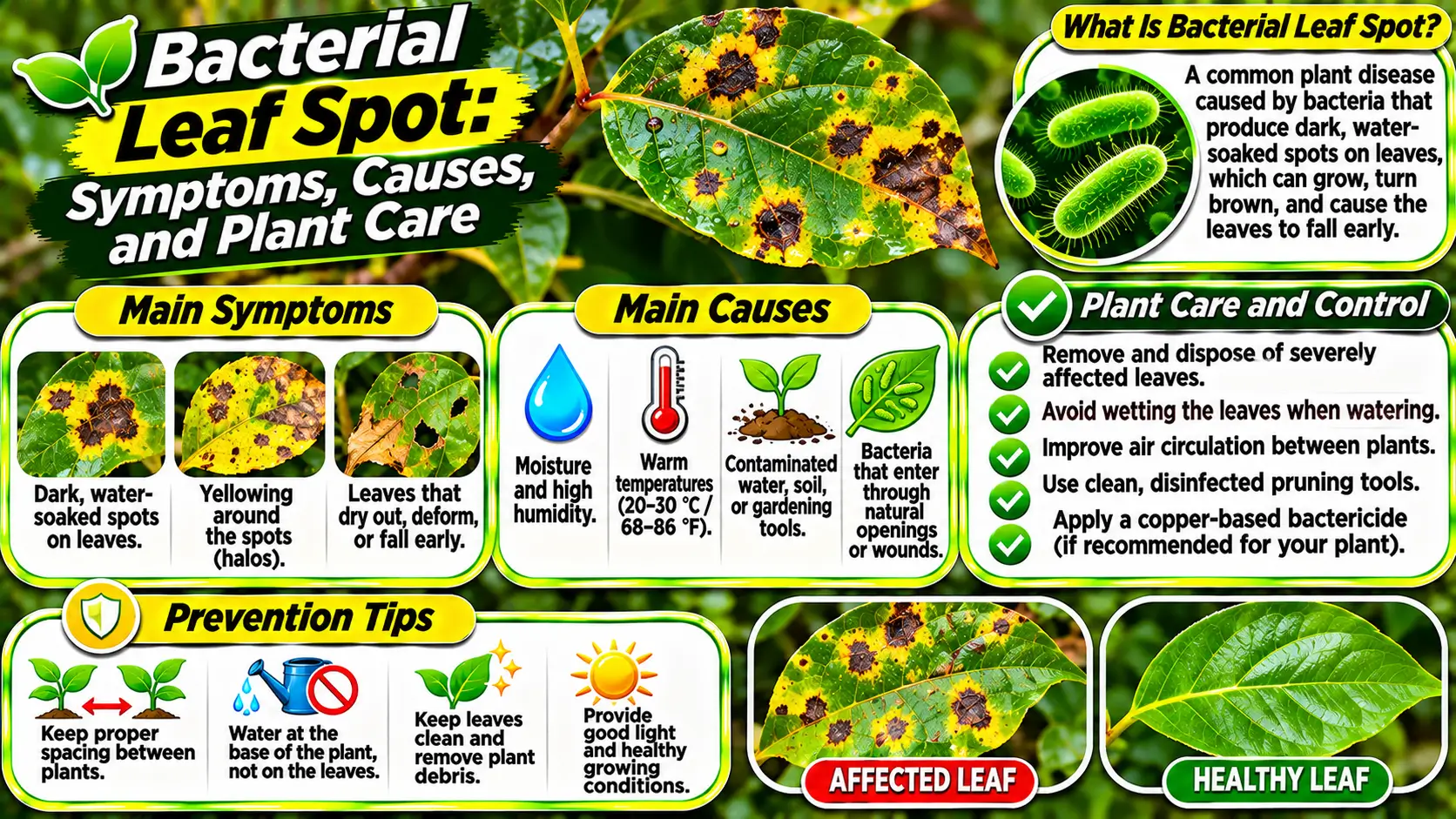
Symptoms vary with the host and bacterial species. Spots may begin as small water-soaked areas that later turn brown, black, or translucent. They can be angular when limited by leaf veins, or irregular when they expand across the leaf. A yellow halo may surround some lesions, while others appear greasy or have a wet-looking margin. In humid weather, lesions may merge and cause large areas of tissue to die. Similar patterns can result from fungal disease, chemical injury, or environmental stress, so appearance is a clue rather than proof.
How bacteria reach plant tissue
Bacteria commonly enter through natural openings or wounds caused by insects, pruning, wind, or handling. Rain and overhead irrigation can splash bacteria from an infected leaf to nearby foliage. Contaminated tools, reused trays, plant debris, and infected seed or transplants may also contribute. Warm temperatures and prolonged leaf wetness favor many outbreaks, although the exact conditions depend on the pathogen and host. Crowded plants dry slowly and are harder to inspect. Understanding the route of spread helps target prevention: reduce unnecessary leaf wetness, avoid working among wet plants, and start with clean planting material.
Distinguish bacterial spots from other problems
Fungal leaf spots may produce visible spores or fruiting structures under magnification, while bacterial lesions often look water-soaked early in development. However, these differences are not reliable in every case. Nutrient problems usually create more regular patterns across leaves or affect older or younger foliage in characteristic ways, while spray injury may follow the pattern of application. Photograph symptoms, note which leaves were affected first, and record recent weather, irrigation, and treatments. A laboratory diagnosis is valuable when the plant is commercially important, the disease is spreading rapidly, or management depends on knowing the pathogen.
Inspect and contain the outbreak
Check both sides of leaves, stems, and nearby plants. Mark or photograph affected areas so you can tell whether new lesions are appearing. Avoid carrying wet foliage through the garden because hands and clothing can transfer contaminated moisture. If only a few leaves are affected and the plant can tolerate their removal, prune them during dry weather and place them in household waste where local rules allow. Do not remove so much foliage that the plant becomes severely stressed. Clean tools after working on diseased plants and avoid using the same gloves on healthy specimens without washing.
Water in a way that limits spread
Water the soil rather than the foliage whenever practical. Drip irrigation, a soaker hose, or careful hand watering can reduce splashing and shorten the period leaves remain wet. If overhead watering is necessary, water early enough for foliage to dry before evening and avoid frequent light sprinkling. Do not handle or prune plants while leaves are wet. Adjust irrigation to the crop’s actual needs; waterlogged soil can weaken roots and create additional stress even though it is not the direct cause of every leaf spot. Good watering practices reduce favorable conditions for many pathogens.
Pruning and sanitation
Remove heavily diseased leaves or stems when doing so will not compromise the plant. Make clean cuts and disinfect tools between plants, following an appropriate tool-sanitizing procedure. Remove fallen infected leaves from beneath plants because debris can preserve pathogens or contribute to future splash dispersal. Do not place diseased material in a cool home compost pile unless the process is known to reach conditions that destroy the pathogen. Clean pots, benches, trays, and greenhouse surfaces before reusing them. Sanitation will not reverse existing lesions, but it can lower the amount of infectious material available to spread.
Choose resistant varieties and clean starts
When bacterial leaf spot is a recurring problem on a particular crop, look for varieties described by reliable regional sources as resistant or less susceptible to the relevant disease. Resistance is often specific to a pathogen or strain, so a general claim of disease resistance may not cover the problem you have. Buy transplants from reputable suppliers and inspect them before planting. Avoid plants with water-soaked lesions, unexplained leaf spotting, or widespread yellowing. Use clean seed and fresh or properly sanitized propagation supplies. Healthy-looking starts reduce risk but cannot guarantee that bacteria are absent.
Fertilizer and plant stress
Avoid trying to cure leaf spot with extra fertilizer. Excess nitrogen can produce dense, tender growth and may make some plants more susceptible to disease or harder to dry after rain. Follow soil-test recommendations where available and use balanced nutrition suited to the crop. Maintain appropriate spacing, light, and irrigation so plants can grow steadily. Remove weeds that obstruct airflow or harbor related hosts. A stressed plant may recover slowly even after spread is reduced, so judge progress by the appearance of new growth rather than expecting old lesions to disappear.
Are copper products or other sprays useful?
Some products containing copper are labeled for suppression of certain bacterial diseases on specific plants. They are generally preventive or suppressive rather than curative, and performance varies by pathogen, crop, and conditions. Repeated or excessive copper use can injure foliage and contribute to copper accumulation in soil. Use only products registered for the plant and disease in your location, and follow label directions exactly. Do not mix products or increase rates in an attempt to force a cure. If the diagnosis is uncertain, ask a local extension specialist before applying a pesticide.
When diagnosis and replacement make sense
If lesions continue to spread despite sanitation and improved watering, obtain professional diagnosis. Some bacterial diseases are regulated or especially damaging to particular crops, and local guidance may recommend removal of severely infected plants. For an annual plant near the end of its season, replacement may be more practical than repeated treatment. For valuable perennials or trees, avoid drastic pruning until the cause is known. Keep records of the plant variety, symptoms, weather, and actions taken. Prevention through clean starts, dry foliage, sanitation, and resistant varieties is usually more dependable than trying to rescue severely infected tissue.
A practical monitoring routine
Make pest checks part of ordinary plant care instead of waiting for obvious damage. Inspect a few representative leaves, stems, and growing points each week, increasing the frequency when conditions favor the pest or when a nearby plant is affected. Record the date, location, symptoms, and action taken. This simple record helps distinguish a treatment that is working from one that only temporarily reduces visible insects. Keep the plant’s basic needs in balance, avoid unnecessary chemical applications, and reassess the diagnosis if symptoms do not match the expected pattern.
Bacterial leaf spot: diagnosis and response
| Observation | What it may indicate | Recommended response |
|---|---|---|
| Small water-soaked spots | Possible early bacterial lesions | Inspect both sides of leaves and record progression |
| Angular lesions bounded by veins | May be consistent with bacterial leaf spot | Compare with fungal spots and abiotic damage |
| Yellow halos or leaf yellowing | Possible infection or other stress | Check watering, nutrition, and plant history |
| Wet foliage and overhead irrigation | Can encourage spread of bacterial pathogens | Water at soil level and improve airflow |
| Widespread symptoms | Diagnosis may require laboratory or extension support | Seek expert identification before treatment |
For expert background, consult University of Maryland Extension guidance on bacterial leaf spots.
Related articles:
- Bacterial Leaf Spot: Symptoms, Causes, and Plant Care
- How to Recognize and Manage Bacterial Leaf Spot on Plants
More related plant health guides:
More related plant-care guides:
- Scale Insect Management: Monitoring and Treatment for Garden Plants
- How to Identify and Control Thrips on Garden and Houseplants
How to collect a useful leaf-spot sample
If leaf spots are spreading or the diagnosis will determine whether a crop is removed or treated, a good sample can be more valuable than another spray. Contact the diagnostic laboratory first and follow its current submission instructions. In general, select several leaves showing early to moderate symptoms, including the transition between healthy and affected tissue. Avoid sending only completely dead, dried, or decomposed leaves because they may no longer contain useful diagnostic material.
Keep samples from different plant species or separate problem areas in different bags, label them with the host and collection location, and include photographs of the whole plant and the planting pattern. Do not add water or seal wet leaves in a way that causes them to rot during transport. Include relevant notes: when symptoms began, recent rain or overhead irrigation, pesticide or fertilizer applications, whether new growth is affected, and how quickly lesions are expanding. Do not assume that a laboratory can identify the cause from a photograph alone.
University of Delaware’s plant-diagnosis guidance emphasizes representative samples, good sample condition, and a record of the pattern and history. Review its diagnostic sampling recommendations before collecting. Until results are available, reduce splash, avoid handling wet plants, and clean tools between plants. This approach helps distinguish bacterial disease from fungal, chemical, and environmental look-alikes.
Prepare and document leaf samples for a laboratory
A useful diagnostic submission includes both the symptom and its context. Photograph the whole plant, the affected branch or bed, and close views of several lesions with a scale reference. Collect multiple leaves at different stages of symptom development, preferably including the boundary between healthy and affected tissue. Keep samples from different hosts or locations separate, label each bag, and avoid sending only completely dead tissue.
Before collecting, contact the receiving laboratory because packaging and shipping requirements vary. Many services prefer samples that are fresh but not wet; excessive moisture inside a sealed bag can accelerate decay in transit. Do not add water, freeze samples, or use a chemical preservative unless the laboratory specifically instructs you to do so. Include the plant name, location, date, recent weather, irrigation pattern, and any pesticide or fertilizer applications. This history can help distinguish an infectious disease from spray injury or environmental stress.
University of Delaware’s plant problem diagnostic guidance explains why representative samples and a clear history matter. A laboratory result should be interpreted alongside the field pattern; detecting an organism does not always prove it caused every symptom. Ask the diagnostician what the finding means for the specific host and whether follow-up testing is needed.
Related Gardening Guides
Explore these related guides for more practical ideas and plant-care advice:
- How to Recognize and Manage Bacterial Leaf Spot on Plants
- How to Identify and Treat Common Fungal Diseases on Garden Plants
- How to Prevent and Manage Damping-Off in Seedlings
Frequently Asked Questions
Can bacterial leaf spot spread through seeds?
Some plant pathogens can be seedborne, but this depends on the bacterium and host. Use reputable seed sources and follow crop-specific sanitation guidance when disease is suspected.
Should I prune every leaf with a spot?
Remove severely affected tissue when practical, but avoid stripping too much healthy foliage. Use clean tools and manage the underlying conditions that encourage spread.
Can copper products cure bacterial leaf spot?
No product should be treated as a guaranteed cure for infected tissue. Some products may be used preventively in specific crops and regions, but effectiveness and permitted uses vary; follow local recommendations and the label.
How can I reduce bacterial leaf spot in the next growing season?
Use healthy planting material, rotate crops where relevant, remove infected debris, improve airflow, avoid overhead watering when possible, and clean tools between plants.

