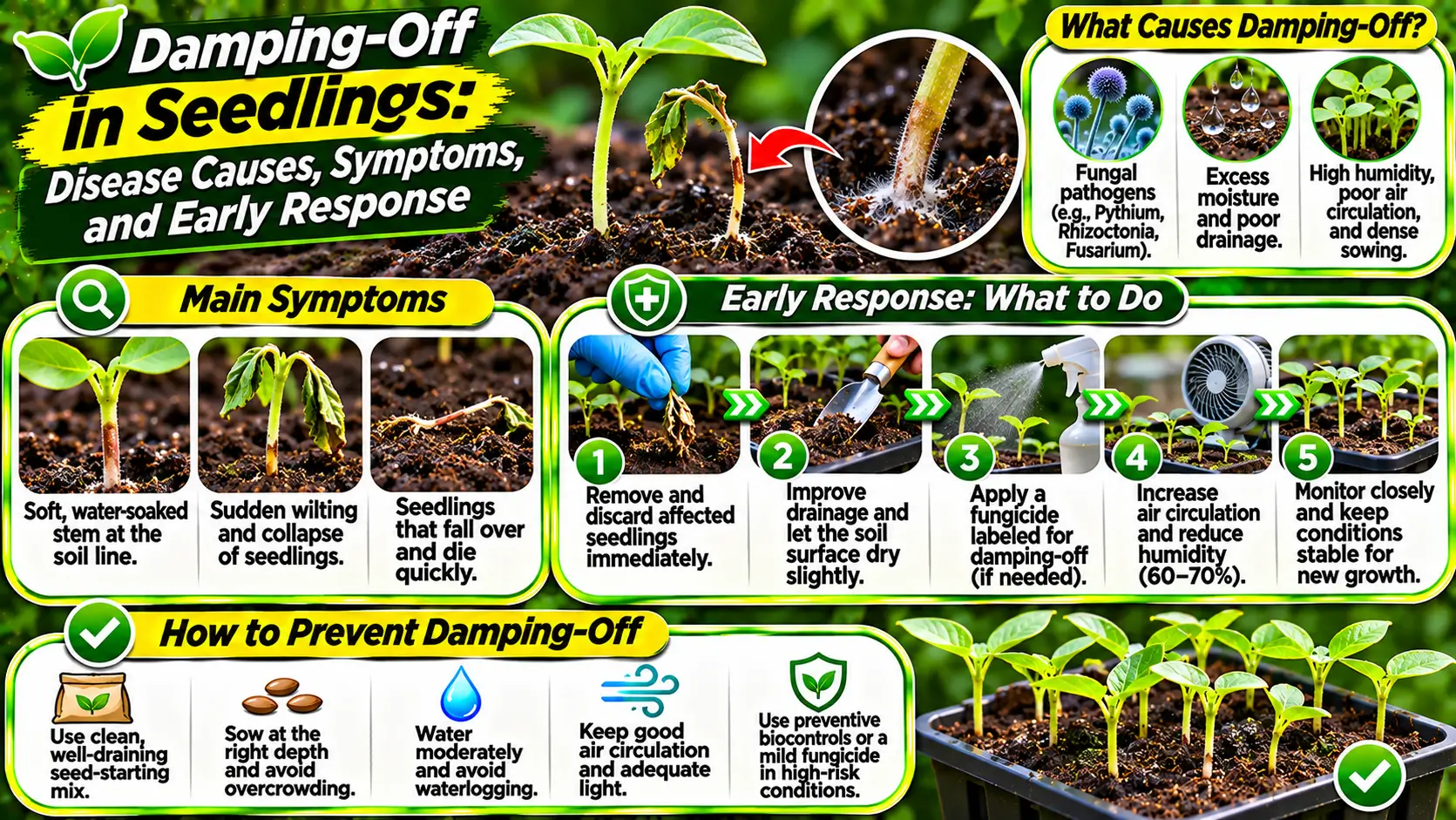
Damping-off is a disease complex, not one single fungus
Damping-off describes seed and seedling losses caused by several soilborne organisms, including fungi and water molds such as Pythium. Seeds may rot before emergence, or newly emerged seedlings may develop water-soaked stems that narrow near the soil line and collapse. Because several problems can cause poor emergence or wilting, examine the stem base and roots rather than diagnosing from yellow leaves alone. Cold, saturated media, low light, crowding, and contaminated trays can increase risk by slowing seedling growth or moving pathogens through shared water.
This guide focuses on understanding damping-off symptoms and causes, making an early assessment, and responding safely when a seedling tray is affected. It emphasizes diagnosis and immediate triage rather than repeating a full prevention checklist.
Once a seedling has collapsed from damping-off, it is rarely worth trying to rescue it. Remove affected seedlings and nearby debris carefully, avoid splashing water across the tray, and do not reuse contaminated medium. If many trays are affected or the same problem recurs despite sanitation, obtain a diagnosis rather than assuming that every collapse has the same cause.
What to do when a seedling tray is affected
| Observation | Likely concern | Immediate action |
|---|---|---|
| Seed fails to emerge and becomes soft | Pre-emergence seed rot or unsuitable germination conditions | Check seed quality, medium moisture, temperature, and sanitation |
| Stem pinches at soil line and seedling falls | Typical post-emergence damping-off | Remove affected seedling and reduce spread through water and debris |
| Seedlings wilt but stem base remains firm | Could be drought, root damage, heat, or another disease | Inspect moisture and roots before assigning a diagnosis |
| Repeated outbreaks in reused trays | Contaminated equipment or medium may be involved | Clean and disinfect containers and use fresh propagation mix |
University of Minnesota Extension recommends clean containers, fresh seed-starting mix, good drainage, suitable light, and moisture that is even but not waterlogged. Its temperature examples are crop- and climate-specific; use the germination range for the species being raised rather than applying one temperature to every seed tray.
Related Gardening Guides
Explore these related guides for more practical ideas and planning advice:
- How to Monitor and Manage Thrips on Indoor and Outdoor Plants
- How to Grow Plants from Seeds: A Reliable Guide from Sowing to Transplanting
- How to Start a Home Compost Pile: Materials, Layers, and Maintenance
Understanding damping-off
Damping-off is a common problem in seed starting where seeds rot before emergence or young seedlings collapse near the soil surface. Several soil- and water-associated organisms can cause similar symptoms, including fungi and fungus-like pathogens. The result is often a patch of missing seedlings or young plants that suddenly fall over. Because the damage occurs at a vulnerable stage, prevention is usually more successful than trying to rescue affected seedlings. A tray that looks healthy one day can develop losses quickly when conditions favor the pathogens.
Table of Contents
- Understanding damping-off
- Recognizing the symptoms
- Why moisture matters
- Start with clean containers
- Use a suitable seed-starting mix
- Sow at the right density and depth
- Manage water from below or carefully above
- Provide light and airflow
- Control temperature and humidity
- Remove affected seedlings promptly
- Do not rely on home remedies
- Harden seedlings before transplanting
- A prevention checklist
- When diagnosis is needed
- Damping-off is a disease complex, not one single fungus
- What to do when a seedling tray is affected
- Frequently Asked Questions
Recognizing the symptoms
Before emergence, infected seeds may soften, discolor, or decay without producing a shoot. After emergence, a seedling may develop a narrow, water-soaked, brown, or darkened area at the soil line. The stem becomes weak and the plant tips over, sometimes while the leaves still look green. Roots may be brown or poorly developed. Not every collapsed seedling has damping-off: physical damage, poor light, overwatering, and excessive heat can also cause weak growth. Inspect the stem base and growing medium before deciding what happened.
Why moisture matters
Persistently wet growing media create conditions that favor many damping-off organisms and reduce the oxygen available to young roots. A tray left standing in water, a pot with poor drainage, or repeated watering before the surface has begun to dry can increase risk. Seedlings need consistent moisture, but consistently saturated media are not the same as evenly moist media. The goal is to keep the root zone hydrated while allowing excess water to drain and air to return to the pore spaces. Watering should respond to the medium and seedling stage.
Start with clean containers
Wash reusable trays, pots, and cell packs to remove soil and organic residue. If disinfection is appropriate, use a method or product recommended for seed-starting equipment and follow its directions, including any contact time and rinsing instructions. Cracked containers and items that cannot be cleaned thoroughly may be better discarded. Clean benches and work surfaces before sowing. New containers are not automatically sterile, but they reduce the risk of carrying contaminated soil from a previous growing cycle.
Use a suitable seed-starting mix
Choose a fresh, well-draining seed-starting medium rather than dense garden soil. Garden soil can compact in small containers, drain poorly, and carry organisms or weed seeds. A commercial seed-starting mix is designed to provide a consistent texture for germination, although quality varies. Store unused mix in a clean, dry, closed container and avoid mixing it with old material from diseased trays. Do not assume that adding extra fertilizer will make seedlings stronger; young roots can be sensitive to excess salts.
Sow at the right density and depth
Follow the seed packet or reliable crop guidance for sowing depth and spacing. Crowded seedlings restrict airflow and make it harder to water evenly or remove a diseased plant. Seeds sown too deeply may emerge slowly and remain vulnerable in wet media for longer. Very shallow sowing can expose seed to drying, so balance depth with the needs of the species. Thin seedlings when appropriate, using clean scissors rather than pulling in a way that disturbs neighboring roots.
Manage water from below or carefully above
Bottom watering can reduce splashing and help moisten the medium evenly, but trays should not remain submerged. Allow the mix to absorb water and then drain excess from the tray. If watering from above, use a gentle stream or fine rose to avoid dislodging seeds and splashing soil onto stems. Check moisture with a finger or by lifting the container rather than following a fixed schedule. Different mixes, container sizes, and room temperatures dry at different rates.
Provide light and airflow
Adequate light helps seedlings grow compact and sturdy. Insufficient light often produces elongated stems that are more likely to fall over, although this weakness is not itself proof of infection. Provide suitable light intensity and duration for the crop, keeping lamps at the recommended distance to avoid overheating. Gentle air movement can help foliage dry and strengthen stems, but avoid strong drafts that dry the medium too quickly. Do not crowd trays together in a humid, stagnant corner.
Control temperature and humidity
Use the temperature range recommended for the crop. Excessively cool conditions can slow germination and prolong the period when seeds are vulnerable, while excessive warmth can stress seedlings or favor certain pathogens. Humidity domes may help with germination, but remove or vent them as soon as seedlings emerge and conditions allow. Condensation that drips continuously onto seedlings is a warning sign that the environment may be too wet. Balance humidity with ventilation rather than keeping trays sealed indefinitely.
Remove affected seedlings promptly
If damping-off appears, remove collapsed seedlings and the surrounding medium carefully to limit disturbance and reduce potential sources of infection. Do not compost diseased material unless the composting system reliably reaches conditions recommended for pathogen reduction. Improve drainage and watering practices immediately, and separate affected trays from healthy ones. In a small cell tray with widespread collapse, restarting with clean equipment and fresh medium may be more reliable than trying to save every plant. Avoid reusing contaminated mix.
Do not rely on home remedies
Cinnamon, hydrogen peroxide, chamomile tea, and other household treatments are often discussed as damping-off remedies, but results are inconsistent and may depend on concentration and conditions. Improvised mixtures can damage tender roots or create a false sense of security. Fungicides and biological products should be used only when labeled for the crop, setting, and target disease, and according to local regulations. A product cannot compensate for saturated media, dirty containers, or poor airflow. Prioritize sanitation and growing conditions first.
Harden seedlings before transplanting
Once seedlings are healthy and ready to move outdoors, acclimate them gradually to sunlight, wind, and changing temperatures. Hardening off reduces transplant shock, although it does not cure damping-off. Transplant into well-prepared soil at the appropriate depth and avoid burying stems unless the crop specifically tolerates that practice. Water thoroughly after transplanting, then allow the soil to drain. Do not move weak or symptomatic seedlings into the garden simply because they have survived the initial collapse.
A prevention checklist
Before sowing, clean containers and surfaces, use fresh seed-starting mix, and confirm that trays drain freely. Sow at suitable depth and spacing, label varieties, and provide crop-appropriate warmth and light. Monitor moisture daily but water only when needed. Empty drainage trays, vent humidity covers after emergence, and remove diseased seedlings promptly. Keep notes about the mix, sowing date, temperature, and watering routine. If losses recur, change one or more conditions and seek local diagnostic help rather than repeating the same setup.
When diagnosis is needed
If seedlings repeatedly collapse despite clean equipment and careful watering, the cause may be a specific pathogen or an environmental problem that needs closer assessment. Photograph affected plants and retain a fresh sample only as directed by a diagnostic service. Record the seed source, growing medium, temperature, and irrigation practices. Extension specialists can help distinguish damping-off from nutrient, temperature, or light problems. Understanding the cause makes the next sowing more successful and prevents unnecessary product use.
Damping-off prevention checklist
| Risk factor | Prevention step | Why it helps |
|---|---|---|
| Contaminated trays or pots | Wash and sanitize reusable containers | Reduces pathogen carryover |
| Heavy or waterlogged medium | Use clean, well-drained seed-starting mix | Improves air around roots |
| Excess moisture | Water carefully and avoid keeping the surface saturated | Limits conditions favorable to disease |
| Poor airflow and crowding | Thin seedlings and provide ventilation | Helps foliage and medium dry appropriately |
| Cold, wet conditions | Sow when temperatures suit the crop | Supports faster, healthier emergence |
| Infected seedlings | Remove and discard affected plants | Reduces spread to healthy seedlings |
For expert background and practical recommendations, consult UC Integrated Pest Management guidance on damping-off diseases.
Explore these related guides:
More related gardening resources:
Additional related guides:
Damping-off is a disease complex, not one single fungus
Damping-off describes seed and seedling losses caused by several soilborne organisms, including fungi and water molds such as Pythium. Seeds may rot before emergence, or newly emerged seedlings may develop water-soaked stems that narrow near the soil line and collapse. Because several problems can cause poor emergence or wilting, examine the stem base and roots rather than diagnosing from yellow leaves alone. Cold, saturated media, low light, crowding, and contaminated trays can increase risk by slowing seedling growth or moving pathogens through shared water.
Once a seedling has collapsed from damping-off, it is rarely worth trying to rescue it. Remove affected seedlings and nearby debris carefully, avoid splashing water across the tray, and do not reuse contaminated medium. If many trays are affected or the same problem recurs despite sanitation, obtain a diagnosis rather than assuming that every collapse has the same cause.
What to do when a seedling tray is affected
| Observation | Likely concern | Immediate action |
|---|---|---|
| Seed fails to emerge and becomes soft | Pre-emergence seed rot or unsuitable germination conditions | Check seed quality, medium moisture, temperature, and sanitation |
| Stem pinches at soil line and seedling falls | Typical post-emergence damping-off | Remove affected seedling and reduce spread through water and debris |
| Seedlings wilt but stem base remains firm | Could be drought, root damage, heat, or another disease | Inspect moisture and roots before assigning a diagnosis |
| Repeated outbreaks in reused trays | Contaminated equipment or medium may be involved | Clean and disinfect containers and use fresh propagation mix |
University of Minnesota Extension recommends clean containers, fresh seed-starting mix, good drainage, suitable light, and moisture that is even but not waterlogged. Its temperature examples are crop- and climate-specific; use the germination range for the species being raised rather than applying one temperature to every seed tray.
Related Gardening Guides
Explore these related guides for more practical ideas and planning advice:
- How to Monitor and Manage Thrips on Indoor and Outdoor Plants
- How to Grow Plants from Seeds: A Reliable Guide from Sowing to Transplanting
- How to Start a Home Compost Pile: Materials, Layers, and Maintenance
Frequently Asked Questions
Can seedlings recover after damping-off?
Seedlings whose stems have collapsed or rotted at the soil line usually do not recover. Remove affected plants and focus on preventing spread to healthy seedlings.
What causes damping-off in seed trays?
Damping-off is associated with several soilborne pathogens and is favored by contaminated equipment or medium, excessive moisture, poor airflow, and crowded conditions.
Can I reuse seed-starting mix from an affected tray?
It is safer not to reuse contaminated growing medium. Clean and disinfect reusable containers and tools using an appropriate method before starting another batch.
How can I prevent damping-off in new seedlings?
Use clean containers and fresh, suitable seed-starting mix, avoid overwatering, provide airflow and adequate light, and sow at recommended spacing and depth.


4 thoughts on “Damping-Off in Seedlings: Disease Causes, Symptoms, and Early Response”