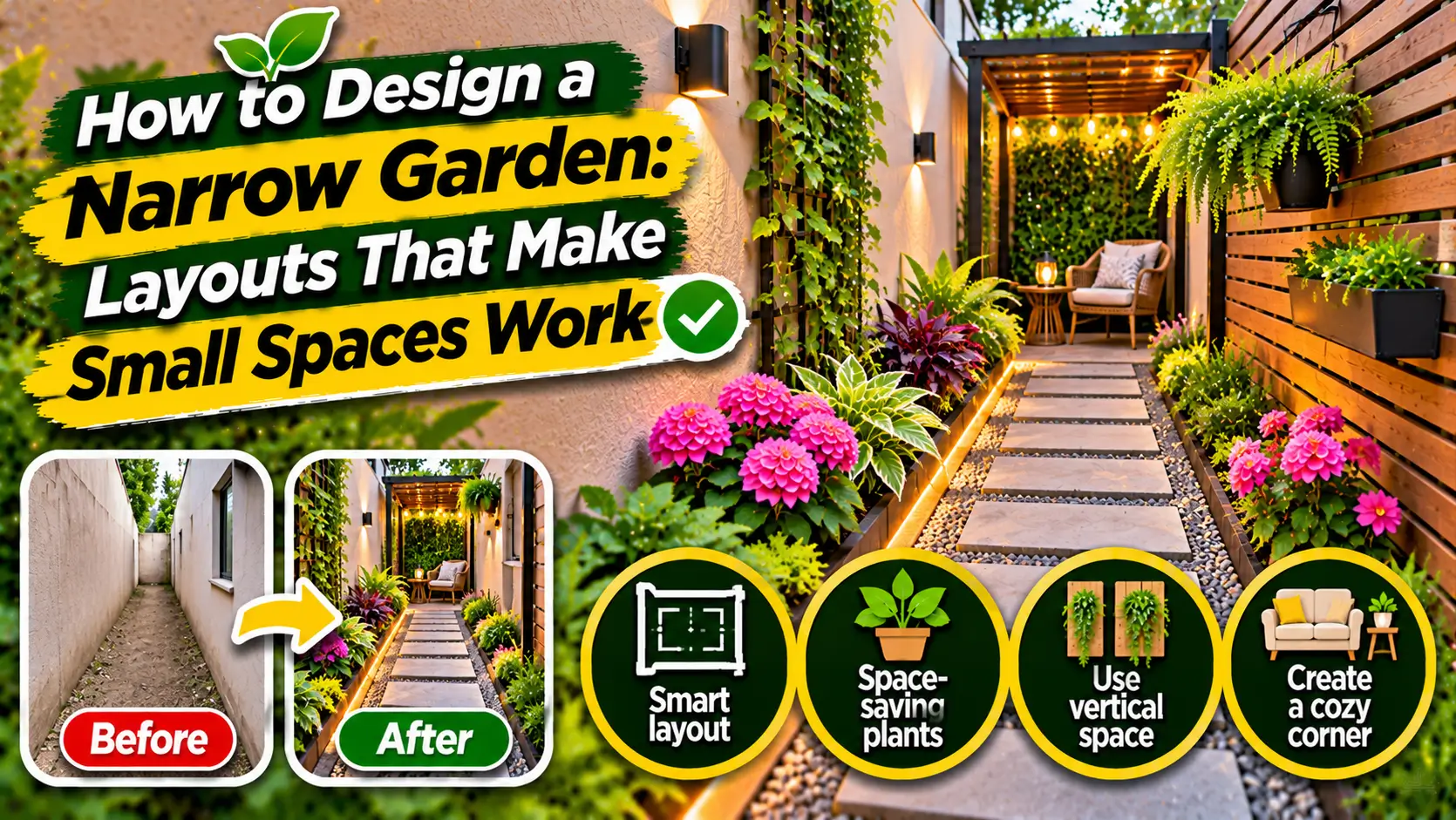
Read the proportions before choosing a layout
A narrow garden can feel restrictive when every feature is placed along the edges and a straight strip of lawn dominates the center. The solution is not necessarily to fill the space with more objects. Start by measuring the length and width, locating doors, windows, gates, existing trees, drains, and areas that receive sun or shade. Observe the garden from the house and from the far end to understand the views that matter most.Think about the proportions of each feature. A large shed or deep border can consume a significant share of a narrow plot, while a slim bench or compact table may provide the same function with less obstruction. Decide which activities matter most: dining, relaxing, growing vegetables, play, storage, or simply enjoying greenery. A clear priority list prevents the design from becoming a collection of unrelated items that leave no comfortable route through the garden.
Table of Contents
- Read the proportions before choosing a layout
- Create zones without dividing the garden into tiny rooms
- Use paths to improve movement and visual rhythm
- Choose plants that add height without overwhelming the width
- Make boundaries feel softer and more attractive
- Select compact furniture and flexible features
- Use levels carefully to create interest
- Improve privacy while keeping light and airflow
- Plan lighting and storage from the beginning
- Keep the design simple and maintainable
- Frequently Asked Questions
Create zones without dividing the garden into tiny rooms
A long space often benefits from two or three connected zones rather than one uninterrupted strip. For example, a small seating area near the house can lead to a planted middle section and a quieter destination at the far end. The transitions should feel natural, not like barriers. Changes in paving, planting, or level can suggest a new area without requiring solid partitions.Avoid placing bulky structures across the full width unless there is enough space to move around them comfortably. A low planting group, narrow trellis, or change in surface can create a sense of separation while preserving views. A focal point at the end of the garden can encourage the eye to travel through the space. This might be a specimen plant, sculpture, water bowl, or simple bench. Keep the composition calm so that the garden feels intentional rather than crowded.
Use paths to improve movement and visual rhythm
In a very narrow garden, a path that runs exactly down the center may emphasize the limited width. A route placed slightly to one side can leave room for a broader planting bed or seating area. Gentle changes in direction may make the garden feel more relaxed, but avoid awkward zigzags that reduce usable space. Keep the main route direct enough for everyday access and wide enough for the people and equipment that use it.Large paving units can create a calmer appearance than many small pieces, while a consistent surface can visually connect separate zones. If the garden is too narrow for a conventional path and lawn, consider a continuous paved or gravel surface with planting pockets along the edges. Ensure that the surface drains properly and provides suitable traction. A clear route is more valuable than decorative complexity that makes movement difficult.
Choose plants that add height without overwhelming the width
Vertical structure is especially useful in narrow gardens because it adds interest without occupying much floor area. Climbers on a suitable trellis, wall-mounted planters, slender shrubs, and small trees with an appropriate mature form can draw the eye upward. However, plants still need enough root space and room for their mature canopy. A narrow columnar plant may be more suitable than a broad spreading shrub, but its final size must be checked before planting.Layer planting from low ground covers to medium perennials and taller accents. Repeating a limited palette of plants creates continuity and prevents the borders from feeling chaotic. Use foliage texture and seasonal changes as well as flowers. Avoid thorny or brittle plants beside a tight walkway, and keep branches clear of windows, doors, and neighboring access. Select species suited to the actual light and moisture conditions rather than choosing solely for their compact appearance.
Make boundaries feel softer and more attractive
Long fences and walls can make a narrow garden feel enclosed. Planting can soften these boundaries, but the depth of a border must be balanced against the space needed for movement. A slim bed with repeated plants may be more effective than a deep, mixed border that leaves little room for furniture. Climbers can add greenery to vertical surfaces, provided the support is appropriate and the building material is protected.Color and material choices also affect perception. Light-colored paving and simple boundary finishes can make a small area feel brighter, while repeated materials help the space feel unified. Mirrors are sometimes used in gardens, but they need careful placement to avoid confusing wildlife or creating unwanted reflections. A focal feature placed at an angle can add depth without requiring a large object. The aim is to make boundaries feel intentional rather than attempting to hide every wall or fence.
Select compact furniture and flexible features
Furniture should fit the space when people are actually using it. Measure chairs when pulled away from a table, allow room to walk behind seating, and check that doors and gates can open fully. Folding chairs, benches with storage, narrow tables, and built-in seating can provide useful functions without dominating the garden. A bench placed along a boundary may preserve more central space than separate chairs.Choose durable outdoor materials and consider how furniture will be stored or protected. Large lounge sets may be uncomfortable in a narrow plot even if they fit on paper. A small table that can be moved when needed may be more versatile. Keep access to taps, drains, and storage areas clear. Flexible features allow the garden to adapt for everyday use, visitors, or seasonal activities without permanent rearrangement.
Use levels carefully to create interest
A small change in level can distinguish a seating area from a planting zone, but raised platforms and steps consume space and add construction complexity. Before introducing levels, consider whether the existing ground can be used more effectively with furniture placement and planting. Where a level change is needed, keep transitions safe and provide stable steps or a suitable ramped route.Raised beds can make gardening easier and add structure, but their depth reduces the available width. Place them where they do not obstruct the main route and choose dimensions that can be reached comfortably from the path. Ensure that raised structures are stable and that water drains away appropriately. Avoid building up soil against walls or fences without considering moisture and structural effects. Simple, well-proportioned features usually work better than multiple small terraces in a restricted space.
Improve privacy while keeping light and airflow
Privacy can be important in a narrow garden where neighboring windows overlook the space. A solid screen across the full width may make the garden feel smaller and darker. Instead, consider targeted screening near the seating area, a trellis with suitable climbers, or a carefully positioned shrub. The goal is to block the most intrusive sightlines while preserving daylight and airflow.Check local rules and property boundaries before installing tall screens, trees, or structures. Consider the mature height and spread of plants and whether roots or branches may affect neighboring property. A layered solution often feels more natural than a continuous wall. Use open structures where possible and place screening only where it serves a clear purpose. This approach can create a sense of enclosure without making the garden feel boxed in.
Plan lighting and storage from the beginning
Lighting can make a narrow garden useful after dark and visually connect its different zones. Use modest, shielded fixtures along essential routes and softer light near seating. Avoid a row of bright fixtures that exaggerates the length of the space or shines into neighboring windows. A small number of well-positioned lights is usually enough.Storage is equally important because tools, cushions, pots, and equipment can quickly clutter a small plot. Choose a compact storage unit that fits the available depth and can be accessed without blocking the route. Vertical tool storage, a bench with a storage compartment, or a discreet cabinet may help. Plan access to electrical outlets and water before installing fixed furniture or planters. Keeping practical items organized allows the garden to remain calm and spacious.
Keep the design simple and maintainable
A narrow garden benefits from a limited material palette, repeated plant choices, and features that serve more than one purpose. Too many paving patterns, colors, containers, and ornaments can make the space feel busy. Choose a few strong elements and allow them room to be appreciated. Use plants that suit the site’s conditions and do not require constant pruning to remain within bounds.Review the design after a season of growth. Remove or relocate features that obstruct movement, replace plants that repeatedly struggle, and adjust irrigation where containers dry too quickly. Keep paths clear and trim growth before it narrows access. The best narrow garden is not the one with the most features; it is the one that makes everyday activities comfortable while offering attractive views, healthy planting, and a clear sense of purpose.
Vertical supports can free valuable ground area, but choose a stable system and plants suited to the exposure; see Utah State University Extension’s guide to vertical gardening for practical planning considerations.
Design strategies for narrow gardens
| Strategy | How it helps | Watch for |
|---|---|---|
| Clear zones | Organizes the long space | Avoid too many small sections |
| Diagonal or curved path | Softens the corridor effect | Keep circulation practical |
| Vertical planting | Uses walls and fences | Ensure safe access and adequate light |
| Layered borders | Adds depth and screening | Respect mature plant width |
| Light-colored surfaces | Can make the space feel brighter | Avoid glare in exposed locations |
Related Gardening Guides
Explore these related guides for more practical ideas and planning advice:
- How to Create a Vertical Garden: Structures, Plants, and Maintenance
- Vertical Garden Design: How to Use Walls and Fences Effectively
- Small Garden Design Ideas That Make Limited Outdoor Spaces Feel Larger
- Vertical Garden Design: How to Use Walls and Fences Effectively
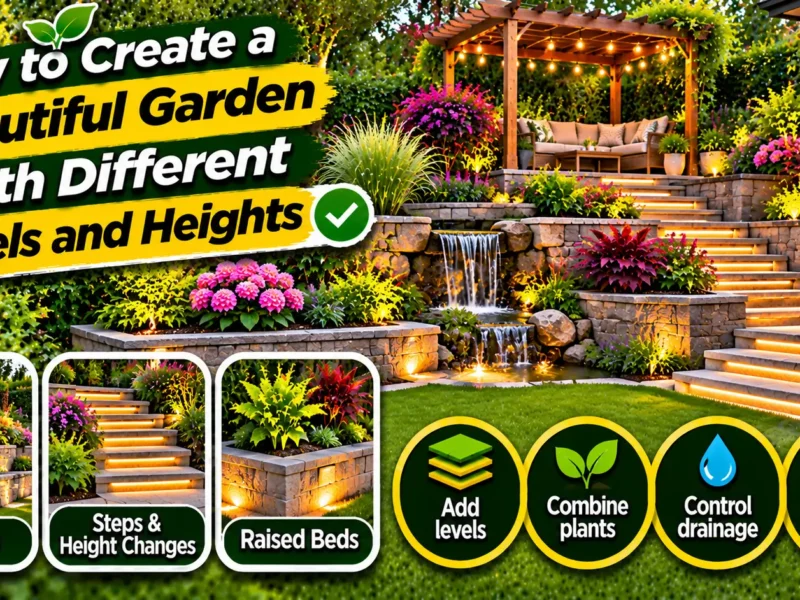
- How to Create a Beautiful Garden with Different Levels and Heights
Frequently Asked Questions
How can I make a narrow garden feel wider?
Use a clear route, repeat a limited plant palette, and create one or two focal points. Layer planting along boundaries while keeping the central movement space open and avoiding bulky features that block views.
Which plants suit a narrow garden?
Look for plants with a naturally upright or compact growth habit and check their mature width. Climbers can add height on suitable supports, while ground covers can soften edges without taking over the path.
How can I add privacy without making a narrow garden darker?
Use selective screening, open trellises, and plants with a suitable mature density. Position screens where they block direct views but preserve daylight and airflow where possible.
Are straight or curved paths better in a narrow garden?
Either can work. A straight route is efficient in very tight spaces, while a gentle curve can create a sense of discovery if there is enough width. The path should remain comfortable and easy to navigate.
6 thoughts on “How to Design a Narrow Garden: Layouts That Make Small Spaces Work”