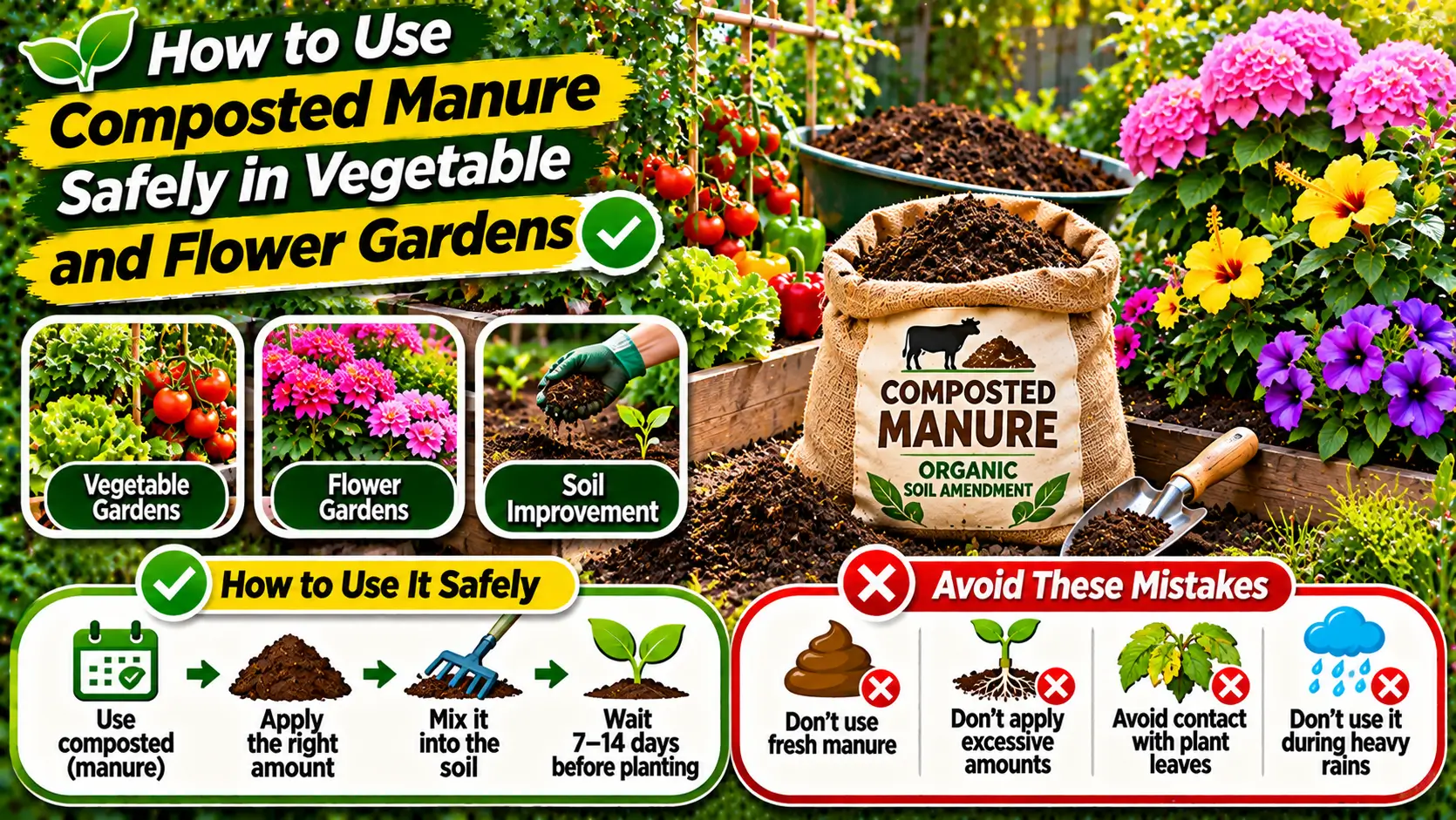
Composted manure is animal manure that has undergone a managed decomposition process. Depending on the animal source, bedding, feed, and composting method, it can contribute organic matter and nutrients such as nitrogen, phosphorus, and potassium. Its composition varies considerably, so it should not be treated as a uniform fertilizer. Properly processed manure can be useful in garden soil, but raw or poorly managed material can create odor, nutrient, pathogen, and weed-seed concerns.
Table of Contents
- Composted manure versus fresh manure
- Choosing a reliable source
- Understanding nutrient variability
- Why maturity matters
- Applying before planting
- Using manure around established plants
- Food safety and harvest timing
- Avoiding nutrient excess
- Storage and handling
- Common mistakes to avoid
- A safer manure management plan
- Verify composting and source quality
- Manage food safety and nutrient loading
- Frequently Asked Questions
Composted manure versus fresh manure
Fresh manure is not the same as finished composted manure. Fresh material may contain high levels of readily available nutrients, salts, pathogens, and weed seeds. It can burn roots or leaves if applied incorrectly and may create food-safety risks around edible crops. Composting under appropriate conditions can reduce some risks, but only when the process is managed effectively. Do not assume that manure is safe simply because it looks dry or has been stored for a short period.
Choosing a reliable source
Buy from a supplier who can explain the animal source, bedding materials, and composting process. Ask whether the material is fully composted and whether it has been handled to reduce contamination. Avoid manure mixed with unknown waste, treated bedding, or persistent herbicide residues. Some herbicides used on pasture or hay can remain active after passing through animals and may damage sensitive garden plants. If the source is uncertain, test a small area or use a more reliable material.
Understanding nutrient variability
Manure nutrient levels depend on animal species, feed, bedding, storage, moisture, and composting. Poultry manure may differ substantially from cattle, horse, or sheep manure. Bedding can increase carbon content and alter the nutrient concentration. A laboratory analysis is the best way to know the nutrient content of a large or repeated application. For ordinary home gardens, use conservative rates and avoid repeated heavy applications, especially where phosphorus may accumulate.
Why maturity matters
Mature composted manure generally has a stable, earthy smell and a more uniform texture than fresh manure. It should not be actively heating or releasing a strong ammonia odor. However, appearance and smell alone do not prove that a composting process reached conditions needed to reduce pathogens or weed seeds. Use material from a trustworthy source and follow food-safety guidance for the crops being grown. When in doubt, do not use uncertain manure on beds for edible crops.
Applying before planting
Composted manure is often easiest to incorporate before planting, when the bed is accessible and the material can be distributed evenly. Use the rate recommended by a soil test, supplier guidance, or local extension service. Work it into the upper soil layer where appropriate rather than placing concentrated material directly against roots or seeds. Avoid applying to saturated ground or immediately before heavy rain, when nutrients may run off.
Using manure around established plants
A suitable finished product may be used as a light top dressing around established ornamentals or other plants according to local recommendations. Keep it away from stems, crowns, and edible plant parts. Do not pile it against trunks or apply thick layers that remain wet. For vegetable gardens, follow local food-safety guidance on timing and avoid contact with harvested produce. Wash produce thoroughly and maintain clean harvest practices.
Food safety and harvest timing
Animal manure can carry organisms that cause illness if it is not handled and composted appropriately. Follow the current recommendations from local food-safety and agricultural authorities for manure use around crops eaten raw. Requirements may differ depending on whether the manure is treated, the crop, and the production system. Do not rely on a universal waiting period without checking the rules that apply to your location and growing method.
Avoiding nutrient excess
Repeated manure applications can add more phosphorus and salts than plants need, even when the material is composted. Excess nutrients can affect plant growth and move into waterways through runoff. Use soil tests periodically, especially in vegetable beds that receive manure or compost every year. If phosphorus is already high, choose amendments that add less of it and focus on other soil improvements. Do not use manure as a substitute for a balanced nutrient plan.
Storage and handling
Store composted manure in a contained area where runoff cannot reach drains or watercourses. Keep it covered appropriately to prevent excessive rain from washing nutrients away, while avoiding conditions that cause persistent waterlogging. Wear gloves and wash hands after handling. Keep material away from food preparation surfaces, animal feed, and clean harvest containers. Clean tools and footwear before moving from manure storage areas into food-handling spaces.
Common mistakes to avoid
Common errors include using fresh manure on growing crops, applying an unknown product too heavily, spreading it before a storm, and assuming that every composted product is pathogen-free. Another mistake is using manure to correct a nutrient problem without testing the soil. Do not apply it directly to seedlings or mix large amounts into potting media unless the product is specifically suitable for that purpose. Follow local guidance and label instructions.
A safer manure management plan
Use composted manure as one possible source of organic matter and nutrients, not as an unlimited soil conditioner. Select a reliable source, confirm that the material is mature, apply conservative test-based rates, and protect water and food safety. Keep records of source, application date, and amount. Combine manure with mulching, crop rotation, and soil testing to maintain a productive garden without allowing nutrient levels to build up unnecessarily.
Before changing an amendment or feeding routine, consider the history of the bed or container. Repeated applications can build up nutrients even when each individual dose seems small. Keep a simple record of materials and rates, and use a soil or growing-medium test when repeated problems occur. This makes it easier to identify whether a nutrient is missing, excessive, or unavailable.
Choose materials that are appropriate for the intended plants and growing system. A product designed for a large outdoor bed may not be suitable for seedlings or small containers. Check labels, ingredient information, and local guidance. If the source or concentration is uncertain, begin with a conservative approach or select a clearly labeled product.
Water and drainage remain essential even when the nutrient plan is correct. Roots need both moisture and oxygen, and a saturated root zone can prevent healthy nutrient uptake. Check the medium below the surface, make sure containers drain freely, and avoid leaving standing water around roots. Adjust watering as temperatures, plant size, and seasonal growth change.
Do not use fertilizer as a substitute for diagnosing plant stress. Weak growth can result from insufficient light, unsuitable temperatures, pests, disease, compacted soil, or damaged roots. Inspect the whole plant and its growing environment before applying more nutrients. Correcting the actual limiting factor is usually more effective than repeated feeding.
Observe new growth over time and make adjustments gradually. Old damaged leaves may not recover even after conditions improve, so judge success by healthy new growth and stable plant performance. Avoid making several major changes at once. A measured approach protects roots, reduces waste, and helps build a sustainable soil and nutrient management routine.
For further reading, explore these related guides on soil care and plant management: How to Choose and Use Gypsum in Garden Soil and How to Improve Soil Drainage in Garden Beds Without Drying Them Out. For additional research-based recommendations, consult Penn State Extension guidance on the wise use of manure in home vegetable gardens.
Composted manure at a glance
| Manure source | Typical characteristics | Practical caution |
|---|---|---|
| Cattle | Often contains bedding and organic matter | Nutrient content varies; avoid repeated heavy applications |
| Horse | May contain substantial bedding material | Check for persistent herbicide residues from hay or pasture |
| Poultry | Can be relatively nutrient-rich | Use only properly composted material and conservative rates |
| Sheep or goat | Often relatively dry and pellet-like | Do not assume nutrient levels or pathogen safety without reliable processing |
Verify composting and source quality
The word “aged” does not prove that manure has been composted to a pathogen-reducing standard. Ask the supplier what material was used, whether the pile was actively managed, whether temperature and turning were documented, and whether the product was tested for nutrient content or contaminants. Bedding such as sawdust or wood shavings can raise the carbon-to-nitrogen ratio and temporarily reduce nitrogen availability as it decomposes. Hay or pasture residues can also carry persistent herbicide residues that may injure sensitive broadleaf crops.
Manage food safety and nutrient loading
| Risk | Why it matters | Precaution |
|---|---|---|
| Pathogens in raw or inadequately composted manure | Can contaminate edible crops and garden surfaces | Use properly processed products and follow local food-safety intervals for raw manure |
| Excess phosphorus | Repeated manure use can raise soil phosphorus beyond crop needs | Test soil and avoid manure-based amendments when phosphorus is already high |
| High salts or ammonia | Can injure roots and seedlings | Avoid immature or strongly ammonia-smelling material; check product analysis |
| Persistent herbicide residues | May distort or damage sensitive crops | Ask about feed and bedding sources; test a small sample with sensitive plants if uncertain |
University of New Hampshire Extension explains that nutrient content varies widely by manure source and bedding, that excess phosphorus can accumulate, and that “aged” manure is not necessarily pathogen-safe compost. Its guidance describes a 90-day interval for crops not in contact with soil and 120 days for crops that grow in or near soil when raw or aged manure is applied; these are specific food-safety recommendations and local rules may differ. For food crops, use the applicable local standard and avoid applying raw manure during the growing season.
Colorado State University Extension also cautions that compost and manure can add salts and release nutrients slowly; soil testing helps prevent excess applications.
References: University of New Hampshire Extension: Guidelines for Using Animal Manures and Manure-Based Composts; Colorado State University Extension: Vegetable Gardens—Soil Management and Fertilization.
Related Gardening Guides
Explore these related guides for more practical ideas and planning advice:
- Bone Meal Fertilizer: When to Use It and When to Avoid It
- How to Make and Use Homemade Compost Tea Responsibly
- How to Use Cover Crops to Protect and Improve Garden Soil
Frequently Asked Questions
How can I tell whether manure is fully composted?
Use a reputable, clearly labeled source and look for material that is stable, dark, crumbly, and earthy rather than fresh-smelling or heating. Appearance alone is not a guarantee of pathogen reduction.
Can I use composted manure in a vegetable garden?
It can be used as a soil amendment when properly processed and handled, but follow local food-safety guidance and product instructions, especially for crops eaten raw or close to harvest.
Is composted manure suitable for every plant?
Not always. Nutrient content and salt levels vary, and some plants are sensitive to excess nutrients. Consider the crop, soil test, product analysis, and application rate.
Can too much manure harm garden soil?
Yes. Excessive applications can add more nutrients and salts than plants need and may contribute to runoff. Use modest, test-informed amounts rather than applying it automatically each season.

2 thoughts on “How to Use Composted Manure Safely in Vegetable and Flower Gardens”