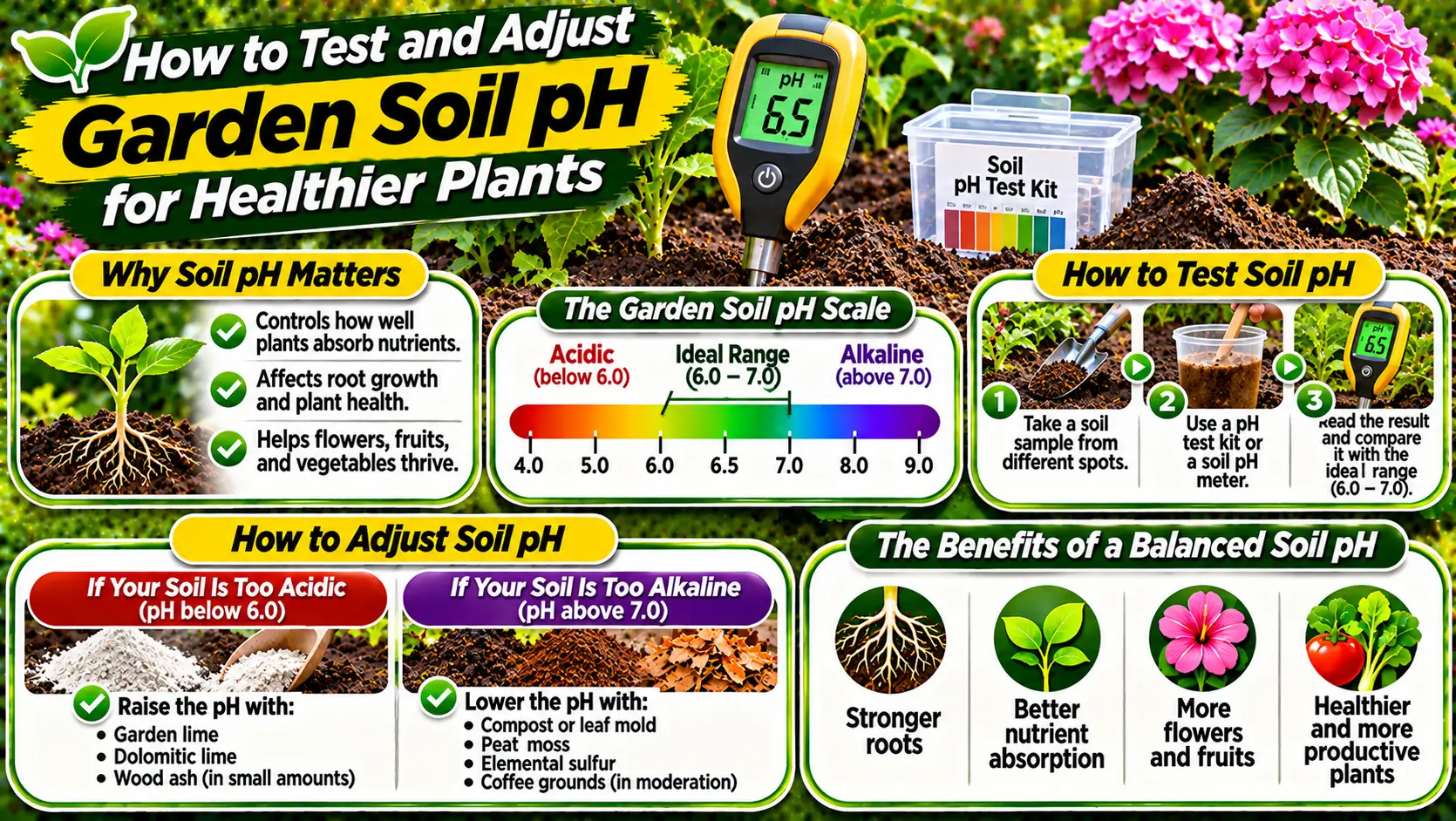
Soil pH describes how acidic or alkaline the soil is. The scale runs from 0 to 14, with 7 considered neutral; values below 7 are acidic and values above 7 are alkaline. Most garden soils fall somewhere between these extremes. pH matters because it influences how readily plants can access nutrients and how soil organisms function. It does not directly measure how fertile a soil is, and a soil with a suitable pH can still lack nutrients, organic matter, or good structure.
Table of Contents
- Why different plants prefer different pH levels
- Recognizing possible pH-related symptoms
- Choosing a soil test method
- Collecting a representative sample
- Interpreting the result
- Raising pH in acidic soil
- Lowering pH in alkaline soil
- Organic matter and pH
- Avoiding common mistakes
- Retesting and monitoring
- Building a long-term soil plan
- Frequently Asked Questions
Why different plants prefer different pH levels
Many common vegetables and ornamental plants grow well in slightly acidic to neutral soil, but preferences vary. Some plants adapted to acidic conditions may develop nutrient problems in alkaline soil, while other species tolerate or prefer more alkaline conditions. Before changing a bed, identify the plants that will grow there and check their preferred range. Trying to make an entire garden fit one universal number can create unnecessary work and may make conditions worse for plants that naturally prefer a different soil reaction.
Recognizing possible pH-related symptoms
Yellow leaves, weak growth, poor flowering, and disappointing harvests can sometimes be associated with unsuitable pH because nutrients become less available. However, these symptoms also result from overwatering, root damage, pests, disease, temperature stress, or actual nutrient shortages. Do not diagnose pH from leaf color alone. Testing the soil is more reliable than adding lime, sulfur, or fertilizer based only on appearance.
Choosing a soil test method
A laboratory soil test is generally the most useful option when you need dependable results and recommendations for a vegetable bed, lawn, orchard, or large planting area. Home test kits and digital meters can provide a rough indication, but accuracy varies with product quality, calibration, sampling, and soil preparation. If a reading seems surprising, repeat it or send a sample to a reputable laboratory. A test that also reports nutrient levels and organic matter can provide a more complete picture.
Collecting a representative sample
Soil can vary significantly across a garden, especially where beds have received different amendments or have different drainage. For one uniform planting area, collect several small samples from different points at the same depth and combine them in a clean container. Remove surface litter before sampling and avoid unusual spots such as compost piles, fertilizer spills, paths, or recently amended holes. Sample separate areas independently when their history, soil type, or plant use differs.
Interpreting the result
Read the laboratory report carefully and note the units, recommended range, and any suggested amendment rate. A pH number is only one part of the report. Texture, organic matter, nutrient levels, and drainage also influence plant performance. Recommendations should be matched to the crop and soil conditions. Avoid comparing readings from different test methods as though they were perfectly interchangeable, because preparation and measurement techniques can produce different results.
Raising pH in acidic soil
Agricultural lime is commonly used to raise the pH of acidic soil. The required amount depends on the starting pH, soil texture, buffering capacity, and the target range. Fine lime generally reacts more quickly than coarse material, but the correct product and rate should come from a soil test or trusted local recommendation. Spread it evenly and incorporate it where appropriate. Do not assume that adding more lime will improve every acidic soil; excessive application can create micronutrient availability problems.
Lowering pH in alkaline soil
Elemental sulfur and certain acidifying materials may lower soil pH, but the process can be slow and depends strongly on soil properties. Some soils contain free lime or have a high buffering capacity, making a large pH change difficult or impractical. Sulfur must be converted by soil microorganisms, so moisture, temperature, and aeration affect the process. Follow a tested recommendation and avoid repeated applications without retesting.
Organic matter and pH
Compost, leaf mold, and other organic materials improve soil structure and biological activity, but they should not be treated as precise pH correction products. Their effect depends on the material and the soil. Well-made compost can support nutrient cycling and moisture management, yet it may not shift a strongly acidic or alkaline soil into the ideal range. Use organic matter for the benefits it reliably provides, and use a soil-test-based amendment when a specific pH adjustment is needed.
Avoiding common mistakes
Frequent mistakes include testing only one small spot, using an uncalibrated meter, applying lime without a test, and expecting immediate changes after adding sulfur. Another error is adjusting pH for a plant that is not suited to the site’s climate or drainage. Avoid mixing multiple amendments in an attempt to correct every possible problem at once. Make one well-supported change, follow application directions, and allow time for the soil reaction to respond.
Retesting and monitoring
After applying an amendment, wait for the period recommended for the product and local soil conditions before testing again. A retest helps determine whether the change was sufficient and prevents repeated applications based on guesswork. Keep records of sample locations, test dates, amendment types, and rates. Use consistent sampling areas so that results can be compared over time. For perennial beds, small gradual adjustments are usually easier to manage than dramatic changes.
Building a long-term soil plan
Healthy soil management combines suitable pH, organic matter, balanced nutrients, good structure, and appropriate moisture. Start with a representative test, match the target to the plants, and use only the amendments needed. Continue adding suitable organic matter and protecting soil from compaction and erosion. When pH is difficult to change, consider choosing plants adapted to the existing conditions rather than fighting the soil indefinitely. A measured approach saves money and supports healthier roots.
Before making a major change, consider the whole growing area rather than one plant in isolation. Soil conditions can differ between beds, containers, and areas near buildings or paths. A small test and a few observations about drainage, moisture, and plant performance can prevent unnecessary amendments. Keep changes gradual so you can identify which practice actually improves the growing conditions.
Use clean tools and materials from a reliable source. Organic materials can vary in maturity, salt content, nutrient concentration, and possible contaminants. If the source or composition is unclear, do not apply it around edible crops or sensitive plants. Follow local guidance and product labels, especially when handling animal-derived materials or commercial soil amendments.
Good soil management also depends on protecting the surface. Avoid leaving beds bare for long periods where erosion, crusting, or rapid moisture loss is a concern. Suitable mulch, cover crops, and living roots can protect the soil and support biological activity. Choose a cover that fits the climate and crop rotation, and prevent unwanted plants from setting seed.
Remember that soil amendments are not instant cures for every growth problem. Plants also need suitable light, temperature, water, space, and healthy roots. If a plant remains weak after a soil improvement, reassess the diagnosis rather than applying more products automatically. A measured approach is usually more effective and less expensive than repeated trial-and-error treatments.
Record the date, material, approximate amount, and area treated whenever you amend soil. Note how the soil behaves after rain or irrigation and how plants respond during the following growing period. These records help you avoid excessive applications and make future decisions more accurate. Soil improves through consistent care, observation, and adjustments based on evidence.
For further reading, explore these related guides on soil care and plant management: How to Improve Clay and Sandy Soil for Better Garden Growth and How to Choose and Use Gypsum in Garden Soil. For additional research-based recommendations, consult University of Minnesota Extension’s soil-testing guidance for lawns and gardens.
- How to Make and Use Homemade Compost Tea Responsibly
- Bone Meal Fertilizer: When to Use It and When to Avoid It
Soil pH adjustment overview
| Soil test result | Possible amendment | Important caution |
|---|---|---|
| Too acidic for the intended plant | Agricultural lime may raise pH | Use the soil-test recommendation; do not guess the rate |
| Too alkaline for the intended plant | Elemental sulfur may lower pH gradually | Effect depends on soil texture, biology and conditions |
| Within the plant’s preferred range | No pH amendment may be needed | Focus on other causes if plants are struggling |
| Unknown pH | Collect and submit a representative soil sample | Test before applying lime, sulfur or other corrective products |
Related Gardening Guides
Explore these related guides for more practical ideas and planning advice:
- How to Improve Clay and Sandy Soil for Better Garden Growth
- How to Choose and Use Gypsum in Garden Soil
- How to Improve Soil Drainage in Garden Beds Without Drying Them Out
Frequently Asked Questions
What is the ideal pH for every garden plant?
There is no single ideal pH for all plants. Many common garden plants tolerate a slightly acidic to neutral range, but some species have more specific needs. Check recommendations for the plants you grow.
Can I change soil pH quickly?
Most pH adjustments take time and depend on soil texture, buffering capacity, and the amendment used. Retest after the recommended interval rather than repeatedly applying products.
Should I add lime whenever soil is acidic?
Only when a soil test and plant requirements indicate it is appropriate. Some acid-loving plants prefer lower pH, and excessive liming can make nutrients less available.
Can coffee grounds lower garden soil pH?
Used coffee grounds are not a reliable way to make garden soil meaningfully more acidic. Base pH changes on a soil test and a suitable amendment with clear application guidance.

One thought on “How to Test and Adjust Garden Soil pH for Healthier Plants”