Treatment coverage and follow-up for hidden mealybugs
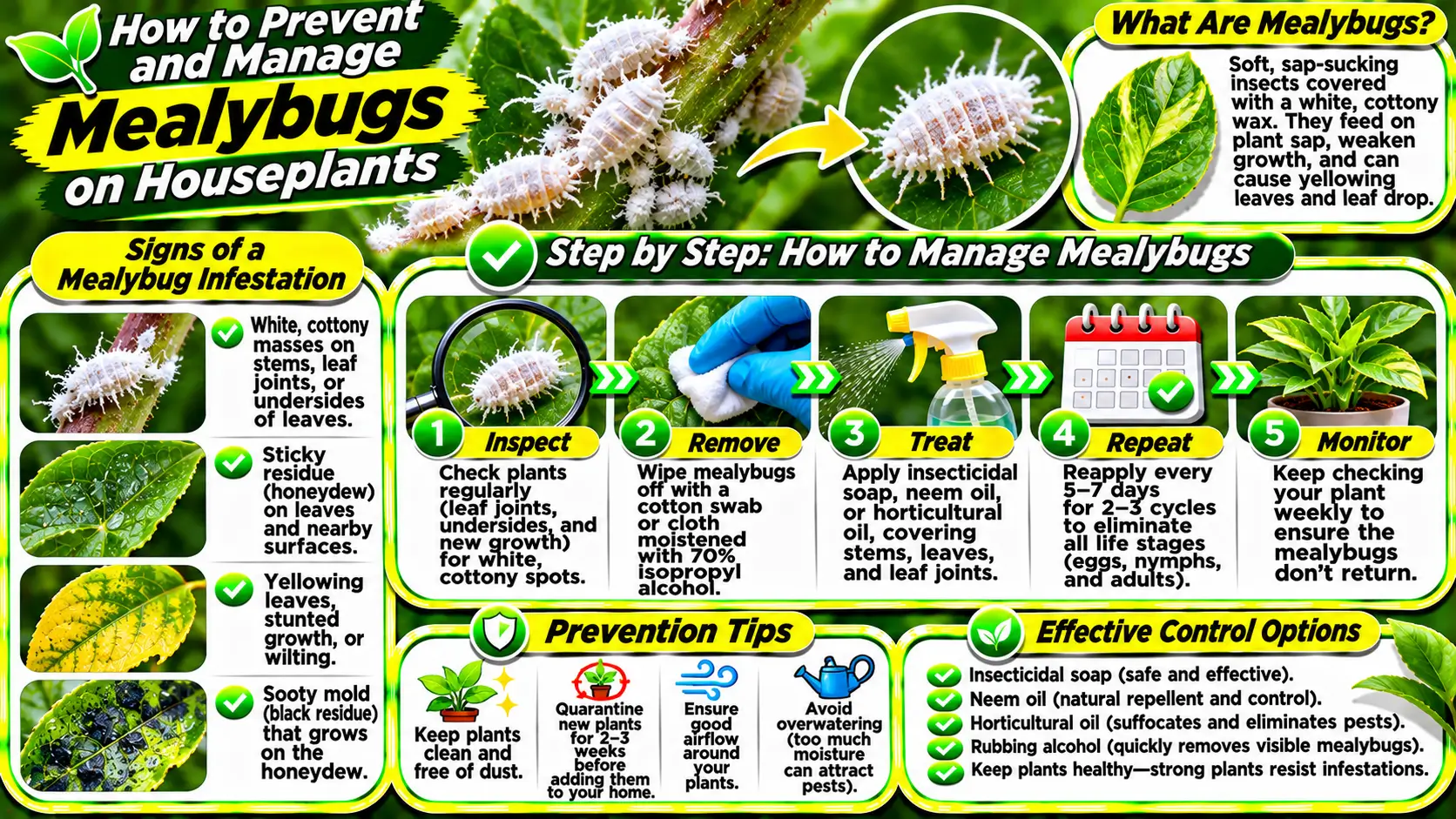
Mealybugs often persist because the visible cottony clusters are only part of the infestation. Inspect leaf axils, stem joints, the crown, undersides of leaves, flower parts, pot rims, and the area where stems meet the growing medium. Some species can feed on roots, so a plant that continues to decline despite removing visible insects may need a careful root-zone inspection. Do not unpot every plant automatically; first look for recurring symptoms and evidence that aboveground colonies are not the only source.
Contact products such as insecticidal soap and horticultural oil work only when the target insects are adequately covered, and waxy adults or insects hidden in crevices can escape treatment. Younger mobile nymphs are often more exposed. If a locally labeled product is appropriate, follow the label for coverage and repeat timing; do not improvise mixtures or assume that a single application will eliminate every life stage. Test a small area of sensitive foliage first because some plants are injured by oils or soaps.
After each intervention, inspect the same marked locations and nearby plants. Distinguish live insects from old wax or egg-sac residue, and look for new crawlers, fresh honeydew, and renewed plant decline. UC IPM’s mealybug management guide notes the importance of monitoring and the limits of contact treatments. For indoor plants, University of Maryland Extension also provides houseplant-specific identification and management advice. Consider discarding a severely infested plant if repeated control would expose the rest of the collection to ongoing risk.
Related Gardening Guides
Explore these related guides for more practical ideas and plant-care advice:
- How to Identify and Control Scale Insects on Plants
- How to Identify and Manage Spider Mites on Indoor and Outdoor Plants
- How to Manage Garden Pests with Integrated, Plant-Safe Methods
Introduction
Mealybugs are sap-feeding insects that often appear as small white, cottony clusters on houseplants. They hide in leaf axils, along stems, beneath leaves, around roots, and in other protected spaces. Their waxy covering makes them easy to recognize in many cases, but a light infestation can be missed until leaves yellow or sticky honeydew appears. Mealybugs can weaken plants over time and may spread when infested plants are placed close together.Successful management requires patience and repeated inspection. Removing visible insects may reduce a colony, but hidden individuals and egg masses can remain. Start by isolating the affected plant, confirming the pest, and checking nearby plants. Choose a control method that suits the plant’s size and sensitivity. Avoid applying strong household chemicals or improvised mixtures that can damage foliage.
Table of Contents
- Introduction
- Identify mealybugs and their signs
- Isolate and inspect the plant
- Manual removal for small infestations
- Consider labeled insecticidal soaps and oils
- Root mealybugs and difficult infestations
- Prevent future infestations
- Ants, honeydew, and secondary problems
- When to replace a plant
- Treatment coverage and follow-up for hidden mealybugs
- When to investigate possible root mealybugs
- Frequently Asked Questions
Identify mealybugs and their signs
Adult and immature mealybugs are usually oval, soft-bodied, and covered with white waxy filaments or powder. They may cluster where leaves meet stems, around new growth, or along veins. Some species feed on roots and may remain hidden in the growing medium. Their feeding can cause yellowing, distorted growth, leaf drop, and reduced vigor.Honeydew is a sticky substance produced by sap-feeding insects. It can attract ants and support dark sooty mold on leaves or nearby surfaces. Cottony material alone is not always enough to confirm mealybugs; inspect closely for the insects beneath the wax. Use a magnifier if needed and compare several areas of the plant. If the symptoms are unclear, seek identification help before treating.
Isolate and inspect the plant
Move an affected houseplant away from other plants, taking care not to brush infested foliage against healthy specimens. Check the entire plant, including leaf undersides, stems, nodes, flowers, and the rim of the pot. Inspect the drainage holes and root area if root mealybugs are suspected. Look at nearby plants even if they appear healthy because early colonies can be difficult to see.Clean the surface where the plant stood and remove fallen leaves or debris. Keep the plant isolated while you monitor it. Do not place it back into a crowded collection after removing only the visible insects. Repeated inspections are needed to determine whether the infestation has been controlled.
Manual removal for small infestations
For a small colony on a sturdy plant, remove visible insects with a damp cotton swab or soft cloth. Work carefully around leaf axils and stem joints. Dispose of the swab or cloth material so insects are not transferred to another plant. A gentle rinse may help on plants with foliage that tolerates water, but avoid leaving sensitive plants wet for long periods.Prune heavily infested leaves or stems only when the plant can tolerate the loss. Use clean scissors and dispose of the cut material securely. Check the plant again after several days, because hidden insects may emerge or new crawlers may appear. Manual removal is useful for small infestations but can be impractical on large, dense plants.
Consider labeled insecticidal soaps and oils
Formulated insecticidal soaps or horticultural oils may help control exposed mealybugs when applied according to the label. Coverage is important because waxy insects often hide in protected places. Some products require repeat applications to reach newly emerged individuals. Confirm that the product is approved for the plant and indoor use, and follow directions about ventilation, protective equipment, and contact with people or pets.Test a small area first if the plant is sensitive. Avoid spraying during intense heat or on drought-stressed foliage unless the label says otherwise. Do not substitute dish soap, alcohol mixtures, or household cleaners without reliable plant-specific guidance; these can burn leaves or damage waxy surfaces. Never exceed label concentration or mix products unless explicitly permitted.
Root mealybugs and difficult infestations
Root mealybugs can be harder to detect because they feed around the roots and may leave white waxy deposits in the growing medium or on the root ball. Symptoms can include poor growth, yellowing, and decline that resembles root disease or watering stress. If suspected, inspect the root system carefully. Do not assume that every white deposit in potting mix is a pest; mineral residue and fungal growth can look different.For a confirmed root infestation, the plant may need to be removed from its pot, the affected medium discarded safely, and the container cleaned before reuse. Whether the plant can be saved depends on the severity and root health. Use fresh, suitable potting medium and avoid reusing contaminated material. If the plant is valuable, seek expert advice before aggressive root cleaning or treatment.
Prevent future infestations
Inspect new plants before adding them to an established collection and isolate them for observation when practical. Check stems and leaf axils rather than looking only at the upper leaf surface. Avoid overcrowding plants, which makes inspection difficult and allows pests to move between touching leaves. Keep plants healthy with appropriate light, watering, and feeding, but do not overfertilize.Clean shelves, pots, and tools, and remove dead leaves that can hide insects. If a plant repeatedly becomes infested, assess whether its location or condition is contributing to stress. Check nearby plants regularly because mealybugs can spread through contact and movement of infested material. Prevention is not perfect, but it makes early detection much more likely.
Ants, honeydew, and secondary problems
Ants may visit mealybug colonies to collect honeydew and can sometimes protect the insects from predators. If ants are repeatedly moving around a plant, inspect it for sap-feeding pests. Managing the mealybugs may reduce the food source, but ant nests or trails may require separate attention. Avoid applying ant bait or other products where children, pets, or beneficial insects could be exposed, and follow product directions.Sooty mold can develop on honeydew-covered surfaces. It is usually a secondary growth rather than the original cause of plant decline. Once the insects are controlled, gently clean suitable leaves and allow new growth to replace damaged foliage. Do not scrub delicate leaves or use harsh cleaners.
When to replace a plant
Some severe infestations are difficult to control, especially on large, densely branched plants or when root mealybugs have damaged much of the root system. If the plant is declining and repeated careful treatment has not reduced the population, disposal may protect the rest of the collection. Seal infested material before discarding it and follow local waste guidance. Do not compost it where surviving insects could spread.Before replacing the plant, clean the pot and surrounding area and inspect nearby specimens. Consider whether the species is worth growing in the same location or whether a less susceptible, easier-to-inspect plant would be more suitable. Replacing one severely infested plant can sometimes be more practical than exposing an entire collection to repeated treatments.
Conclusion
Mealybugs are recognizable by their white waxy clusters, but they can hide in leaf axils, stems, and roots. Isolate affected plants, inspect thoroughly, remove small colonies manually, and use labeled products carefully when necessary. Repeated monitoring is essential because hidden insects and newly emerged crawlers can survive an initial cleanup.Inspect new plants, avoid overcrowding, and keep growing conditions suitable for each species. A measured, plant-conscious approach can control many infestations while reducing the risk of damaging foliage or harming beneficial organisms.
Mealybug detection and response checklist
| Finding | What it suggests | Recommended action |
|---|---|---|
| White cottony clusters | Possible mealybugs on stems, nodes, or leaf axils | Inspect nearby plants and isolate the affected one |
| Sticky honeydew | Feeding insects may be present | Check for ants and sooty mold |
| Small early infestation | Localized population | Remove insects carefully and repeat inspections |
| Root mealybug suspicion | Insects may be hidden in the root zone | Inspect roots and growing medium if decline continues |
| Persistent infestation | Eggs or hidden individuals may remain | Use only plant-labeled products and follow directions |
For expert background, consult University of Minnesota Extension information on mealybugs.
Related articles:
- How to Identify and Manage Spider Mites on Indoor and Outdoor Plants
- How to Recognize and Control Aphids on Garden Plants
More related plant health guides:
More related plant-care guides:
Treatment coverage and follow-up for hidden mealybugs
Mealybugs often persist because the visible cottony clusters are only part of the infestation. Inspect leaf axils, stem joints, the crown, undersides of leaves, flower parts, pot rims, and the area where stems meet the growing medium. Some species can feed on roots, so a plant that continues to decline despite removing visible insects may need a careful root-zone inspection. Do not unpot every plant automatically; first look for recurring symptoms and evidence that aboveground colonies are not the only source.
Contact products such as insecticidal soap and horticultural oil work only when the target insects are adequately covered, and waxy adults or insects hidden in crevices can escape treatment. Younger mobile nymphs are often more exposed. If a locally labeled product is appropriate, follow the label for coverage and repeat timing; do not improvise mixtures or assume that a single application will eliminate every life stage. Test a small area of sensitive foliage first because some plants are injured by oils or soaps.
After each intervention, inspect the same marked locations and nearby plants. Distinguish live insects from old wax or egg-sac residue, and look for new crawlers, fresh honeydew, and renewed plant decline. UC IPM’s mealybug management guide notes the importance of monitoring and the limits of contact treatments. For indoor plants, University of Maryland Extension also provides houseplant-specific identification and management advice. Consider discarding a severely infested plant if repeated control would expose the rest of the collection to ongoing risk.
When to investigate possible root mealybugs
Consider a root-zone inspection when a houseplant continues to decline despite removing visible cottony insects, especially if growth is weak, leaves yellow, or the plant wilts while the growing medium is not dry. Root mealybugs may leave white waxy deposits around roots, inside drainage holes, or along the inner wall of a pot. These signs can be confused with mineral residue or ordinary potting-mix fibers, so use a hand lens and look for actual insects rather than diagnosing from white material alone.
If inspection is justified, prepare a clean work surface and gently slide the root ball from the pot. Avoid shaking contaminated mix across other plants. Examine the outer root zone and drainage area, then isolate the plant and discard infested medium in a sealed bag rather than reusing it. Clean the pot thoroughly before reuse. Do not automatically wash or prune all roots: unnecessary root disturbance can add stress, and the correct response depends on how extensive the infestation is and whether healthy roots remain.
UMN Extension recommends isolating infested indoor plants and checking growing conditions and plant parts carefully; its indoor plant insect management guide provides a useful framework. For suspected root mealybugs, seek species-specific local advice before using any soil-applied product. Only use a product whose label explicitly permits the indoor plant, target pest, and application site.
Related Gardening Guides
Explore these related guides for more practical ideas and plant-care advice:
- How to Identify and Control Scale Insects on Plants
- How to Identify and Manage Spider Mites on Indoor and Outdoor Plants
- How to Manage Garden Pests with Integrated, Plant-Safe Methods
Frequently Asked Questions
How can I recognize mealybugs on a houseplant?
Look for small, soft-bodied insects covered in white waxy material, often clustered at leaf joints, stem nodes, and other sheltered areas. Sticky honeydew and distorted growth may also occur.
Can mealybugs spread to nearby plants?
Yes. Crawlers can move between touching plants, and infested plants or equipment can spread them. Isolate affected plants where possible and inspect nearby specimens.
Why are mealybugs difficult to eliminate?
They hide in leaf axils, crevices, and roots, while waxy coverings can reduce the effect of some contact treatments. Thorough inspection and repeated follow-up are important.
Can root mealybugs affect plants?
Yes. Some mealybugs feed on roots and may be harder to detect than those on foliage. Check the root zone when a plant declines despite apparently suitable above-ground care.


One thought on “How to Prevent and Manage Mealybugs on Houseplants”