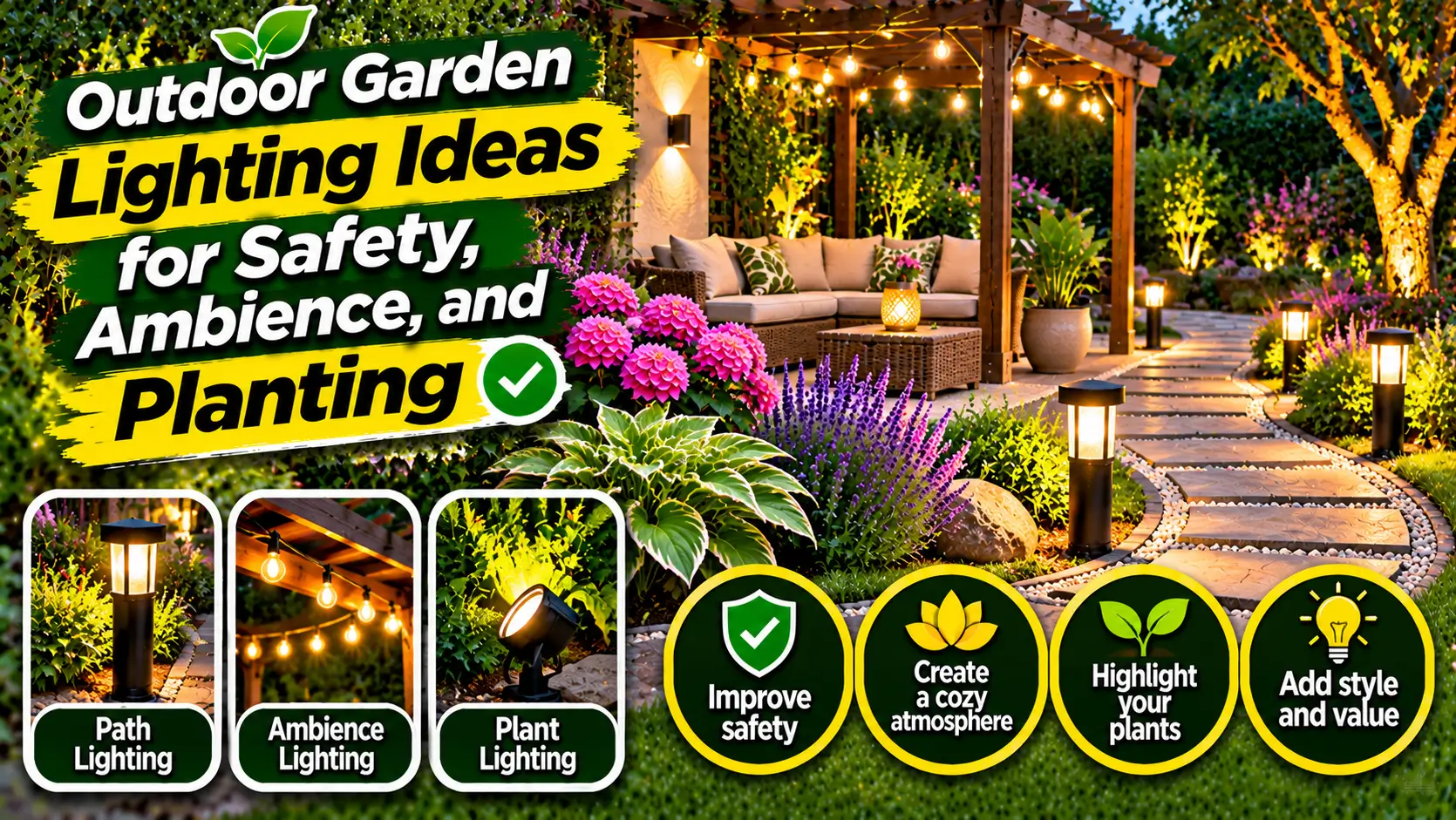
Plan lighting around how the garden is used
Garden lighting is most effective when it responds to real activities. Begin by identifying the routes people use after dark, the entrances that need visibility, and the outdoor areas where people sit or eat. Note steps, changes in level, gates, and other features that may be difficult to see at night. Then identify a few landscape elements worth highlighting, such as a mature tree, textured wall, water feature, or attractive planting bed.Avoid treating the entire garden as one space that needs equal brightness. A layered plan usually feels more comfortable and uses less energy. Functional light belongs where people walk and work; softer ambient light can define a seating area; accent lighting can draw attention to a feature. Leave some areas darker so the garden retains depth and does not feel like an indoor room exposed to the night sky.
Table of Contents
- Plan lighting around how the garden is used
- Understand the main types of outdoor fixtures
- Use light levels and color thoughtfully
- Light paths and steps without creating glare
- Highlight trees and planting with restraint
- Choose efficient power and control options
- Protect wildlife and reduce light pollution
- Install fixtures securely and keep them accessible
- Maintain the system through the year
- Create a balanced evening landscape
- Frequently Asked Questions
Understand the main types of outdoor fixtures
Path lights, bollards, wall lights, step lights, spotlights, in-ground fixtures, and string lights each serve different purposes. Path lights can indicate the edge of a walkway, while shielded wall lights can illuminate an entrance. Step lights help reveal changes in level, and adjustable spotlights can highlight a tree or architectural feature. String lights can create a relaxed atmosphere over a seating area when installed with suitable supports and outdoor-rated equipment.Choose fixtures based on the task, beam direction, durability, and maintenance access. A fixture that looks attractive in a catalog may create glare if its light source is exposed at eye level. Use shields, diffusers, and careful positioning to keep light directed where it is needed. Check that the product is rated for outdoor use and for the exposure it will receive, including rain, dust, and coastal conditions where relevant.
Use light levels and color thoughtfully
More light does not automatically make a garden safer or more attractive. Excessive brightness can cause glare, flatten the appearance of plants, and make darker areas harder to see by contrast. Use the lowest practical light level for each task. Warm white light often creates a comfortable atmosphere in seating areas and can complement natural materials, while neutral or cooler light may be useful for some functional applications. The best choice depends on the setting and personal preference.Consistency matters. Too many different color temperatures can make a small garden feel visually unsettled. Choose a simple approach and test fixtures at night before installing a large number. Consider dimmable lights or separate switching zones so the garden can change from practical evening use to a quieter atmosphere. If a light is intended to highlight a plant, position it to reveal form and texture without shining into nearby rooms or the eyes of visitors.
Light paths and steps without creating glare
A safe route should be recognizable from one illuminated area to the next. Fixtures can mark path edges, illuminate a gate, and reveal steps or changes in surface. Avoid placing bright lights directly in the line of sight. Low-level, shielded fixtures often work better than powerful lights aimed across the walkway. Make sure that shadows do not hide obstacles or create confusing patterns on steps.Keep the layout consistent and avoid long unlit gaps along a route used regularly. At the same time, do not install a fixture at every paving joint. A few well-positioned lights can provide enough guidance. Test the route from the perspective of someone walking toward the house and someone walking away from it. Check whether the light reveals the surface clearly and whether nearby plants cast moving shadows that could be mistaken for obstacles.
Highlight trees and planting with restraint
Accent lighting can make a garden feel inviting by emphasizing the shape of a tree, the texture of ornamental grasses, or the structure of a planted border. A spotlight placed below a tree can reveal its trunk and branching form, while a grazing light can emphasize a textured wall. Use a narrow beam for a specific feature and a broader beam for a larger planting group, choosing a position that avoids direct glare.Plants change with the seasons, so leave room for growth and maintenance. A spotlight that works on a young tree may become obscured as the canopy expands. Avoid aiming lights into wildlife habitat or directly toward neighboring windows. Do not leave bright lights running all night without a reason. Timers, motion sensors, and carefully selected operating periods can reduce unnecessary light and help preserve a natural night environment.
Choose efficient power and control options
LED fixtures are commonly used outdoors because they can provide useful light with relatively low energy consumption and long service life. Compare actual light output, beam angle, color appearance, and durability rather than choosing solely by wattage. A low-voltage landscape system may be suitable for some gardens, while solar lights can be convenient where wiring is impractical. Solar performance depends on panel exposure, battery quality, weather, and seasonal daylight.Mains-powered outdoor lighting requires appropriate protection and installation according to local electrical codes. Have fixed electrical work completed by a qualified electrician. Use outdoor-rated cables, connectors, transformers, and enclosures as required by the system. Keep connections protected from water and avoid makeshift extensions. Timers, photocells, and motion sensors can help manage operating hours, but controls should be easy to override when the garden is being used for an event or maintenance.
Protect wildlife and reduce light pollution
Artificial light can affect nocturnal wildlife, insects, and the natural darkness of surrounding areas. Direct light downward and use shields to limit spill beyond the intended area. Avoid illuminating trees, hedges, or water features throughout the night when they provide habitat for wildlife. Motion-activated lighting can provide visibility when needed without maintaining constant illumination.Choose a warm, modest light level where appropriate and turn off decorative lighting when it is not in use. Consider whether a feature genuinely needs lighting or whether its nighttime darkness is part of the garden’s character. Preventing light from entering neighboring windows is also a matter of courtesy. A thoughtful lighting design respects the wider environment while still making the garden comfortable for people.
Install fixtures securely and keep them accessible
Before installation, check the location of buried utilities, irrigation pipes, and tree roots. Position fixtures where they will not be struck by lawn equipment or damaged by routine digging. Avoid placing cables where future planting or edging work is likely. Follow manufacturer instructions for mounting height, spacing, connections, and required clearances.Do not bury ordinary indoor cables or use indoor fittings outside. Electrical systems exposed to weather must be designed for that environment. Even low-voltage systems need correct components and secure connections. Keep transformers and controls accessible for inspection. If the project involves mains voltage, complex wiring, or uncertain site conditions, use a qualified electrician rather than experimenting with household wiring.
Maintain the system through the year
Outdoor fixtures collect dust, leaves, insects, and mineral deposits. Clean lenses and solar panels periodically using methods recommended by the manufacturer. Trim plants that block beams, but do not prune heavily just to preserve a lighting effect. Check fixtures after storms for movement, damaged housings, exposed cables, or water inside fittings. Replace failed components with compatible products rather than mixing parts without checking specifications.Review the lighting plan as the garden matures. A newly planted border may need different positioning after shrubs grow, and a new seating area may need a separate circuit. Replace lights that create glare or spill into unwanted areas. If energy use is higher than expected, reduce operating hours, use controls, and reconsider whether every fixture is necessary. Regular inspection keeps the system safe and maintains the intended atmosphere.
Create a balanced evening landscape
A successful garden lighting scheme combines clear movement routes, comfortable social spaces, and a small number of carefully selected accents. It does not need to illuminate every plant or every corner. Begin with essential safety and access, add ambient lighting where people gather, and finish with subtle highlights that give the landscape depth.Test the design after dark and make adjustments before adding more fixtures. Look for glare, dark gaps, unwanted spill, and areas where the light feels too harsh. Consider how the garden looks from inside the house as well as from the patio. With efficient fixtures, safe installation, appropriate controls, and respect for wildlife, outdoor lighting can extend the use of the garden while preserving its calm nighttime character.
Plan lighting alongside paths, planting, and hardscape rather than as a separate afterthought; broader site-planning considerations are covered in Utah State University Extension’s landscape-design recommendations for practical planning considerations.
Outdoor garden lighting options
| Lighting type | Main purpose | Practical note |
|---|---|---|
| Path lights | Mark routes and changes in level | Avoid glare and keep fixtures out of walkways |
| Step and deck lights | Improve visibility at transitions | Use appropriate outdoor-rated fittings |
| Accent lights | Highlight trees and focal features | Use sparingly to avoid light pollution |
| Task lighting | Support outdoor work and seating | Aim light where it is needed |
| Timers or sensors | Control operating periods | Adjust settings to reduce unnecessary use |
Related Gardening Guides
Explore these related guides for more practical ideas and planning advice:
- How to Design Garden Paths and Walkways That Are Practical and Beautiful
- How to Plan a Garden Patio and Outdoor Seating Area
- How to Design a Garden Pathway: Materials, Layout, and Practical Tips
- How to Choose the Right Garden Style for Your Home
- How to Create a Vertical Garden: Structures, Plants, and Maintenance
Frequently Asked Questions
How many lights should an outdoor garden have?
Use only enough fixtures to make important routes, steps, entrances, and activity areas easy to use. Start with the purpose of each light and avoid adding fixtures simply to illuminate every corner.
Is warm or cool lighting better for a garden?
A restrained, warm-toned light often creates a comfortable residential atmosphere, while the best choice depends on the task and surrounding materials. Keep brightness controlled and avoid glare.
Are solar garden lights reliable?
They can work well where panels receive sufficient daylight and the fixtures suit the local weather. Shaded locations or long periods of poor sunlight may require a different power source or more modest expectations.
How can garden lighting protect wildlife?
Aim light downward, shield bulbs, use timers or motion controls where suitable, and avoid lighting trees, ponds, and natural areas unnecessarily. Dark periods help reduce disturbance to nocturnal wildlife.

3 thoughts on “Outdoor Garden Lighting Ideas for Safety, Ambience, and Planting”